Content Governance for Remote and Global Teams: Roles, Approvals, and Compliance is most useful when ownership and risk are matched to the right operating model. Centralized Content Model should be selected by governance committees, legal/compliance, and executive sponsors in large, regulated or multi-department organizations to ensure auditability, consistent standards, and single-point accountability. Decentralized Content Model works for fast-moving product, regional, or cross-functional teams where domain leaders own content but rely on lightweight templates and guardrails to preserve brand. Hybrid governance fits global firms balancing control with speed, with a central policy layer and cross-functional ownership. AI-assisted governance benefits scale; IT, operations, and policy owners should guide automation while preserving human oversight. A CMS backbone supports centralized permissions, workflows, and versioning; templates, briefs, and workflows assist editors and contributors across the lifecycle. This framework aligns with Content Governance for Remote and Global Teams: Roles, Approvals, and Compliance.
TLDR:
- Centralized governance is best where auditability and cross-department control are paramount, led by governance committees and legal.
- Decentralized governance suits fast-moving, domain-specific teams with lightweight guardrails.
- Hybrid governance balances control and speed with cross-functional ownership and a central policy layer.
- AI-assisted governance scales routine reviews while preserving human oversight.
- A CMS backbone with templates and workflows supports consistent publishing and auditable processes.

Choosing a Governance Model for Global Teams: Options, Strengths, and Tradeoffs
This section presents a concise, evidence-based comparison of governance options for remote and global teams, focusing on roles, approvals, and compliance. It reflects the structured options from the prior sources, including centralized, decentralized, hybrid models, and AI-assisted governance, as well as CMS and governance tools. The aim is to help governance stakeholders assess auditability, speed, cross-border collaboration, and risk management when selecting a model and supporting tooling.
| Option | Best for | Main strength | Main tradeoff | Pricing |
|---|---|---|---|---|
| Centralized Content Model | Best for organizations needing tight control and single-point oversight across multi-department reviews | Single-point accountability and auditability across departments | Potential bottlenecks and slower content velocity due to centralized approvals | Not stated |
| Decentralized Content Model | Best for fast-moving product, regional, or cross-functional teams with domain leaders owning content | Domain-level autonomy with lightweight guardrails | Less consistency across channels; higher risk of brand drift | Not stated |
| Hybrid Content Model | Best for organizations seeking a balance of control and speed with cross-functional ownership | Balance of control and speed; central policy with cross-functional ownership | Requires coordination across teams and governance layers | Not stated |
| Active Content Governance (AI-assisted governance) | Best for automating governance tasks and real-time metrics at scale | Automates governance tasks and real-time metrics; preserves human oversight | Requires careful balance to avoid over-automation | Not stated |
| Content Management System (CMS) | Best for enforcing audit trails, permissions, workflows, and versioning within a central platform | Core CMS capabilities to support governance (audit trails, permissions, workflow, versioning) | Complexity of setup and ongoing maintenance | Not stated |
| Content Governance Tools | Best for providing templates, playbooks, and governance patterns to standardize | Templates and playbooks standardize governance tasks | May not replace custom governance planning | Not stated |
| Content Briefs | Best for formal requests that clarify content goals and ownership to streamline reviews | Clarify goals and ownership to streamline reviews | Additional upfront overhead | Not stated |
| Content Workflows | Best for end-to-end activities required to produce and publish content across channels | End-to-end coordination from planning to publication | Can be complex to implement across teams | Not stated |
| Editorial Guidelines | Best for maintaining tone, messaging, and brand alignment across content | Maintains brand voice and messaging consistency | Requires ongoing governance and updates | Not stated |
| Style Guides | Best for defining writing and graphic standards to preserve brand voice | Defines standards for writing and graphics | Needs regular updates to stay current | Not stated |
How to read this table:
- Option alignment shows where governance auditability and cross-department oversight are strongest.
- The main strength highlights the core benefit each option provides for remote/global teams.
- The main tradeoff identifies the primary cost or challenge associated with the option.
- Pricing is noted as stated or not stated based on available evidence.
- CMS and templates-based options emphasize standardization and scalability for distributed teams.
Option-by-Option comparison: Content Governance for Remote and Global Teams
Centralized Content Model
Best for: Organizations that require tight control and single-point oversight across multi-department reviews.
What it does well:
- Single-point accountability and auditability across departments
- Clear decision-making authority with standardized processes
- Consistency in brand and messaging due to centralized governance
- Easier regulatory alignment and reporting
Watch-outs:
- Potential bottlenecks and slower content velocity due to centralized approvals
- Risk of overdependence on a central team for all content decisions
- Less agility for regional or domain-specific needs
Notable features: This model concentrates governance decisions, permissions, and workflows in a central authority, enabling robust audit trails and uniform standards across the organization.
Setup or workflow notes: Establish a central governance owner and steering committee, define standard templates and briefs, and implement a central policy layer to guide all content activities.
Decentralized Content Model
Best for: Fast-moving product, regional, or cross-functional teams where domain leaders own content.
What it does well:
- Domain-level autonomy with lightweight guardrails
- Faster approvals and local adaptation to audience needs
- Better scalability for remote contributors and diverse markets
- Encourages rapid experimentation within defined boundaries
Watch-outs:
- Greater risk of brand drift without strong cross-channel alignment
- Potential gaps in auditability and cross-department consistency
Notable features: Domain owners manage content with delegated authority, supported by guardrails and shared templates to guide behavior.
Setup or workflow notes: Define clear domain ownership, provide lightweight templates, and establish cross-functional oversight to maintain coherence across teams.
Hybrid Content Model
Best for: Organizations balancing control with speed, combining central policy with cross-functional ownership.
What it does well:
- Central policy layer with cross-functional ownership
- Faster decision-making than a purely centralized model
- Coordinated governance across regions while preserving local agility
- Supports consistent standards through shared templates and playbooks
Watch-outs:
- Requires careful coordination to avoid conflicts between owners
- Governance complexity can increase with multiple interfaces
Notable features: Combines formal policy with distributed execution, supported by cross-functional ownership and defined escalation paths.
Setup or workflow notes: Set up a central policy layer, appoint cross-functional owners, and codify escalation and handoff procedures to preserve alignment.
Active Content Governance (AI-assisted governance)
Best for: Automating governance tasks and real-time metrics at scale.
What it does well:
- Automates routine reviews and reminders
- Provides real-time governance metrics across teams
- Maintains human oversight to prevent over-automation risks
Watch-outs:
- Requires balance to avoid over-reliance on automation
- Calibration needed to align AI outputs with brand and policy nuances
Notable features: AI-driven insights and automated governance workflows integrated with human review stages.
Setup or workflow notes: Integrate AI into existing workflows, define guardrails, and establish review checkpoints to keep oversight intact.
Content Management System (CMS)
Best for: Enforcing audit trails, permissions, workflows, and versioning within a central platform.
What it does well:
- Core governance capabilities like audit trails, permissions, and versioning
- Structured workflows that support multi-user collaboration
- Centralized repository for asset and content management
Watch-outs:
- Complexity of setup and ongoing maintenance
- Requires careful planning to scale across many teams and channels
Notable features: A central platform that standardizes publishing across channels with built-in governance controls and lifecycle management.
Setup or workflow notes: Configure roles and permissions, implement versioning and staging, and integrate templates and briefs into the CMS workflows.
Content Governance Tools
Best for: Providing templates, playbooks, and governance patterns to standardize tasks across teams.
What it does well:
- Templates and playbooks standardize governance tasks
- Facilitates repeatable, scalable governance practices
- Supports onboarding and consistency across distributed contributors
Watch-outs:
- May not replace custom governance planning for unique needs
- Effectiveness depends on adoption and ongoing updates
Notable features: A library of templates and governance patterns designed to codify common processes.
Setup or workflow notes: Build a templates library, align with workflows, and train teams on applying patterns to real projects.
Content Briefs
Best for: Formal requests that clarify content goals and ownership to streamline reviews.
What it does well:
- Clarifies goals and ownership upfront
- Streamlines review by setting expectations
- Improves consistency by formalizing inputs for every piece
Watch-outs:
- Requires upfront effort to create and maintain briefs
- Overly rigid briefs can slow creative exploration
Notable features: Standardized briefs with required fields to guide content creation and approvals.
Setup or workflow notes: Develop briefing templates, assign owners, and integrate briefs into the review workflow to ensure alignment.
Content Workflows
Best for: End-to-end activities required to produce and publish content across channels.
What it does well:
- End-to-end coordination from planning to publication
- Cross-channel alignment and scheduling support
- Clear stage gates that maintain quality before release
Watch-outs:
- Can be complex to implement across multiple teams
- Requires ongoing governance to stay current with processes
Notable features: Structured activity maps that document activities, owners, and dependencies across the content lifecycle.
Setup or workflow notes: Map existing processes, create stage gates, and connect with templates, briefs, and CMS where applicable.
Editorial Guidelines
Best for: Maintaining tone, messaging, and brand alignment across content.
What it does well:
- Maintains brand voice and messaging consistency
- Provides clear parameters for writers and editors
- Supports cross-channel coherence
Watch-outs:
- Requires ongoing governance and updates to stay relevant
- Overly rigid guidelines can hinder creativity
Notable features: Written standards and guidelines that anchor content quality and tone across teams.
Setup or workflow notes: Publish initial guidelines, establish a cadence for reviews, and tie guidelines to workflows and briefs.
Style Guides
Best for: Defining writing and graphic standards to preserve brand voice across assets.
What it does well:
- Defines consistent writing and graphic standards
- Supports cross-team visual and linguistic uniformity
- Provides measurable criteria for quality control
Watch-outs:
- Requires regular updates to reflect brand evolution
- Implementation depends on broad adoption by creatives
Notable features: Detailed rules for typography, imagery, terminology, and layout that guide content production.
Setup or workflow notes: Create living style guides, train teams on usage, and integrate with editorial guidelines and workflows.
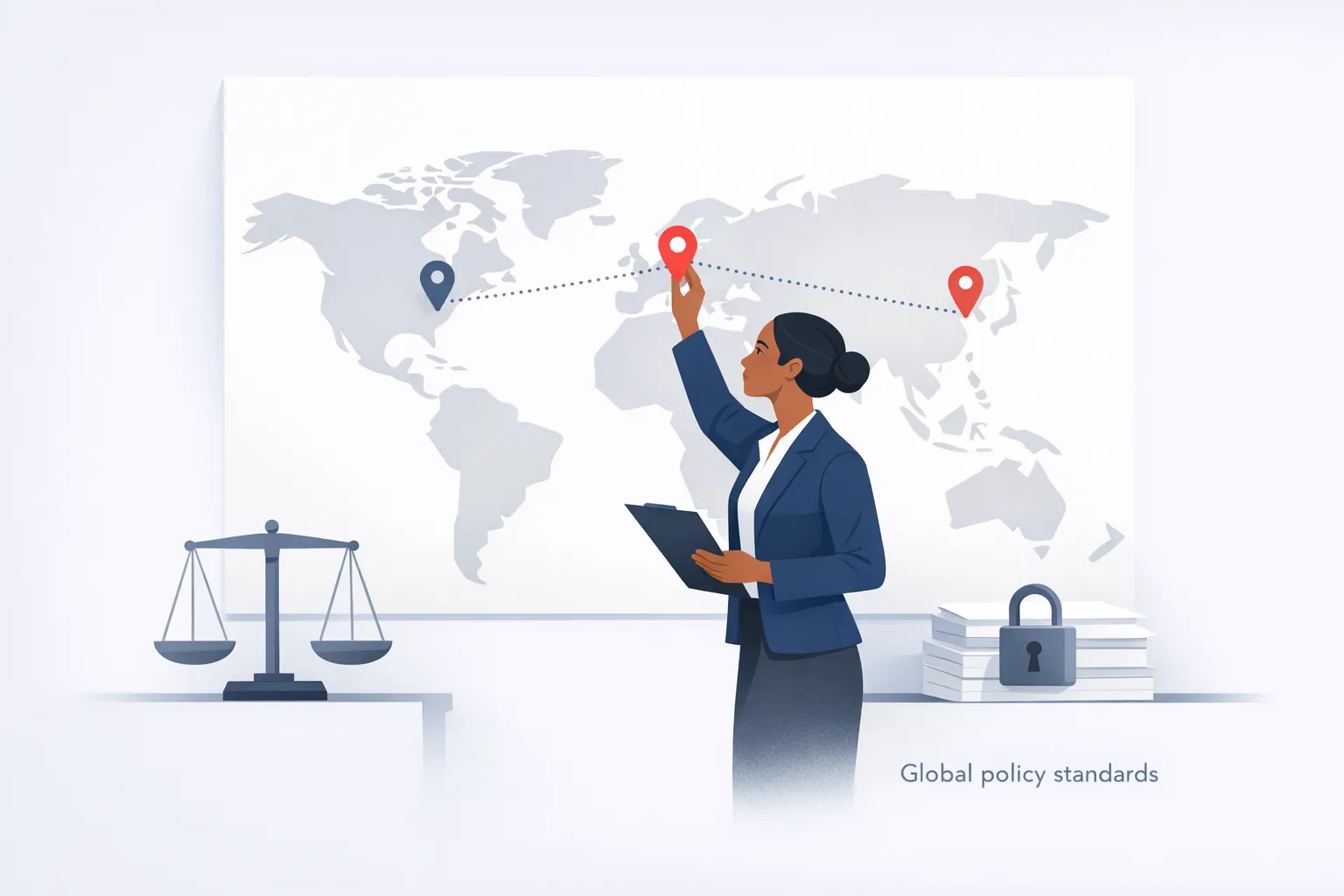
Decision guide: choosing a governance model for remote and global teams
Decisioning about governance for remote and global teams must balance auditability, speed, and scale. The core logic is to map organizational priorities—compliance needs, risk tolerance, channel footprint, and contributor maturity—to governance models and tooling. Centralized models emphasize accountability and uniform standards; decentralized models prioritize speed and domain autonomy; hybrid models mix control with cross-functional ownership. AI-assisted governance can scale routine reviews, while CMS, templates, and briefs institutionalize repeatable processes across time zones.
- If regulatory/compliance needs high auditability and cross-department alignment, choose Centralized Content Model because it provides single-point accountability and robust audit trails.
- If speed and domain-level autonomy are critical for regional teams, choose Decentralized Content Model because it enables fast local decision-making with guardrails.
- If the organization requires both control and speed with cross-functional ownership, choose Hybrid Content Model because it balances policy with distributed execution.
- If scalability and automated governance are priorities, choose Active Content Governance because it automates reminders and real-time metrics.
- If a central, auditable platform for publishing and versioning is essential, choose CMS because it enforces audit trails and structured workflows.
- If teams need standardized templates and playbooks to scale governance, choose Content Governance Tools because they codify templates and patterns.
- If formal, goal-driven content requests streamline reviews, choose Content Briefs because they clarify goals and ownership.
- If end-to-end content production across channels is needed, choose Content Workflows because they coordinate planning through publication.
- If brand voice consistency is paramount, choose Editorial Guidelines because they anchor tone and messaging.
- If writing and graphic standards must be defined across assets, choose Style Guides because they preserve brand voice and consistency.
People usually ask next
- What is the best governance model for multinational teams? It depends on auditability vs speed; centralized for compliance-heavy environments, decentralized for speed, hybrid for balanced needs.
- How can AI-assisted governance fit into existing processes? It automates routine reviews and metrics while preserving human oversight to avoid over-automation.
- How to avoid bottlenecks with a centralized model? Establish escalation paths, clearly defined roles, and SLA-backed templates and briefs.
- How to onboard external contributors? Provide standardized briefs and templates, and use CMS-like workflows to manage reviews and approvals.
- How to measure governance effectiveness? Track approval cycle times, revision counts, audit results, and alignment with strategic metrics.
- How to handle multilingual/regulatory needs in one framework? Implement metadata tagging, localization workflows, and integrated compliance checks across reviews.
Frequently asked questions about Content Governance for Remote and Global Teams
What is content governance for remote and global teams?
Content governance for remote and global teams defines the structured policies, roles, and processes that guide content from creation through review, approval, publication, and ongoing maintenance across time zones. It emphasizes clear ownership, formal approval steps, audit trails, and lifecycle management to scale with contributors and channels. The goal is consistency, compliance, and reliable delivery regardless of location or language.
How should organizations choose between centralized, decentralized, and hybrid models?
Centralized Content Model offers control and auditability by placing decision rights in a single authority; Decentralized Model prioritizes speed and domain autonomy with lightweight guardrails; Hybrid combines central policy with distributed execution. The best choice depends on regulatory needs, risk tolerance, and the desired balance between speed and consistency. For distributed teams, hybrid often works best as a practical compromise.
What is AI-assisted governance and when should it be used?
AI-assisted governance automates routine reviews, reminders, and metrics while keeping humans in the loop to prevent over-automation. It scales governance across many contributors and channels, helping maintain consistency and timely approvals. However, it requires careful calibration to preserve brand nuance and regulatory compliance. Use AI when scale and reliability are priorities, but ensure human oversight remains at the center of decisions.
How do templates, briefs, and workflows support governance?
Templates, briefs, and workflows standardize requests and review steps, helping distributed teams align on goals and ownership. They reduce ad hoc work, speed up approvals, and improve consistency across channels. However, over-reliance on templates can inhibit creativity if guidance becomes too rigid, and teams must refresh these artifacts to reflect evolving strategies and regulatory changes.
How does a CMS fit into governance for remote teams?
A CMS backbone supports audit trails, permissions, workflow, and versioning within a central platform. It provides a single source of truth for global teams and enables controlled collaboration across regions, languages, and channels. However, it requires careful setup, governance documentation, and ongoing maintenance to scale without bottlenecks.
How to onboard external contributors and ensure compliance?
Onboarding external contributors requires standardized briefs, templates, access controls, and review workflows. Clear ownership and defined SLAs help external authors integrate with internal governance. Providing a central place for policies and training reduces risk and accelerates contribution while maintaining brand consistency and alignment with editorial guidelines and workflows.
How should governance effectiveness be measured?
Governance effectiveness is measured through metrics such as approval cycle times, audit results, compliance checks, and alignment with strategic goals. Regular reviews and quarterly audits help adapt the framework to changing business needs, regulatory changes, and channel requirements, ensuring ongoing improvement while maintaining quality and consistency across content and regions.