To write a procedural guide that ranks in AI answers you will start by clarifying intent, identifying the main question users want answered, and mapping those needs to a modular content structure. The simplest correct path is to build a clearly defined page type such as Versus or Alternatives, present a concise top fold with a side by side comparison, and embed direct Q A blocks that hold short, answerable responses. Break content into parseable sections with explicit H2 and H3 signals, use bulleted lists and small tables for steps, and apply FAQPage and QAPage schema to help AI surfaces extract facts. Keep every claim data backed with credible sources, timestamp data, and ensure accessibility with alt text. Finally, test with snippet and rich result validators and monitor AI surface metrics to refine over time.
This is for you if:
- You manage content and SEO for pages that target AI answers and snippets
- You need repeatable, data backed structures that AI can parse easily
- You want to optimize for clear intent signals and credible sources
- You require modular content with Q A blocks, tables, and visuals for snippability
- You aim to monitor and improve AI surface performance over time
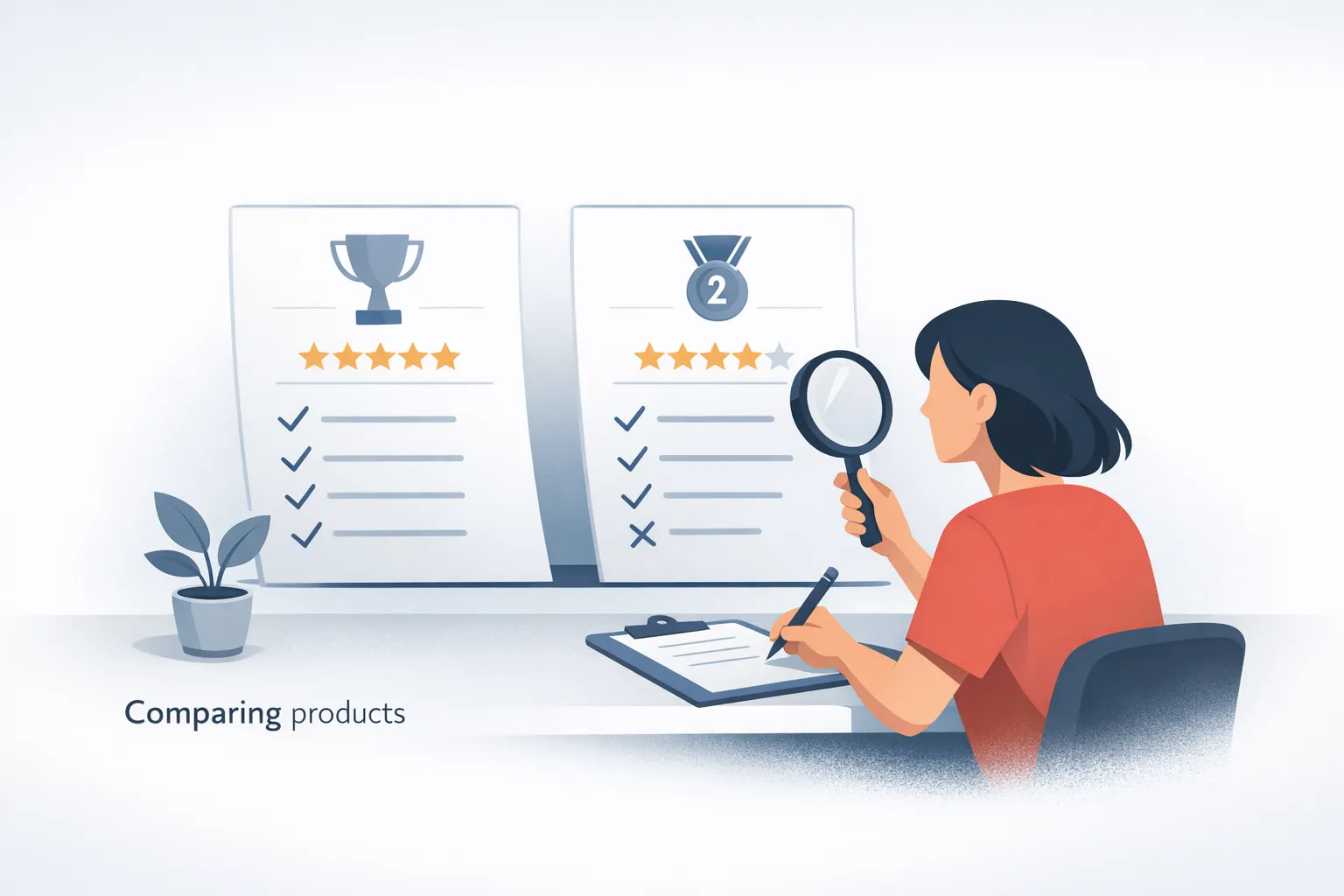
Prerequisites for Writing AI Rankable Comparison Pages
Prerequisites establish the foundation for a scalable AI friendly comparison page. They ensure you have reliable data, clear audience intent, and a structure that AI can parse. By gathering sources, selecting a consistent page type, and preparing schema friendly assets, you reduce rework and improve snippability, making it easier for AI to surface accurate, trustworthy answers.
Before you start, make sure you have:
- Define the page type Versus or Alternatives and the primary intent
- Identify target competitors and gather your product data
- Compile pricing features and user ratings from credible sources
- Create a list of common questions from People Also Ask Answer The Public or internal queries
- Prepare direct Q and A blocks with concise answers ready to place above the fold
- Plan to implement FAQPage and QAPage schema and test validation
- Ensure all content will be HTML with descriptive alt text for images
- Review credible data on AI surface trends from SimilarWeb AI referral traffic winners AI referral traffic winners
- Set up an editorial plan including a freshness schedule and internal linking strategy
- Confirm you have analytics access to monitor AI surface performance
Execute a proven step-by-step process to craft AI rankable comparison pages
This structured procedure sets clear expectations for building pages that AI can understand and surface. You will define the page type and scope, gather reliable competitor data, design a compelling top fold, and implement direct Q A blocks along with schema markup. The goal is a fair, data driven comparison that is easy for AI to parse, snippable for quick answers, and accessible across devices, delivering trustworthy, actionable insights to readers without overloading them with unnecessary detail.
-
Define page type and scope
Choose whether the page is a Versus or Alternatives page. Outline the core intent, the target keyword, and the top fold structure. Align stakeholders on success metrics and the signals you want AI to extract.
How to verify: The brief clearly states the page type and the intended AI signals.
Common fail: Scope is vague leading to inconsistent content across sections.
-
Gather competitive data
Collect pricing, features, and user ratings for your product and each competitor. Source credible references and note timestamps. Create a centralized data sheet to feed later sections.
How to verify: A data sheet exists with citations and timestamps for all items.
Common fail: Data is outdated or sourced from unreliable places.
-
Create top fold side-by-side table
Design a scannable table that highlights differences at a glance. Include visual accents like checkmarks or icons and ensure accessibility with captions. Place it above the fold for immediate comparison.
How to verify: The top fold contains a clear comparison table that is readable with assistive tech.
Common fail: Table clutter hides key differences or is hard to read on mobile.
-
Draft objective strengths and weaknesses
Write balanced prose that notes advantages and limitations for each option, supported by data and quotes where appropriate. Keep tone neutral and avoid disparagement.
How to verify: The copy covers both positives and drawbacks with evidence.
Common fail: One sided claims or vague statements without backing.
-
Add direct Q A blocks with concise answers
Identify the most common user questions and craft direct, bite sized answers placed near relevant sections. Use simple, exact phrasing that matches user intent.
How to verify: Q A blocks answer the top 5 questions with standalone sentences.
Common fail: Questions are incomplete or answers are lengthy and unfocused.
-
Implement schema and test validation
Apply FAQPage and QAPage schema where applicable and validate with online tools. Fix any errors and re validate until clean.
How to verify: All schema validators return success without errors.
Common fail: Validation failures block rich results indexing.
-
Format for snippability with lists and tables
Break content into bullets and short paragraphs. Use tables for critical comparisons and keep sentences self contained for snippets.
How to verify: Snippet friendly blocks exist and are clearly separable from narrative text.
Common fail: Text is dense and not easily extractable by AI.
-
Publish and monitor AI surface performance
Launch the page and track impressions, AI surface appearances, and conversion signals. Schedule regular data refreshes and adjust based on observed results.
How to verify: Analytics show measurable AI surface activity and improved stability over time.
Common fail: No ongoing monitoring leads to stale or underperforming content.

Verification focused checks to confirm AI rank readiness
Verification ensures the page meets AI surface requirements before publish. It focuses on a clear top fold with a side by side comparison, active direct Q A blocks, and valid structured data. You will validate accessibility, snippability, and internal linking while tracking AI surface signals in analytics. Successful verification means validators pass, AI can extract the key facts, and readers can quickly obtain trustworthy, actionable insights without noise.
- Top fold presents a clear side by side comparison with differentiators
- Direct Q A blocks respond to common questions
- Schema markup for FAQPage and QAPage is implemented and valid
- Images include descriptive alt text and HTML equivalents
- Content is modular with explicit H2 and H3 signals
- Internal links connect to related content for context
- Freshness plan with timestamps and data sources
- Data points are sourced from credible references
- Snippable blocks use bullets and short paragraphs
- URL slug title tag and H1 reflect the main keyword
- Accessibility checks cover contrast and keyboard navigation
- Page performance is optimized for mobile loading
| Checkpoint | What good looks like | How to test | If it fails, try |
|---|---|---|---|
| Page type and focus aligned | Page clearly defines Versus or Alternatives and presents a concise top fold | Review the brief and confirm the type matches the heading | Revise the scope and update the brief for consistency |
| Top fold readability | Side by side comparison is instantly scannable on both desktop and mobile | Open the page on multiple devices and check the fold region | Simplify layout or reduce column count for small screens |
| Q A blocks coverage | Key questions are answered with concise direct sentences | Search for common questions and verify direct answers exist | Add missing questions and tighten answers |
| Schema validation | Validators return success with FAQPage and QAPage types | Run schema validators and fix errors | Correct types and placement; revalidate |
| Alt text coverage | All images have descriptive alt attributes | Audit image tags and compare against content | Add alt text or replace with accessible content |
| Internal linking | Contextual links to related content support understanding | Crawl the page and verify links point outward appropriately | Insert additional related links and update navigation |
| Freshness and data accuracy | Timestamps present and sources cited for data | Check for timestamps and verify source links | Refresh data and update citations |
| Snippable formatting | Structured lists and concise sentences suitable for snippets | Run snippet tests and confirm standalone sentences | Rewrite sections to improve self containment |
Troubleshooting for AI rank ready comparison pages
Use this guide to quickly diagnose and fix issues that block AI from ranking your comparison pages. Focus on top fold clarity snippable blocks and credible data. Follow these actionable steps to identify symptoms understand causes and implement precise fixes that improve parseability accessibility and trust. After applying fixes re test with validators and monitor AI surface signals to confirm improvements.
-
Symptom:
Top fold lacks clear side by side comparison or differentiators
Why it happens: Design choices or data not prepared for quick scan
Fix: Place a visible top fold side by side table of features and differentiators; ensure visual cues; keep to two to four columns; ensure accessible with captions
-
Symptom:
Q A blocks missing direct single sentence answers
Why it happens: Q A sections buried in paragraphs; no lead sentence
Fix: Place concise direct answer at the start of each Q A block; keep one to two sentences; then provide context
-
Symptom:
Schema validation errors on FAQPage or QAPage
Why it happens: Incorrect or misconfigured schema
Fix: Validate with schema tools and fix; ensure mainEntity is a Question with acceptedAnswer as an Answer
-
Symptom:
Images lack alt text
Why it happens: Images used for visuals but alt text missing
Fix: Add descriptive alt text for all images; ensure alt describes the visual and its relevance to the data
-
Symptom:
Data is outdated or missing timestamps
Why it happens: Freshness schedule not followed
Fix: Add timestamps; link to sources; set a refresh cadence
-
Symptom:
Internal links missing or weak
Why it happens: Content siloing
Fix: Insert contextual internal links to related comparison pages and supporting resources
-
Symptom:
Content not snippable long paragraphs
Why it happens: No modular structure
Fix: Break into modular sections with headings; use bullet lists and short paragraphs; create stand alone sentences for snippets
What readers ask next about AI rankable comparison pages
- How can I ensure a top fold is instantly scannable for AI? Place a clear side by side table and a concise value proposition at the top; use explicit headings and minimal walls of text; ensure the first 1-2 sentences answer core questions.
- What makes a page snippable for AI answers? Use direct Q A blocks with concise answers, self contained statements, and bulleted steps or lists that can be pulled as snippets; keep data points accessible in HTML rather than images.
- Should I standardize on Versus or Alternatives across pages? Pick one approach per page based on user intent; mirror the structure across pages for consistency and easier AI parsing; use consistent naming.
- How often should I refresh data like pricing and features? Establish a freshness schedule with timestamps and cite sources; update regularly to maintain trust and accuracy.
- How do I implement schema markup to support AI understanding? Add FAQPage and QAPage markup for questions and answers; validate with schema tools until errors are resolved.
- What types of social proof most influence AI generated answers? Include credible quotes, third party badges, and verifiable case studies to reinforce claims in the AI's response.
- How should I balance fairness and persuasion in a comparison page? Acknowledge strengths and weaknesses for each option; avoid disparagement; anchor claims to data and sources.
- How can I test that AI will extract answers from my page? Use snippet testing and validators to see if direct answers appear; adjust content to improve extraction and clarity.
Common questions about ranking in AI answers
-
How should a page begin for AI readers?
Begin with a concise direct answer to the main question, followed by a brief setup of what readers will learn. Place a clearly defined top fold that shows a side-by-side comparison and a prominent value proposition. Use explicit headings and direct Q A blocks to satisfy AI parsing. Keep the initial sentences answer oriented, then expand with data points and context.
-
What makes a top fold effective for AI answers?
An effective top fold immediately communicates the core differentiation and value. It should present a scannable side-by-side comparison, highlight the strongest benefits, and keep secondary details away from the fold. Visual cues like icons or checkmarks help, while accessible markup ensures screen readers can follow. Above all, the fold must answer the user's primary question within a few seconds of arrival.
-
How important is schema markup for AI visibility?
Schema markup is a critical signal for AI systems to interpret page intent and structure. Implement FAQPage and QAPage where relevant, validate with tools, and keep the data synchronized with the on-page content. Proper markup improves the likelihood of AI surfacing direct answers and rich results, while also supporting accessibility and crawlability across devices.
-
How can I ensure snippable content on my page?
Snippable content requires modular, stand-alone statements. Use direct Q A blocks, bullets, and concise tables that can be extracted as snippets. Avoid embedding key facts solely in paragraphs, ensure each fact has a clear label, and keep sentences short and self-contained. Regularly test how AI surfaces the content in answer blocks and adjust for clarity.
-
Should I use Versus or Alternatives and why?
Versus or Alternatives should be chosen based on user intent and consistently applied across pages. A Versus page targets a specific pair, while Alternatives lists options around a competitor. Maintain uniform structure, naming, and data signals so AI can compare and extract the relevant slices without ambiguity.
-
How often should data be refreshed to stay credible?
Data freshness matters; implement a cadence for updating pricing, features, and ratings and display timestamps. Link to credible sources and note when data was collected. Regular updates help maintain trust, improve accuracy in AI answers, and reduce the risk of outdated comparisons influencing decisions.
-
What role do social proofs play in AI answers?
Social proof strengthens AI responses by providing credible voices and validation. Include quotes from users, third-party badges, and case studies where possible. Attribute sources and ensure the proof aligns with the claims. Authentic, visible validation signals can improve trust and the likelihood that AI references your page.
-
How can I test whether AI extracts the correct answers from my page?
Testing for AI extraction involves running snippet checks and validator tests to confirm direct answers are surfaced. Experiment with different question phrasings measure whether the page yields triggerable snippets and adjust headings and Q A blocks accordingly. Continuously monitor AI surface signals and refine for consistent extraction across queries.