To build a credible pillar page ecosystem, start with a clear objective: establish topical authority while improving navigation, user experience, and long term organic performance. Readers want a practical framework they can reproduce, including selecting broad core topics, mapping 8 to 12 supporting subtopics, and creating a single pillar page that links to each cluster and back. Use a hub and spoke architecture to signal relationships, with descriptive anchor text and a structure that is easy to scan on mobile. Pillar pages typically run three thousand to five thousand words, while cluster articles range from one thousand to two thousand five hundred words to cover depth without overwhelming readers. SEO should place core keywords in the page title, H1, slug, meta description, and image alt text, and you should update the XML sitemap and internal links to reflect the new topology. Measure success with organic traffic, keyword rankings, time on page, scroll depth, and conversions to confirm impact. Watch for edge cases such as topics that are too broad or too narrow and risk of content cannibalization or orphan pages.
This is for you if:
- You are building a scalable topic authority with pillar and cluster content.
- You want a repeatable process for mapping core topics, subtopics, and internal links.
- You need actionable guidelines on measurement, governance, and cadence for updates.
- You must balance depth with readability and maintain evergreen relevance.
- You operate in a B2B or SaaS context and require a framework that translates to SEO and UX improvements.
Overview and core concepts
Pillar page and cluster content definitions
A pillar page acts as a central hub that presents broad topic coverage and links to a set of related subtopics. It is designed to be evergreen and serve as the reference point readers return to as they explore a topic. Cluster content comprises individual subtopic pages that dive into specific aspects, questions, or workflows and link back to the pillar. Together they form a topic cluster that signals depth and coherence to search engines while guiding users through a logical information journey. Pillar pages anchor the site’s information architecture, while clusters expand coverage and address long tail intents. Pillars and clusters should be clearly delineated by scope, with descriptive anchor text that clarifies the destination topic. Pillar pages are typically long form, and clusters provide depth on discrete angles, enabling scalable expansion over time. Source
The topic cluster mindset: hub and spokes, topical authority, and long-term value
The hub and spoke model centers a broad topic around a pillar page and distributes depth across multiple subtopic pages. This structure establishes topical authority by demonstrating expertise across a domain, not just a handful of niche keywords. Over time, internal links from clusters to the pillar and between related clusters reinforce relationships that search engines interpret as a cohesive knowledge graph. The result is better crawlability, clearer Signals of topical ownership, and more sustainable traffic growth. The approach emphasizes depth over single keyword targeting and supports long term value as new subtopics emerge. Source
Why this approach matters for crawlability, UX, and business outcomes
A well designed pillar cluster ecosystem makes navigation intuitive for readers and easier for search engines to index. A structured table of contents, jump links, and descriptive headings guide readers through a logical sequence, reducing friction and bounce. Internally linking supports topical signaling and distributes page authority, which improves rankings for both pillar and cluster pages. From a business perspective, this structure enables more efficient content production, better measurement of topic ownership, and stronger opportunities to convert readers into leads or customers. Pillars also support multi channel amplification, enabling reuse of hub content across webinars, emails, and social programs. Source
Mental models and frameworks
Pillar-Cluster Architecture
The pillar cluster architecture treats the pillar as the central node and each cluster as a spoke that expands coverage. Each cluster should relate to the pillar topic and link back with purpose. This makes topic boundaries explicit and creates a scalable path for growth as new subtopics arise. The architecture helps ensure coverage is comprehensive without becoming unwieldy. Source
Information Architecture and internal linking discipline
Formal information architecture guides how content is organized, navigated, and discovered. A disciplined internal linking approach uses descriptive anchor text, consistent link placement, and purposeful link relationships to signal how ideas interconnect. This discipline strengthens topical signals and improves crawl efficiency, both of which favor search visibility and user understanding. Source
Knowledge graph and topical signaling
Viewed as a knowledge graph, a pillar plus cluster network maps relationships among topics, subtopics, and related questions. Each link is a data point that reinforces semantic connections, helping search engines infer authority and topic coverage. A well mapped graph reduces orphan pages and improves overall site cohesion. Source
AI augmented content strategy (AEO and GEO) considerations
AI enhanced content planning aligns pillar cluster assets with evolving search experiences. For AI powered answer engines, ensure pillar pages answer core questions clearly and provide navigable routes to clusters. Generative tools can assist outline creation and drafting, but quality and accuracy must be maintained through human review. This balance supports resilient performance as search technology evolves. Source
Lifecycle and governance framework for pillar content
A repeatable lifecycle governs pillar content from topic selection through maintenance. It includes mapping topics to clusters, creating pillar and cluster content, implementing updates, and reviewing performance on a quarterly basis. Governance assigns ownership, sets cadence, and ensures consistency in format, tone, and technical SEO standards. Source
Step-by-step implementation (ordered steps)
Step 1 — Identify core pillar topics
Begin with topics that reflect core business goals and audience needs. A strong pillar topic should be broad enough to accommodate multiple subtopics and retain evergreen relevance. Prioritize topics where existing content demonstrates reach or where gaps clearly limit coverage. Map potential clusters that would collectively cover the topic's most common questions and workflows. This step sets the scope for the entire pillar cluster program and determines the path for subsequent keyword research and content planning. Source
Step 2 — Conduct keyword and topic research
Research should identify related terms, long tail keywords, and questions readers ask. Analyze intent behind queries to ensure clusters address informational and transactional angles. Include signals from People Also Ask and other query features to uncover natural subtopics readers expect to see. Build a topical map that aligns keywords with cluster topics, ensuring each cluster targets a distinct angle and supports pillar authority. Source
Step 3 — Map your content cluster structure
Outline 8 to 12 clusters that directly support the pillar. Each cluster should be a standalone article with a specific focus, yet clearly linked to the pillar. Define for each cluster the targeted long tail keyword, the core questions it answers, and how it connects to related clusters. Plan internal links from cluster pages to the pillar and to other related clusters to create a cohesive web of content. This map guides production and helps avoid gaps or overlaps. Source
Step 4 — Create your pillar page structure
Draft a pillar page that offers comprehensive coverage of the core topic, organized for skimming and deep reading. Include a table of contents with jump links to major sections, and ensure the layout supports a logical progression from general context to subtopic anchors. Build in early anchor text strategies by planning where cluster links will appear in the pillar to reinforce topical authority. Plan for images, diagrams, and examples that illustrate relationships within the cluster network. Source

Step-by-step implementation (ordered steps)
Step 5 Develop cluster content
Develop a set of eight to twelve cluster articles that directly support the pillar topic. Each cluster should be a standalone deep dive that targets a distinct long tail keyword and answers a specific aspect or workflow related to the core topic. Clusters must link to the pillar and to one another where relevant, creating a cohesive web of content that reinforces topical authority. Aim for depth that feels substantial but remains accessible, typically in the range of one thousand to two thousand five hundred words per piece. This structure allows readers to explore facets without feeling overwhelmed by a single expansive page. Balance is essential; each cluster should contribute unique value and avoid duplicating coverage found in other clusters or the pillar itself. Pillar pages and clusters should be planned together so that navigation signals and topic boundaries stay clear. Pillar pages typically run three thousand to five thousand words, while clusters cover depth on discrete angles Source.
To execute this step effectively, begin with a content map that assigns each cluster to a specific question or workflow readers are likely to pursue after engaging with the pillar. Create lightweight briefs that specify the target keyword, primary angle, subheadings, and internal link opportunities. Establish a review process to ensure each cluster upholds quality standards, maintains consistent formatting, and aligns with the pillar's authority signals. Regularly audit clusters for relevance and freshness to preserve evergreen value and to support ongoing topical expansion.
Step 6 Implement internal linking
Establish a disciplined internal linking scheme that clearly signals relationships between the pillar and each cluster, and that also allows clusters to reference related clusters when meaningful. Use descriptive anchor text that reveals the destination topic and avoids generic phrases. The pillar should link to every cluster, and each cluster should link back to the pillar as well as to closely related clusters where appropriate. This hub and spoke pattern distributes authority, helps search engines map the topic graph, and improves user navigation. Maintain consistent anchor text conventions to reinforce topic relevance, and document linking rules in a governance guide that the team can follow as content evolves Source.
Additionally, update site level signals to reflect the new topology. Add or adjust navigational aids such as a table of contents on the pillar and ensure jump links point to major subtopics. Review breadcrumbs and the XML sitemap to reflect pillar to cluster mappings, which aids crawl efficiency and indexing. The goal is a crawlable, human friendly structure that search engines can interpret as a coherent topic cluster rather than a collection of unrelated pages.
Step 7 Optimize for intent and UX
Format pillar and cluster content so readers can scan quickly yet still access depth when they want more detail. Use a clear two level heading structure that maps to search intent, with the pillar containing an introduction that frames the problem and a concise TOC with jump links to major sections. Each cluster should begin with a micro introduction that states the angle and the practical outcome, followed by sections that address common questions, workflows, or criteria readers care about. Prioritize readability with short paragraphs, meaningful subheads, and visuals that illustrate relationships within the cluster network. Plan for AI assisted drafting in earlier stages, but preserve human oversight to ensure accuracy and tone. These practices support both human and machine readers and help content surfaces perform consistently in evolving search experiences Source.
Key UX considerations include mobile friendly navigation, accessible design, and a sticky table of contents that travels with readers. Ensure images, diagrams, and charts have descriptive alt text and that interactive elements remain usable across devices. Align on a set of on page signals that reinforce intent, such as first paragraph framing, prominent subtopic anchors, and clear calls to action that guide readers toward relevant clusters.
Step 8 Launch, promote, and monitor pillar content
Plan a coordinated launch that introduces the pillar and its cluster ecosystem to the audience and to search engines. Promote the pillar through multiple channels, repurpose pillar content into formats such as webinars, infographics, and email series, and use influencer or partner amplification where appropriate. After launch, implement a monitoring routine that tracks the pillar and cluster performance against predefined metrics. Early indicators include indexation status, initial traffic patterns, and engagement signals such as time on page and scroll depth. Use these signals to adjust internal linking, update subtopics, and refine CTAs. The long term benefit comes from consistent measurement and iterative improvements that reinforce topical authority over time Source.
Edge cases, pitfalls, and failure modes
Even with a solid framework, pillar page programs encounter edge cases that can erode authority if not addressed. A pillar topic that is too broad can dilute depth, while one that is too narrow cannot support a robust cluster. governance gaps create inconsistent formats and misaligned linking patterns, which weaken topical signaling. When clusters diverge from the pillar, pages may compete for attention instead of reinforcing a central topic. The most persistent risks revolve around maintenance workload, content decay, and misaligned measurements. Without a clear cadence for updates and a process to refresh data or examples, evergreen status fades and the perceived value declines. The goal is a sustainable system where pillars remain stable anchors while clusters evolve to reflect new questions and workflows. Source
- Goldilocks topic problem: topics that are too broad or too narrow disrupt hierarchy and signal noise rather than clarity.
- Interlinking gaps: missing connections between pillar and clusters weaken signals and hinder crawl efficiency.
- Content cannibalization: overlapping targets across pillar and clusters dilute rankings and confuse readers.
- Intent drift: shifting reader goals over time can make a pillar less authoritative if updates do not track changes in search intent.
- Maintenance burden: quarterly or annual refreshes must be realistically scoped to avoid stagnation or backlog.
- Localization risk: geo or language variations require careful topic mapping to preserve coherence across regions.
- Technical debt: broken links, missing jump anchors, or outdated metadata undermine UX and crawl signals.
Fixes rely on disciplined governance. Start with a clear topic map that defines boundaries, create a quarterly refresh plan, and codify linking rules so new content inherits the pillar structure rather than creating ad hoc pages. Regularly audit anchor text choices to maintain consistent signaling and prevent drift. Build in a fall back for underperforming clusters by either updating content or reassigning them to related pillar angles. The objective is to prevent small issues from compounding into fragile topical authority. Source
Gaps and opportunities (what SERP misses)
Even strong pillar clusters miss opportunities that can be exploited to improve authority and visibility. Gaps often emerge from insufficient coverage of edge subtopics, lack of regional nuance, or missing formats that support different intents. There is room to deepen ROI framing beyond traffic metrics, and to provide practical templates that teams can reuse. Localized versions of pillar topics frequently lag behind generic coverage, creating a clear opening for geo optimized hub content. Real world case studies that quantify outcomes beyond clicks, such as conversions or qualified leads, are rare but highly persuasive when included. Source
- Multilingual and multi regional pillar strategies are under discussed and can unlock non English markets.
- Concrete case studies with before and after metrics across industries help validate approach and set expectations.
- Templates for pillar and cluster outlines, briefs, calendars, and briefs speed up rollout and governance.
- Templates for topical maps that demonstrate 8 to 12 clusters per pillar topic enhance planning clarity.
- Guidance on balancing depth with readability for different devices improves accessibility and engagement.
- Templates for updating pillar content on a fixed cadence reduce content decay and improve ROI signals.
- Advanced ROI models that translate traffic and engagement into business outcomes help justify investment.
- Video, infographic, and audio formats integrated with pillars broaden content reach and format coverage.
- Voice search optimization techniques within pillar ecosystems remain under explored and can yield gains.
- Governance playbooks that assign ownership, responsibilities, and review cycles provide operational clarity.
To close gaps, consider building a lightweight content map that shows pillar topics and 8 to 12 clusters, plus a simple set of templates for outlines and briefs. Pair this with a quarterly health check that compares planned versus actual coverage, updates progress, and revisits topic boundaries. This approach keeps the pillar cluster model adaptable while preserving the authority signal over time. Source
Link inventory
Tracking the links that connect pillar pages to clusters and between clusters is essential for maintaining signal. The inventory should capture only the URLs that exist within the current site, along with their role in the hub and spoke architecture. If a page is removed or restructured, update internal links and the sitemap to prevent orphan content. This section summarizes the current state based on the provided inputs; no external URLs are identified here.
- Primary URLs: None identified
- Credible third party URLs: None identified
- Other URLs: None identified
Continuous improvement relies on visibility into what exists and how it interlinks. Maintain a living document that records pillar topics, the clusters they support, anchor text guidelines, and any planned updates. Regular checks ensure the architecture remains coherent as new content is added or updated. Source
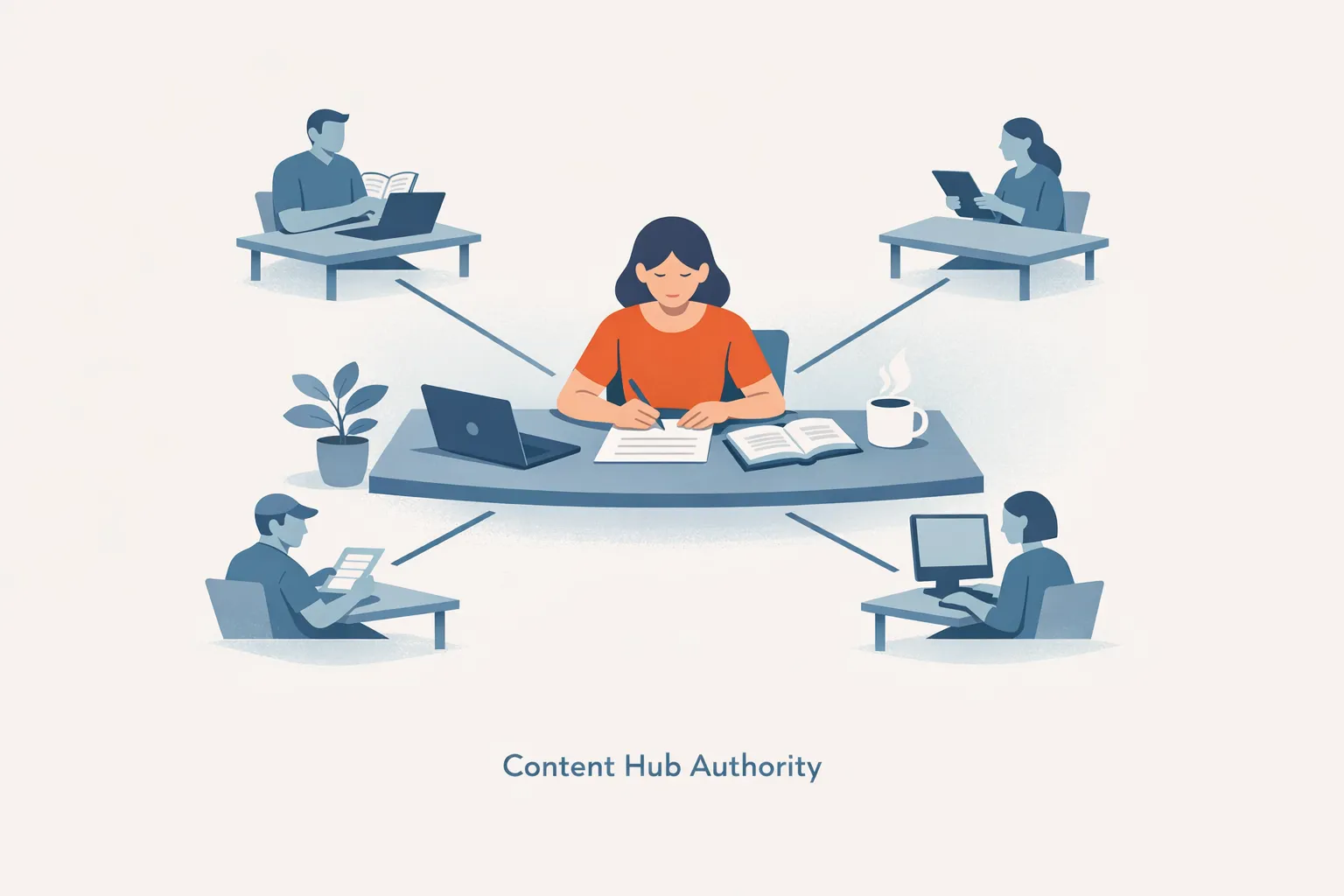
Credibility Through Pillar-Cluster Evidence
- Pillar-page + cluster architecture signals topical authority and supports scalable growth. Source
- Pillars typically 3,000–5,000 words; clusters 1,000–2,500 words each. Source
- Internal linking discipline with descriptive anchor text improves crawlability and topic signaling. Source
- Well-structured pillar pages improve user navigation via a table of contents and jump links. Source
- Timelines for indexing and engagement often show 1–3 months for initial signals, with mid-term gains and long-term growth. Source
- A pillar-cluster model can yield substantial traffic and lead improvements, including notable case-level increases. Source
- Pillars enable cross-channel amplification by providing reusable assets for webinars, emails, and social programs. Source
- Pillar content supports voice search and AI assistant responses by answering core questions comprehensively. Source
- Topical authority is built by covering a core topic with 15–25 subtopic articles; clusters expand depth. Source
- Visuals and examples boost comprehension and retention on pillar pages. Source
- Updating pillar pages regularly maintains evergreen relevance and signals freshness. Source
- Governance and quarterly maintenance routines are essential to keep pillars aligned with business goals and audience needs. Source
- Topic mapping reduces content sprawl and avoids cannibalization by clarifying pillar vs cluster scope. Source
- Pillar pages help search engines understand relationships via internal linking, improving crawlability and indexing. Source
Foundational References for Pillar Page Strategy
- Pillar-Cluster Architecture overview: https://content-zen.com
- Hub and spokes model and topical authority: https://content-zen.com
- Internal linking discipline and descriptive anchor text: https://content-zen.com
- Table of contents and jump links for navigation: https://content-zen.com
- SEO signals and topical authority benefits: https://content-zen.com
- Evergreen pillar content and long term value: https://content-zen.com
- Governance and maintenance cadence for pillars: https://content-zen.com
- Content mapping and cluster planning best practices: https://content-zen.com
- Visuals and diagrams to illustrate pillar cluster relationships: https://content-zen.com
- Measurement and ROI framing for pillar clusters: https://content-zen.com
- Local and geo pillar strategies for regional queries: https://content-zen.com
- Audience and topic mapping for scalable content programs: https://content-zen.com
Use these sources to ground claims in established patterns, blend multiple perspectives, and validate key metrics. Attribute ideas to the sources when presenting data or framework descriptions, verify any numerical guidance against the broader industry context, and refresh references as the topic evolves. Treat the content as a structure guiding decision making, not as a catalog of absolute truths. When in doubt, rely on the collective guidance these references provide and integrate it with your organization specific insights.
What readers ask next about pillar page strategy
- How does pillar page strategy improve topical authority? Pillar page strategy centralizes breadth by establishing a broad, authoritative hub that anchors the core topic and sets clear boundaries for related subtopics, which signals to search engines that the site owns a topic. Cluster pages extend depth on specific angles, questions, and workflows, providing in depth exploration that would overwhelm a single page and creating opportunities for precise keyword capture. Internal linking between the pillar and clusters creates consistent topical signals, improves crawlability, and guides readers through a logical progression from overview to detail.
- What is a typical pillar page length? A pillar page runs roughly three thousand to five thousand words, designed to offer a comprehensive overview while remaining navigable. Cluster articles usually range from one thousand to two thousand five hundred words, allowing deep dives into subtopics without duplicating pillar content. Wording and layout should emphasize skimmability with a table of contents and jump links to major sections.
- How should pillar and clusters be structured for best results? Structure matters: begin with a skimmable introduction, present a table of contents with jump links, then segment the pillar into major subtopics that map to clusters. Each cluster should stand alone with a clear focus, but include links back to the pillar and to related clusters to form a cohesive web. Use consistent headings, anchor text, and visuals to illustrate relationships and reduce cognitive load for readers.
- How do you choose core pillar topics? Choose topics that align with business goals and audience needs, and that are broad enough to support multiple subtopics. Start from existing content that already shows demand or traffic and identify gaps where cluster coverage is missing. Map potential subtopics as clusters and ensure they address common questions or workflows readers pursue after engaging with the pillar.
- How do you measure pillar page success? Measurement should cover engagement signals like time on page and pages per session, plus traffic and rankings for pillar and cluster content. Backlinks, conversions, and the growth pattern of topic coverage provide a broader sense of authority and ROI. Set quarterly targets and monitor momentum, updating clusters and pillar signals as data indicates.
- How often should pillar content be updated? Pillar content benefits from a regular refresh cadence to preserve evergreen relevance. A quarterly review cadence is common, with updates to data, examples, and any new subtopics that have emerged. These updates should be documented and reflected in the sitemap and internal links to maintain navigational coherence.
- How should internal linking signal topical authority? Internal linking should use descriptive anchor text that clearly reveals the destination topic and its relation to the pillar. The pillar must link to all clusters, and clusters should link back to the pillar and to related clusters to reinforce the topic graph. Consistency and governance are essential to prevent drift and to keep signals aligned with business goals.
- Can pillar pages support local or geo SEO? Yes, local context can be integrated by adding geo specific subtopics and regional content within the pillar and clusters. Local content within the hub helps capture regionally relevant keywords and improves visibility in local search. Ensure regional topics remain coherent with the global topic structure to avoid fragmentation.
- What are common pitfalls to avoid? Common pitfalls include topics that are too broad or too narrow, which disrupt hierarchy. Other risks are missing TOC or jump links, orphan pages, and content cannibalization among pillar and clusters. Poor user experience due to clutter or slow performance can undermine authority regardless of depth.
- How do you start implementing pillar cluster? Implementation starts with topic mapping and keyword research to define core topics and supporting clusters. Draft a content map that shows pillar topics at the center and 8 to 12 clusters around it. Then draft the pillar, develop clusters, and establish a disciplined internal linking plan before launch.
- How can you ensure the plan scales with site growth? Scalability comes from a formal governance model and repeatable templates for outlines and briefs. Regular audits, documentation, and a predictable production cadence keep signals coherent as the topic universe expands. Automated checks for broken links and consistent anchor text help maintain signal quality at scale.
- What role do visuals play in pillar pages? Visuals such as charts, diagrams, and short videos aid comprehension and retention. They should illustrate relationships within the pillar cluster network and support explanations without distracting from the text. All visuals must have descriptive alt text to support accessibility and SEO.