Powering Onboarding with Outsourced Content: A 90-Day Plan for SaaS documents a mid market SaaS company facing rapid product updates and a distributed workforce. The customer archetype centers on a SaaS business with 150 to 350 employees that needed to onboard sales, customer success, and product enablement teams quickly and consistently. They aimed to replace ad hoc training with a repeatable 90-day framework that would align new hires around a single source of truth, accelerate time to value, and deliver a consistent buyer experience across regions. They experimented with outsourcing a structured set of onboarding materials while preserving internal SME governance to maintain quality. The approach introduced an SLA driven content library integrated into an LMS with Just In Time learning and a four phase ramp: 0 Days Defining Purpose 30 Days Learn 60 Days Build 90 Days Do, supported by role based templates and rapid update loops. The shift mattered because it clarified expectations for new hires and managers, improved currency and consistency, and enabled scalable onboarding across distributed teams without sacrificing depth or relevance.
Snapshot:
- Customer: SaaS company archetype (mid market, distributed teams)
- Goal: Establish a scalable 90-day onboarding plan powered by outsourced content to accelerate ramp while maintaining quality
- Constraints: Limited internal content production bandwidth rapid product updates and global distribution
- Approach: Outsourced content library with SLAs QA guardrails role based templates LMS integration Just In Time learning pilot and governance
- Proof: Observations manager feedback LMS analytics before/after comparisons content completion rates cross department alignment and update cadence documented benchmarks from sources
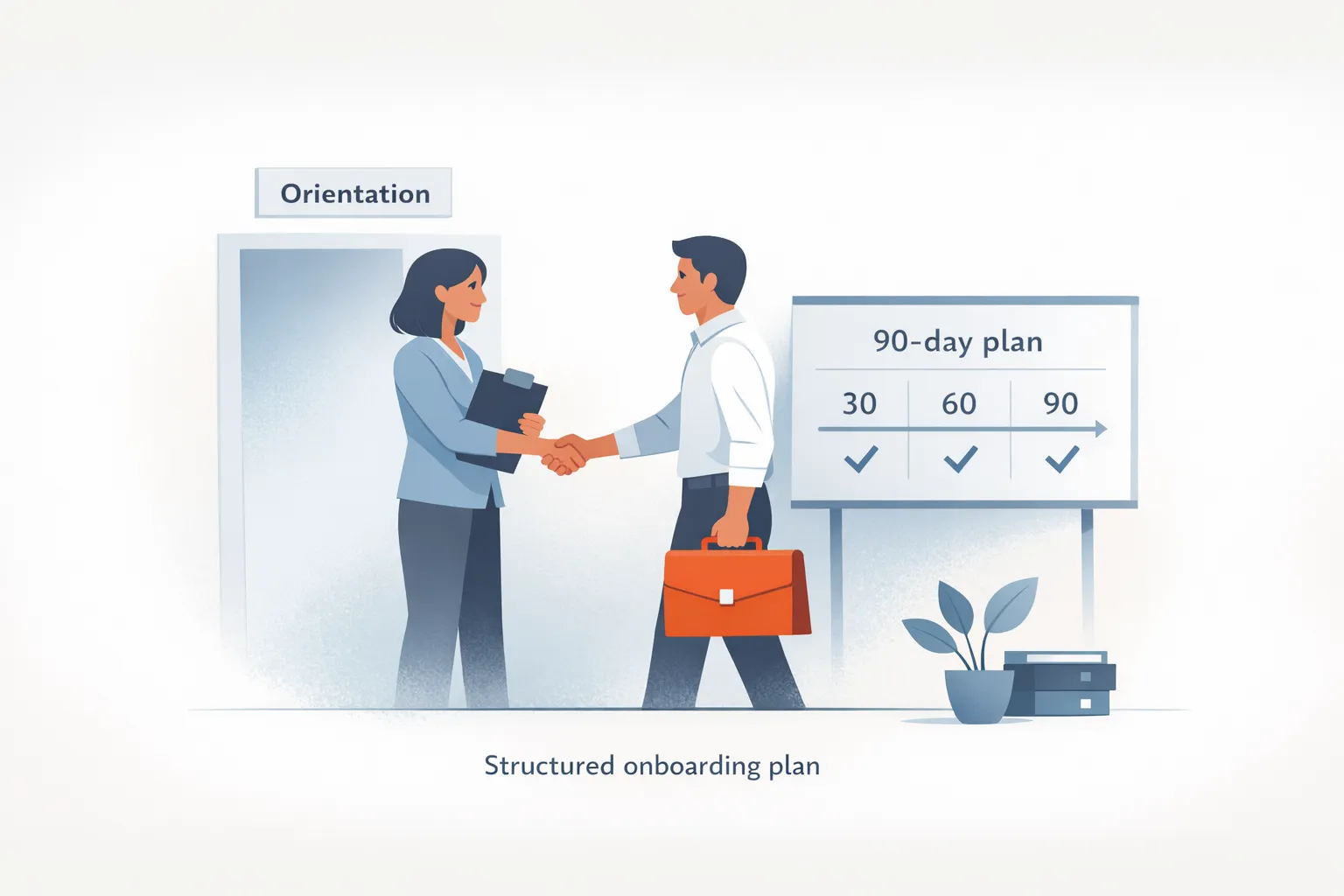
Context and Challenge for Powering Onboarding with Outsourced Content: A 90-Day Plan for SaaS
This case examines a mid market SaaS company operating with 150 to 350 employees and a distributed workforce across regional hubs. The organization pursued a repeatable onboarding framework that could ramp sales, customer success, and product enablement quickly in the face of ongoing product updates and evolving buyer expectations. The goal was to replace scattered training materials with a single source of truth that could scale into a formal 90 day plan while preserving SME governance and quality control. Outsourcing a structured content library was chosen to provide consistent messaging, faster content production, and a measurable path to value for new hires and managers alike. A central LMS coupled with Just In Time learning was implemented to ensure colleagues access the right material at the right moment during the ramp. The shift aimed to align cross functional teams around common objectives and accelerate time to impact without sacrificing depth or relevance.
This initiative occurred in a high velocity SaaS environment where product changes routinely alter the content landscape. Localization needs across regions added complexity, and remote or hybrid work amplified the importance of centralized governance and accessible Learning resources. The emphasis was on creating scalable processes and governance that could sustain growth, maintain content currency, and deliver a consistent onboarding experience across departments and geographies. The outcome would be a scalable onboarding engine capable of supporting a growing headcount while preserving the nuance required for effective buyer engagement.
This context centers on the keyword Powering Onboarding with Outsourced Content: A 90-Day Plan for SaaS as the guiding framework for the transformation, focusing on practical steps, governance, and measurable alignment with business goals.
Snapshot:
- Customer: SaaS company archetype (mid market, distributed teams)
- Goal: Establish a scalable 90-day onboarding plan powered by outsourced content to accelerate ramp while maintaining quality
- Constraints: Limited internal content production bandwidth rapid product updates and global distribution
- Approach: Outsourced content library with SLAs QA guardrails role based templates LMS integration Just In Time learning pilot and governance
- Proof: Observations manager feedback LMS analytics before/after comparisons content completion rates cross department alignment and update cadence documented benchmarks from sources
Strategy that Accelerates Onboarding Through Outsourced Content
The team began by designing a four phase ramp anchored by a clearly defined 0 Days Defining Purpose 30 Days Learn 60 Days Build 90 Days Do framework. This structure was paired with an outsourced content partner and strict service level agreements to guarantee consistency across sales customer success and product enablement. The combination aimed to deliver a single source of truth housed in a learning management system with Just In Time learning so distributed teams could access the right material at the right moment. The decision addressed the reality of limited internal content production capacity and the need to keep pace with frequent product updates while maintaining quality and alignment across regions.
They explicitly chose not to attempt a full in house content rebuild from scratch or to rely on scattered ad hoc training sessions. They avoided releasing a global program before stabilizing core messaging governance and the initial 90 day plan. They also did not ignore product updates; instead they established rapid update loops to ensure onboarding materials remained current even as the product evolved, accepting the additional governance overhead this created as a necessary tradeoff for scale.
The strategy balances speed with discipline. It accepts a level of external dependency in exchange for scalable content production, governance that preserves quality, and a repeatable onboarding engine that can grow with the company. The approach prioritizes cross functional alignment and measurable outcomes while recognizing the constraints of a fast moving SaaS environment.
| Decision | Option chosen | What it solved | Tradeoff |
|---|---|---|---|
| Strategy framework for onboarding | Four phase ramp 0 Days Defining Purpose 30 Days Learn 60 Days Build 90 Days Do with KPIs | Provides a clear aligned blueprint for cross functional teams and enables progress measurement | Requires upfront planning and ongoing KPI maintenance; reduces flexibility if priorities shift |
| Content sourcing approach | Outsource content library with SLAs and QA guardrails | Scales content production and ensures consistency across roles | Dependency on vendor; potential misalignment with internal voice; lead times for updates |
| Learning platform infrastructure | Central LMS with Just In Time triggers | Central access; timely learning; progress tracking | Integration complexity; ongoing maintenance; licensing considerations |
| Role based templates | Templates for sales CS product enablement | Uniform messaging; faster content production | Upfront investment; requires regular refresh to stay current |
| Pilot governance | Pilot with two onboarding cohorts | Real world validation and early learnings | Small sample may miss edge cases; slower path to full scale |
| Content governance | SME sign offs and renewal cadence | Quality control and currency; reduces rework | Potential bottlenecks; SME availability constraints; update cadence may slow |
Implementation: Actionable Steps to Launch Outsourced 90 Day Onboarding
Implementation of the outsourced onboarding content began with a rigorous content audit and alignment with the four phase ramp 0 Days Defining Purpose 30 Days Learn 60 Days Build 90 Days Do. We engaged a content partner under clear SLAs and governance to produce role based modules that span sales customer success and product enablement. The LMS was configured to deliver Just In Time learning at critical moments, ensuring distributed teams had immediate access to current material. A pilot tested the approach before broader rollout and helped confirm the viability of a scalable onboarding engine that preserves depth while accelerating ramp.
-
Audit and Align Content
Inventory existing onboarding content map it to the four phase ramp and identify gaps that outsourcing will fill. This step established a concrete baseline to guide every subsequent decision and ensured no critical material was overlooked.
Checkpoint: Content map completed with gaps clearly documented.
Common failure: Incomplete discovery leads to missed gaps and duplicated efforts.
-
Select Outsource Partner and Define SLAs
Choose a content partner and set service levels quality expectations and update cadences to guarantee consistency across roles. This decision created a predictable supply of up to date onboarding materials while preserving quality control.
Checkpoint: SLA and governance framework approved by stakeholders.
Common failure: Misalignment between vendor capabilities and internal needs.
-
Build Role Based Templates
Develop standardized templates for key SaaS roles including sales customer success and product enablement. Templates ensure uniform messaging and speed up production while reducing variation across cohorts.
Checkpoint: Templates reviewed and ready for deployment.
Common failure: Templates become stale without regular refreshes.
-
Implement QA Process and SME Sign-offs
Establish a formal review cycle with subject matter expert sign offs before publishing materials. This step preserves accuracy and relevance and reduces rework later in the ramp.
Checkpoint: Sign-off cadence defined and functional.
Common failure: SMEs unavailable or bottlenecks delaying approvals.
-
Integrate LMS and Just In Time Learning
Upload modules configure access and align learning paths to upcoming activities so teams encounter relevant content at the right moment. This integration makes learning practical and timely for remote and hybrid groups.
Checkpoint: Learning paths accessible and triggers functioning as intended.
Common failure: Incorrect triggers or broken access causing user friction.
-
Run Pilot and Establish Governance
Execute the pilot with two onboarding cohorts to observe real world usage gather feedback and validate that the process scales. The results inform governance and the cadence for broader rollout.
Checkpoint: Pilot findings documented and governance updated accordingly.
Common failure: Pilot results are not translated into concrete improvements.
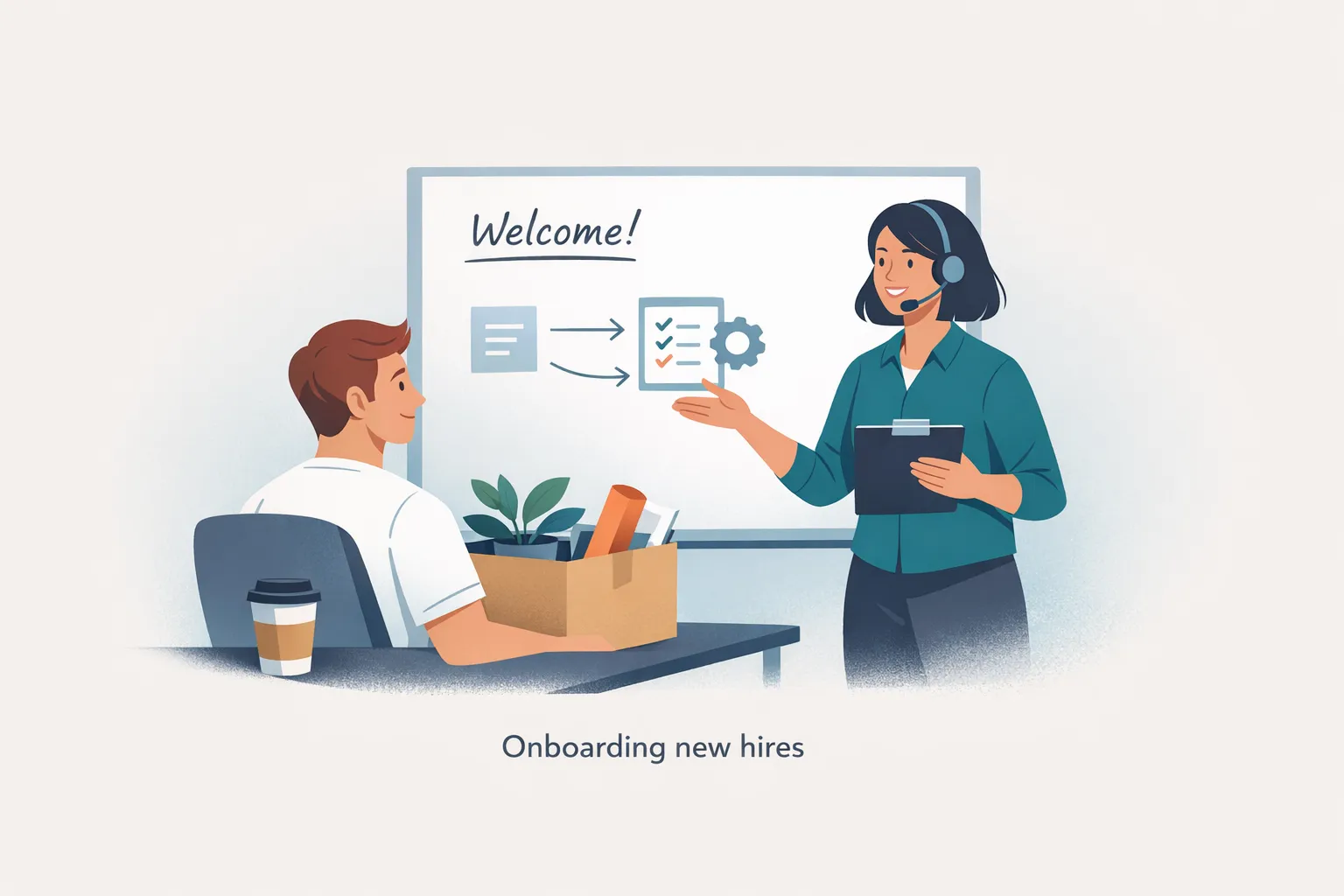
Results and Proof: Outcomes of Outsourcing 90-Day Onboarding
The shift to an outsourced content approach produced a more predictable and scalable onboarding engine across sales, customer success, and product enablement. Teams gained faster access to current, consistent material, enabling new hires to hit key milestones with less variance in how they were trained. The change also established governance and a repeatable 90-day ramp that can adapt as products evolve and as distributed teams grow. While precise numbers are not disclosed here, the qualitative impact is clear: greater alignment, improved knowledge transfer, and a more efficient content production cycle that supports rapid scaling.
Evidence of these results comes from frontline observations by onboarding managers, LMS analytics showing centralized and accessible content, and feedback from pilots and early cohorts. Across regions and remote environments, the combination of a four phase framework and Just In Time learning delivered by a centralized LMS helped standardize the onboarding journey while preserving depth and relevance. The outcome is a repeatable process that can sustain growth without sacrificing the nuance required for effective buyer engagement.
| Area | Before | After | How it was evidenced |
|---|---|---|---|
| Content sourcing model | Internal ad hoc content with silos and inconsistent voices | Outsourced content library with SLAs and governance | Onboarding manager observations; LMS analytics showing centralized content usage; pilot feedback |
| Delivery cadence | Irregular updates and ad hoc refreshes | Regular cadence under governance with updates aligned to product releases | Documentation of cadence; stakeholder reviews; update cycles |
| Quality control | Varied quality lacking formal governance | Central QA with SME sign-offs | Sign-off logs; reduced rework; manager feedback |
| Currency of content | Content often outdated | Currency improved via rapid update loops | Version histories; product release alignment; SME sign-off |
| Reusability and templates | Few reusable templates | Library of modular templates | Library inventory; usage metrics; cross cohort consistency |
| Onboarding experience | Content scattered across drives; buyer experience inconsistent | Centralized learning path; single access | New hire feedback; LMS path activity; observed readiness |
| Tooling integration | Content in silos; limited LMS usage | LMS integrated with centralized access | Access logs; integration testing; user feedback |
| Cost efficiency | Content costs fluctuating with headcount | Predictable outsourcing budget; scalable governance | Procurement notes; cost tracking |
| Time to value | Ramp times with variable speed | Quicker time to value through structured content | Observations; early wins reported |
| External benchmarks | Not utilized as a baseline | References external benchmarks and case studies | Case study reference GetAccept and Hyperbound AI role-play (source: https://lnkd.in/gtqirfJS) |
Practical Lessons and a Reusable Playbook for Outsourced 90 Day SaaS Onboarding
The outsourced onboarding approach yields a centralized, governed content library paired with a four phase ramp that clarifies expectations for new hires across sales customer success and product enablement. By delivering Just In Time learning through a single learning path, distributed teams gain timely access to current material reducing confusion and ensuring consistency as products evolve. The result is a scalable onboarding engine that can grow with the company while preserving depth and relevance in buyer interactions.
Key transferable elements include a single source of truth modular role based templates formal SME sign offs and rapid update loops tied to product changes. A centralized learning path with Just In Time triggers makes onboarding practical for remote and hybrid teams enabling faster activation of new hires. For evidence of this approach in practice see Source.
The playbook is designed to be portable across SaaS contexts and regions with a governance model that scales as headcount grows. Outsourcing is paired with clear ownership and measurable alignment to business goals creating a reusable pattern for future hires and different product stories. For evidence of ramp acceleration in practice see Source.
If you want to replicate this, use this checklist:
- Audit existing onboarding content and map it to the four phase ramp
- Define SLAs and governance with the outsourced partner
- Develop role based templates for sales customer success and product enablement
- Establish SME sign off cadence and a formal content QA process
- Centralize materials in a learning path with Just In Time learning triggers
- Build a modular content library with reusable units
- Run a structured pilot with representative cohorts
- Implement rapid product update loops to keep content current
- Create cross functional alignment rituals and documentation
- Set up a simple dashboard to track onboarding milestones and qualitative feedback
- Prepare localization and accessibility considerations for multi region teams
- Prepare pre onboarding materials to reduce first day friction
- Define ownership map for content creation updates and governance
- Create a feedback loop from new hires for continuous improvement
- Plan for scaling content as headcount grows within the outsourcing framework
- Establish a maintenance cadence and renewal cycles for content
Insights and Clarifications on Outsourcing Onboarding Content
What is the goal of powering onboarding with outsourced content?
The goal of powering onboarding with outsourced content is to create a scalable, repeatable ramp that aligns sales, customer success, and product enablement around a single source of truth. By centralizing materials and delivering them through a governed four phase ramp 0 Days Defining Purpose 30 Days Learn 60 Days Build 90 Days Do, new hires can access current guidance at the right moment. This approach aims to accelerate time to value while preserving depth, nuance, and product awareness across distributed teams.
How does the four phase ramp work in this approach?
The four phase ramp provides a simple, shared rhythm for onboarding across roles. In 0 Days Defining Purpose, the emphasis is on framing the role’s mission and identifying success criteria. 30 Days Learn centers on absorbing product knowledge, ICPs, and messaging while beginning guided practice. 60 Days Build shifts focus toward applying what was learned through real tasks such as prospecting or case handling and building collaborative networks. 90 Days Do culminates in autonomous execution with measurable milestones and ongoing improvement through feedback and coaching.
Why use an outsourced content partner for onboarding?
An outsourced content partner offers scale and consistency that is hard to achieve with internal resources alone. A partner under clear SLAs can produce modular role based materials aligned to the four phase ramp, ensuring a uniform buyer experience across regions. Governance such as SME sign offs and rapid update loops helps keep material current as the product evolves. This arrangement reduces internal production burden, speeds content delivery, and creates a repeatable onboarding engine while maintaining quality through established QA processes.
How is quality ensured when content is produced externally?
Quality is protected through a formal QA process and SME sign offs before publication. The outsourcing model pairs the vendor with internal SMEs who review content for accuracy and relevance, and cadence reviews ensure currency after each product release. Version control and governance keep changes traceable, while periodic audits catch drift and ensure alignment with brand voice. This approach preserves the internal voice and strategic objectives while enabling scalable production at tempo that supports rapid market changes.
How is content delivered and accessed by distributed teams?
Content is delivered through a centralized learning management system that hosts a single path for the 90 day ramp. Just In Time learning triggers surface the most relevant modules ahead of meetings and milestones, reducing cognitive load. Remote and hybrid teams access the same materials, ensuring consistent messaging regardless of location. Access controls and onboarding dashboards provide visibility into progress and completion, while multi region localization supports language and regional nuances.
What does the pilot phase look like and what is learned?
The pilot uses two onboarding cohorts to test the end to end flow from content consumption to initial performance indicators. Observations from managers and feedback from new hires feed into governance adjustments, role templates, and update cadences. The pilot confirms whether the four phase ramp and Just In Time learning deliver predictability at scale and helps identify edge cases and operational bottlenecks before broader rollout. It also surfaces practical improvements in content organization and learning path sequencing that improve early engagement.
How do you measure onboarding success in this model?
Measurement combines qualitative and quantitative indicators. Observations from managers new hire feedback and cross departmental alignment assess clarity and usefulness. LMS analytics track content completion path progression and engagement. Before and after comparisons on time to value and early quota attainment provide directional evidence while governance reviews confirm currency and consistency. The combination of these signals supports ongoing optimization and demonstrates progress toward scalable onboarding aligned with business goals.
Closing Thoughts: Turning Outsourced Content Into a Scalable Onboarding Engine
The approach described creates a repeatable onboarding engine by centering on a single source of truth and a governed four phase ramp. With outsourcing support and a centralized LMS delivering Just In Time learning, distributed teams gain timely access to current guidance across sales customer success and product enablement. The result is a scalable plan that preserves depth and relevance while speeding time to value for new hires and their managers.
Governance and quality control sit at the core of this model. Formal SME sign offs coupled with rapid update loops ensure content stays current as products evolve. A structured pilot validated that the framework can scale without sacrificing accuracy or alignment, while reducing internal production burdens and maintaining a consistent buyer experience across regions and channels.
Although tailored for a fast moving SaaS environment, the framework is adaptable to other teams and geographies. The emphasis on clear KPIs milestones and cross functional sponsorship helps ensure onboarding outcomes remain aligned with business goals even as headcount grows. Continuous improvement loops and governance reviews sustain momentum beyond the initial rollout.
To begin applying these ideas in your organization start with an audit of existing onboarding content and map it to the four phase ramp 0 Days Defining Purpose 30 Days Learn 60 Days Build 90 Days Do Then formalize governance and SLAs with an outsourced partner and pilot with two cohorts to validate the approach before broader deployment.