Begin by gathering the top SERP results for your core topic and noting recurring themes, questions, and content formats. From those patterns, define 3 to 5 pillar topics that reflect audience intent and business goals. Under each pillar, extract subtopics and FAQs that appear across results. Assemble a visual map or spreadsheet linking pillars to clusters and to specific articles, ensuring each page targets a unique angle to avoid cannibalization. Build a simple internal linking plan that guides readers from pillar pages to cluster content and back, reinforcing topical depth. Validate the map with stakeholders, adjust for new SERP signals, and set a cadence for refreshes. The simplest correct path is: collect data, identify pillars, fill clusters, map relationships, assign owners, and begin content planning against the structure.
This is for you if:
- You manage content strategy and want a scalable topical map
- You have access to SERP data and want to convert patterns into structure
- You need to align content with audience intent and business goals
- You collaborate with SEO, content, and product teams
- You want to reduce keyword cannibalization and improve internal linking
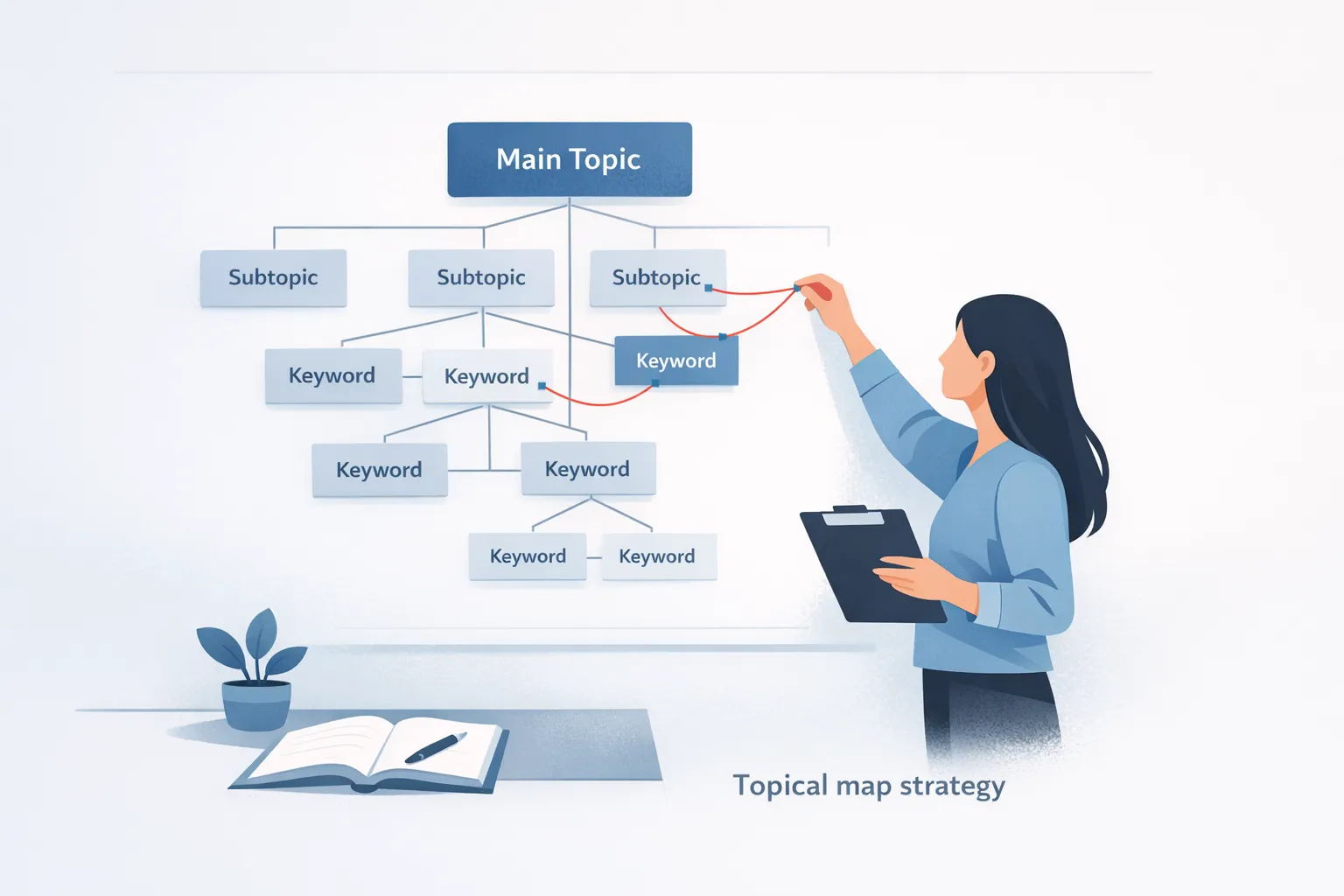
Preparing to map SERP patterns into a topical structure
Prerequisites matter because they ensure the mapping process starts from solid data, clear goals, and agreed ownership. By collecting reliable SERP patterns and aligning them with business objectives, you reduce wasted effort and create a scalable framework you can repeat. This upfront preparation yields faster decisions, cleaner pillar and cluster definitions, and a more actionable content plan that adapts as SERP signals evolve.
Before you start, make sure you have:
- Clear core topic and alignment with business goals
- Access to current SERP data from top ranking pages
- A keyword research tool with volume and intent data
- A plan for pillar pages and content clusters
- A mapping tool such as a mind map or spreadsheet
- Stakeholders available for review and sign-off
- A method to track data sources and decisions
- A basic content inventory mapped to topics
- An internal linking strategy to connect pillars and clusters
- Competition data to identify gaps and opportunities
- A process or template for documenting decisions and rationale
- A plan to manage ownership and timelines for execution
- Access to SERPrecon for SERP pattern extraction SERPrecon
Execute a step by step plan to build a topical map from SERP patterns
This procedure guides you through turning SERP patterns into a usable topical map that informs content planning and internal linking. Expect a focused workflow that begins with data collection and ends with a ready to implement plan. You will identify pillars and clusters from real results, define subtopics and questions, and lay out relationships in a visual map or spreadsheet. The process emphasizes clarity and repeatability so your team can refresh the map as SERP signals evolve without losing momentum.
-
Gather SERP patterns
Identify the top results for your core topic. Note recurring themes questions and content formats. Compile them into a working set that highlights pillars and clusters. Consider featured snippets and related queries to capture intent. SERP pattern extraction can be accelerated with SERPrecon. Source
How to verify: Patterns cover pillars and common questions.
Common fail: Relying on a single source or missing key SERP features.
-
Identify pillars from patterns
Review the gathered SERP patterns and pick the most recurring themes as pillar topics. Ensure each pillar represents a broad area that can host multiple subtopics. Label pillars with clear intents aligned to user needs. Avoid duplicating topics across pillars.
How to verify: Pillars cover distinct broad areas with defined intent.
Common fail: Pillars overlap or miss core domains.
-
Define subtopics and questions
Under each pillar, list subtopics that appear in SERP results and map common questions. Capture long tail terms and FAQs that reveal user intent. Avoid duplicating subtopics across pillars.
How to verify: Each subtopic ties to a specific pillar and intent.
Common fail: Subtopics are too thin or duplicated.
-
Cluster topics into groups and map relationships
Group related subtopics into clusters that feed pillar content. Define parent child and sibling relationships to reflect navigation. Create a preliminary internal linking concept that guides readers through depth.
How to verify: Cluster map shows clear non overlapping connections.
Common fail: Relationships are ambiguous or circular.
-
Create a visual topical map or spreadsheet
Represent pillars clusters and relationships visually or in a structured sheet. Include a legend and color coding for ease of use. Share with the team for quick feedback.
How to verify: Map is legible to external stakeholders and mirrors SERP patterns.
Common fail: Map is cluttered or hard to interpret.
-
Prioritize topics by relevance and demand
Score topics based on audience relevance search volume and competitive intensity. Focus content plans on high impact pillars and clusters first. Adjust priorities as SERP signals change.
How to verify: A ranked list with rationale and data sources.
Common fail: Low value topics consume resources.
-
Plan internal linking between pillar and cluster content
Design an internal linking plan that connects pillar pages to clusters and cross links between related articles. Ensure anchor text supports the topic and user intent. Prepare a navigation flow that guides users through depth.
How to verify: Linking plan aligns with the visual map and content calendar.
Common fail: Missing links or inconsistent anchors.
-
Validate and finalize the map with stakeholders
Present the map to stakeholders gather feedback and update accordingly. Confirm alignment with business goals and content strategy. Create a concise execution plan with owners and timelines.
How to verify: Stakeholder sign off and a documented action plan.
Common fail: Going forward without consensus.
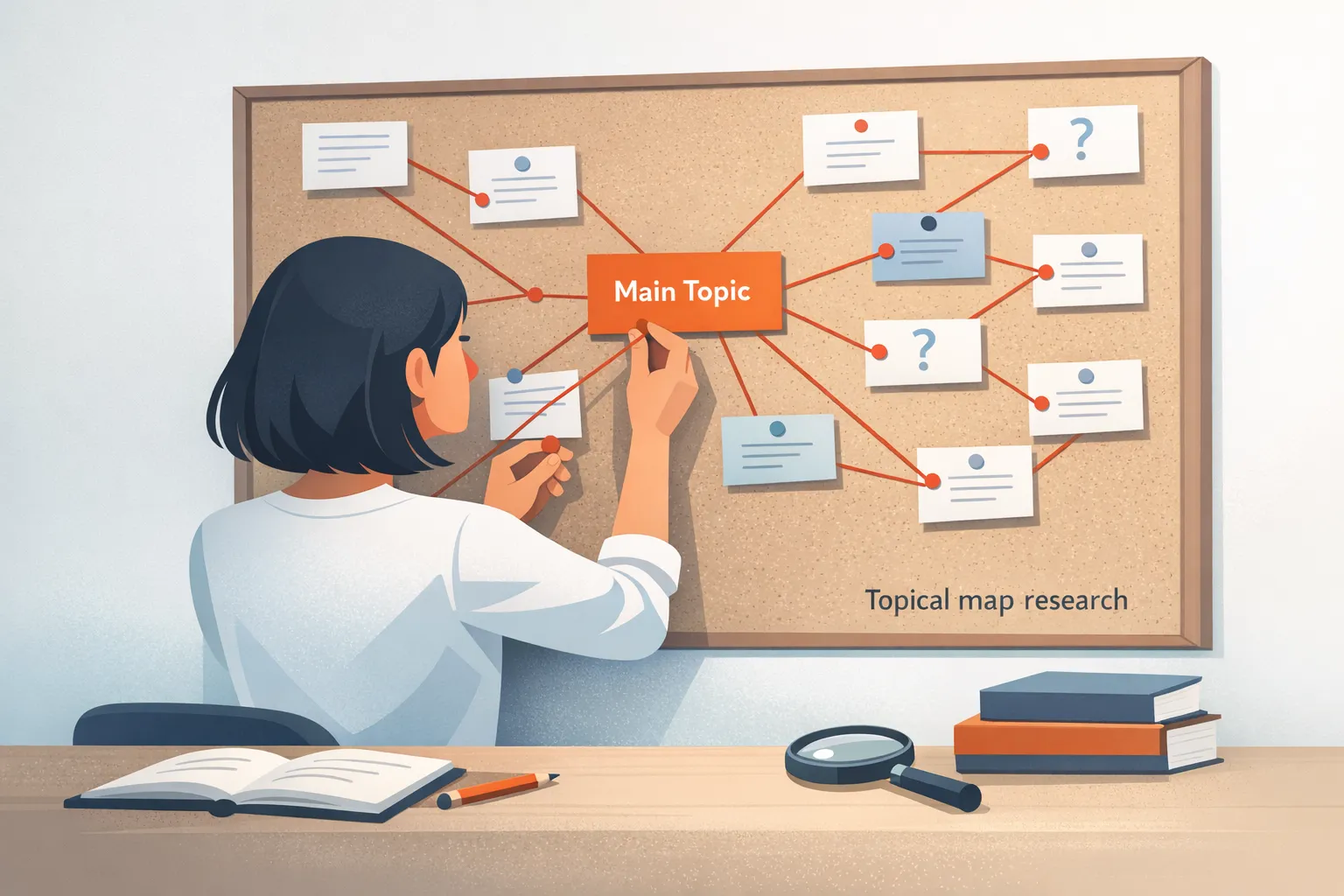
Verification: Confirm the topical map holds under SERP patterns
Verification confirms the map truly reflects SERP patterns and supports a scalable content plan. You will check that pillars and clusters cover the core topic without gaps, that internal links guide users through depth, and that stakeholders have signed off. Diligent documentation of data sources and decisions ensures traceability and repeatability. Expect a process that accommodates evolving SERP signals and yields a map that is easy to understand, auditable, and ready for execution. Use SERPrecon to surface gaps and validate patterns. Source
- Pillars and clusters align with audience intent and business goals
- Internal linking plan connects pillars to clusters coherently
- Coverage includes all major topics and key subtopics
- Unique angles prevent keyword cannibalization
- Data sources and decisions are documented for traceability
- Stakeholders have reviewed and signed off on the map
- Map is easy to understand and share with the team
- Plan is ready to guide content creation and updates
| Checkpoint | What good looks like | How to test | If it fails, try |
|---|---|---|---|
| Pillar coverage complete | Pillars represent distinct broad topics with clear intents | Review against business goals and audience needs | Add or reframe pillars to cover missing areas |
| Internal linking plan approved | Pillars link to clusters and related articles in a logical flow | Inspect the linking schema and navigation paths | Adjust anchor text and link placement for clarity |
| No topic cannibalization | Each page targets a unique topic and intent | Run a content audit for overlapping keywords | Reassign intents or split topics to reduce overlap |
| Stakeholder sign-off obtained | Formal approval documented | Check for sign-off records and comments | Schedule a review session and update the map accordingly |
Troubleshooting: quick fixes for a shaky topical map
This brief guide helps you rapidly diagnose and fix issues that keep a topical map from delivering depth and usability. When patterns shift or structures feel inconsistent you can apply targeted actions to restore alignment between pillars clusters and navigation. Use concrete steps to refine intents prevent cannibalization and maintain a map that remains readable and adaptable as SERP signals evolve.
-
Symptom:
Pillars feel too broad or vague
Why it happens: Core topics were defined at a high level without clear boundaries or intents.
Fix: Redefine each pillar with a specific user intent and a bounded scope then update the map accordingly.
-
Symptom:
Clusters overlap or duplicate content
Why it happens: Related topics are split across multiple pillars or have indistinct boundaries.
Fix: Consolidate overlapping clusters rename topics and ensure each cluster aligns to a single pillar.
-
Symptom:
No pillar content exists for a core topic
Why it happens: Pillars were identified but not paired with dedicated pillar pages.
Fix: Create pillar pages with clear topic scope and link them to related clusters.
-
Symptom:
Keyword cannibalization across pages
Why it happens: Unique keywords are not assigned to pages or intents clash.
Fix: Assign distinct keywords and intents to each page and review meta and header usage for clarity.
-
Symptom:
Missing key subtopics or questions in SERP patterns
Why it happens: Data sources or scans were incomplete or selective.
Fix: Expand data sources run a new SERP scan and incorporate frequently asked questions and long tail terms.
-
Symptom:
Internal linking structure is weak or confusing
Why it happens: Navigation paths were not defined or updated after changes.
Fix: Define clear pillar to cluster and within cluster linking paths and implement consistent anchor text.
-
Symptom:
Data sources lack traceability
Why it happens: Decisions are not documented or sources are not stored in a shared location.
Fix: Create a data source log document attach sources and timestamp decisions for each map change.
-
Symptom:
Stakeholder sign-off is missing
Why it happens: Review cycles were skipped or communicated issues were not resolved.
Fix: Schedule a quick review session present the current map and collect formal sign-off before proceeding.
-
Symptom:
The map feels too complex to read
Why it happens: The visualization includes too many elements or inconsistent labeling.
Fix: Simplify visuals remove extraneous detail use a single legend and create a concise summary version for executive reviews.
What readers ask next about building a topical map from SERP patterns
- How do I start collecting SERP patterns for a topic? Gather the top ranking pages for your core topic, note recurring pillars subtopics FAQs and content formats, and capture intent signals to shape initial pillars and clusters.
- How do I define pillars and clusters from SERP data? Pillars represent broad topics with defined intent, while clusters are grouped subtopics that support each pillar, ensuring unique coverage and minimal overlap.
- How should I structure the topical map visually? Use a mind map or spreadsheet with pillar nodes connected to cluster branches and a legend that explains parent child and sibling relationships.
- What counts as a good internal linking plan for a topical map? Link pillars to their clusters and related articles using descriptive anchor text that reflects topic depth and user intent.
- How can I validate the topical map with stakeholders? Present the map in a review session, collect feedback, adjust intents and coverage, and secure sign off before publishing.
- What are common mistakes to avoid when building from SERP patterns? Common mistakes include keyword cannibalization overlapping topics vague pillar definitions and relying on a single data source.
- What tools should I use during the process? Use SERP analysis tools and keyword research software plus mind mapping tools and keep a data source log for traceability.
- How often should I refresh the topical map? Refresh when SERP patterns shift significantly or after major content updates to maintain depth and relevance.
What readers ask next about building a topical map from SERP patterns
-
How do I start collecting SERP patterns for a topic?
Begin by gathering the top SERP results for your core topic across related queries. Note recurring pillars subtopics FAQs and content formats to understand audience needs. Capture intent signals such as questions and comparisons, then draft 3 to 5 broad pillars aligned with business goals. Outline clusters under each pillar with well defined subtopics and plan initial internal links.
-
How should I define pillars and clusters from SERP data?
Define pillars as broad topic areas with clear intent, and assign them business relevance. From the SERP patterns, ensure each pillar can host multiple subtopics while maintaining distinct boundaries. Clusters are the related subtopics that support a pillar, grouped by shared intent and search behavior. Keep pillars non overlapping to prevent cannibalization and map each cluster to a single pillar.
-
How should I structure the topical map visually?
Structure the topical map visually using a simple map or spreadsheet. Show pillars as top nodes connected to clusters as child nodes with clear labels for parent and child relationships. Add a legend that explains intents and navigation paths. The result should be readable at a glance and scalable for adding new topics as patterns evolve.
-
What counts as a strong internal linking plan for topical maps?
A strong plan links pillar pages to their clusters and connects related articles to reinforce depth. Use descriptive anchor text that reflects topic relevance and intent, and favor links that move readers toward deeper content or conversions. Ensure navigation paths support topic discovery without creating excessive clicks, and maintain consistency across pages to sustain a coherent information architecture.
-
How can I validate the topical map with stakeholders?
Schedule a review session with key stakeholders and walk them through pillar coverage cluster coherence and navigation flow. Collect direct feedback note objections and adjust topics or intents as needed. Document decisions and secure sign off before proceeding to content planning. Use a concise executive summary to align on priorities and expected outcomes.
-
What are common mistakes to avoid when building from SERP patterns?
Avoid vague pillars or blurred boundaries that invite overlap. Don’t rely on a single data source and avoid forcing unrelated topics into clusters. Prevent keyword cannibalization by assigning unique intents and keywords to each page. Ensure consistent internal linking and avoid dense visual maps that hide relationships. Regularly audit coverage and update based on new SERP signals.
-
How often should I refresh the topical map?
Refresh the map when SERP patterns shift significantly or after major content updates. Establish a cadence for periodic checks to validate pillar coverage and cluster relevance and to add new subtopics as needed. Maintain a lightweight version for quick tweaks and a fuller version for long term planning to sustain depth with evolving search behavior.