To get your SaaS content cited in Google AI Overviews, you need to restructure your pages so AI systems can extract and present your answers directly. The process starts with auditing your existing content, rewriting pages so the clearest answer appears in the first paragraph, and building out topic hubs that signal depth and authority. From there, you implement structured data, fix any crawlability issues, and layer in original data and expert perspectives that set your content apart from generic alternatives. You then select an AI SEO tool stack that tracks citations across multiple engines and establish a regular refresh cadence to keep your content competitive. Each step builds on the last, and the teams that follow this process consistently are the ones earning AI Overview citations at scale.
This is for you if:
- You run SEO, content, or growth for a B2B SaaS company and want your pages cited in AI generated search answers
- You already publish content but it is structured for traditional rankings rather than AI extraction and citation
- You want visibility across AI engines including Google AI Overviews, ChatGPT, Perplexity, and Gemini
- You are evaluating or already using AI SEO tools and need a clear process for connecting them to real visibility outcomes
- You have access to your CMS, Google Search Console , and at least one analytics platform and are ready to act on what you find
- You want a repeatable system rather than a one time fix so your content stays competitive as AI search continues to evolve

What You Need Before You Start Optimizing for AI Overviews
Skipping the prerequisites is the fastest way to waste effort on optimizations that cannot work. Before you restructure a single page or implement schema, you need the right access, tools, and baseline data in place. Getting these foundations right means every step you take after this point builds toward measurable AI visibility gains rather than changes that go untracked or unindexed.
Before you start, make sure you have:
- Access to your CMS with the ability to edit, publish, and restructure existing pages
- Access to Google Search Console to check indexing status, crawl errors, and search performance data
- Access to Google Analytics or an equivalent analytics platform to monitor traffic, engagement, and conversion trends
- The ability to view and edit your robots.txt file and confirm no high value pages are accidentally blocked from crawling
- A structured data implementation method in place, whether through a plugin, developer support, or a tag management system
- At least one AI SEO tool that tracks visibility across multiple AI engines such as ChatGPT, AI Overviews, Perplexity, and Gemini
- A working knowledge of your current keyword and topic landscape including which queries your content currently ranks for
- An inventory of your existing published content so you can audit and prioritize pages for optimization
- Access to original data sources such as proprietary survey results, anonymized client examples, or subject matter expert contacts for interviews
- A defined internal linking workflow or tool to connect related content across your site
- Page speed and Core Web Vitals monitoring in place so you can identify and address performance issues that affect AI surfacing
- A documented content governance process that assigns ownership over who reviews AI assisted drafts before publication
- An editorial calendar or equivalent system to plan and schedule quarterly content refreshes
- A clear understanding of your growth stage so you can align your tool selection and optimization priorities to where your team actually is
How to Optimize Your SaaS Content for Google AI Overviews Step by Step
This process requires focused attention across content structure, technical foundations, and ongoing measurement. Some steps such as rewriting pages and implementing schema take concentrated effort upfront, while others such as refreshing content and monitoring citations become part of a recurring workflow. The teams that see the strongest AI Overview results treat this as a system rather than a checklist, moving through each step in sequence and verifying progress before moving on.
-
Audit your existing content for AI Overview readiness
Go through your published pages and evaluate each one against three criteria: whether the answer to the target query appears in the first paragraph, whether headings are descriptive enough for AI parsing, and whether the page is fully crawlable and indexed. Use Google Search Console to identify any indexing gaps or crawl errors affecting your most important pages. Flag pages that bury their answers, use vague headings, or have structured data missing entirely. Prioritize high traffic and high intent pages for immediate attention.
How to verify: Every audited page has a status assigned and the highest priority pages are queued for restructuring before you move to the next step.
Common fail: Teams audit content at a surface level without checking crawlability or schema accuracy, which means structural rewrites go unindexed or uncited.
-
Rewrite pages so the clearest answer appears first
For each priority page, move the most direct and concise answer to the query into the very first paragraph immediately under the main heading. Write it as a standalone statement that requires no surrounding context to be understood, since AI systems extract answers in isolation. Avoid long introductory paragraphs that delay the answer and force AI systems to search deeper into the page. Think of this as writing like a journalist, where the conclusion comes before the supporting detail.
How to verify: The first paragraph of each rewritten page answers the target query completely without requiring the reader to scroll further.
Common fail: Writers preserve their original introductions and add the answer further down, which means the page structure does not change in a way AI systems can act on.
-
Replace vague headings with descriptive, topic specific ones
Review every heading across your priority pages and replace any that are clever, abstract, or non descriptive with headings that state exactly what the section covers. Descriptive headings help AI engines parse the structure of your content and assign the right information to the right query. Ensure your heading hierarchy follows a logical order with H2 for main sections and H3 for subsections so the content structure is unambiguous. Boring and specific is the goal here, not creative.
How to verify: Every heading on the page tells a reader or an AI system exactly what the section contains without needing to read the body text.
Common fail: Teams update body content but leave original clever or branded headings in place, which continues to confuse AI parsing of the page.
-
Map and address fan out questions around every target topic
Identify the follow up questions a user is likely to ask after their initial query and make sure your content addresses them within the same page or within a closely linked article. AI Overviews favor comprehensive content that covers both the initial query and the questions that naturally branch from it. Use your AI SEO tool or a structured research process to surface related queries systematically rather than guessing. Update existing pages with new sections or create new supporting articles to close coverage gaps.
How to verify: Each target page addresses the primary query plus at least three to five related follow up questions either on the page itself or through clearly linked supporting content.
Common fail: Content covers the headline topic but leaves obvious related questions unanswered, giving AI systems a reason to cite a competitor page that covers more ground.
-
Add original data, SME quotes, and first hand examples
Incorporate proprietary survey results, anonymized client examples, or direct quotes from subject matter expert interviews into your content to give AI systems a reason to cite your page over generic alternatives. Even a single original statistic that no other source publishes can meaningfully differentiate your content. Attribute all data and quotes clearly so AI systems and readers can assess credibility. Generic content that restates what every competitor already says is unlikely to earn AI Overview citations regardless of how well it is structured.
How to verify: Each priority page contains at least one data point, client example, or expert quote that cannot be found on a competitor page.
Common fail: Teams add a quote or statistic as a formality without integrating it into the narrative, which means it adds little differentiation signal for AI systems evaluating the page.
-
Build a topic hub with interconnected supporting articles
Create or reorganize your content so that a central pillar page on each core topic links out to multiple supporting articles that cover the subject from different angles, and those supporting articles link back to the pillar. This hub structure signals topical depth and authority to AI systems evaluating whether your site has genuine expertise on a subject. Make sure internal links use descriptive anchor text that reflects the content of the destination page. A cluster of well connected articles on the same topic consistently outperforms isolated posts that lack cross linking.
How to verify: Your pillar page links to at least three to five supporting articles and each supporting article links back to the pillar with relevant anchor text.
Common fail: Teams publish supporting articles but do not update the pillar page to link to them, leaving the hub disconnected and the authority signal incomplete.
-
Implement and validate structured data schema across target pages
Add structured data markup to your priority pages using the schema types most relevant to your content such as Article, FAQPage, or HowTo. Validate your implementation using Google's structured data testing tools to confirm there are no errors or mismatches between the schema and the visible page content. A mismatch between what your schema claims and what a user actually sees on the page erodes trust with AI systems and can prevent citation. Keep schema current whenever you update page content so the two never fall out of sync.
How to verify: Every priority page passes structured data validation with no errors and the schema accurately reflects the content currently visible on the page.
Common fail: Schema is implemented once and never updated after content changes, creating mismatches that reduce AI system trust in the page.
-
Fix crawlability issues and confirm indexing in Search Console
Review your robots.txt file and ensure no high value pages are blocked from crawling by AI systems or search engine bots. Check Google Search Console for any pages that are excluded from the index and resolve the underlying cause whether that is a noindex tag, a canonical conflict, or a fetch error. Content placed behind login walls or hard paywalls is inaccessible to AI systems and will not be cited regardless of its quality. Confirm that every page you have optimized is indexed and returning a 200 status before moving on.
How to verify: All priority pages appear as indexed in Google Search Console with no crawl errors, redirect issues, or access restrictions blocking AI system access.
Common fail: A staging environment robots.txt rule is carried into production, silently blocking entire sections of the site from being crawled or cited.
-
Select and configure an AI SEO tool stack that tracks multi engine visibility
Choose a primary AI SEO tool that tracks your brand and content citations across multiple AI engines including Google AI Overviews, ChatGPT, Perplexity, and Gemini rather than relying on a tool that covers only one engine or treats AI visibility as an add on feature. Align your tool selection with your growth stage, your security requirements such as SSO and SOC 2 compliance for enterprise teams, and your existing analytics integrations such as Google Analytics, Google Search Console, and Looker Studio. Configure the tool to track the specific prompts and queries most relevant to your product category and target audience. Establish a baseline reading of your current AI visibility share before making further optimizations so you have a reference point for measuring progress.
How to verify: Your tool stack is actively tracking citation frequency and share of voice across at least three AI engines and the data is connected to your existing analytics workflow.
Common fail: Teams select a tool based on its content generation features rather than its AI visibility tracking capabilities, which means they produce more content without knowing whether it is being cited.
-
Establish a quarterly content refresh cadence and monitor results
Document a recurring editorial schedule that prioritizes auditing and updating your highest value pages every quarter, since AI Overviews favor recently published or updated content. Assign clear ownership for who reviews each page, who approves updates, and who monitors AI visibility metrics between refresh cycles. Track citation frequency, share of voice across AI engines, and any changes in organic click behavior as your baseline metrics for evaluating whether the optimization system is working. Treat this as an ongoing process rather than a project with an end date, since AI search continues to evolve and content that earns citations today needs maintenance to hold that position over time.
How to verify: A refresh calendar is documented with assigned owners, and AI visibility metrics are reviewed on a defined schedule with a process for acting on what the data shows.
Common fail: Teams complete an initial optimization sprint and then move on without a refresh plan, allowing content to become stale at exactly the point when competitors are updating theirs.
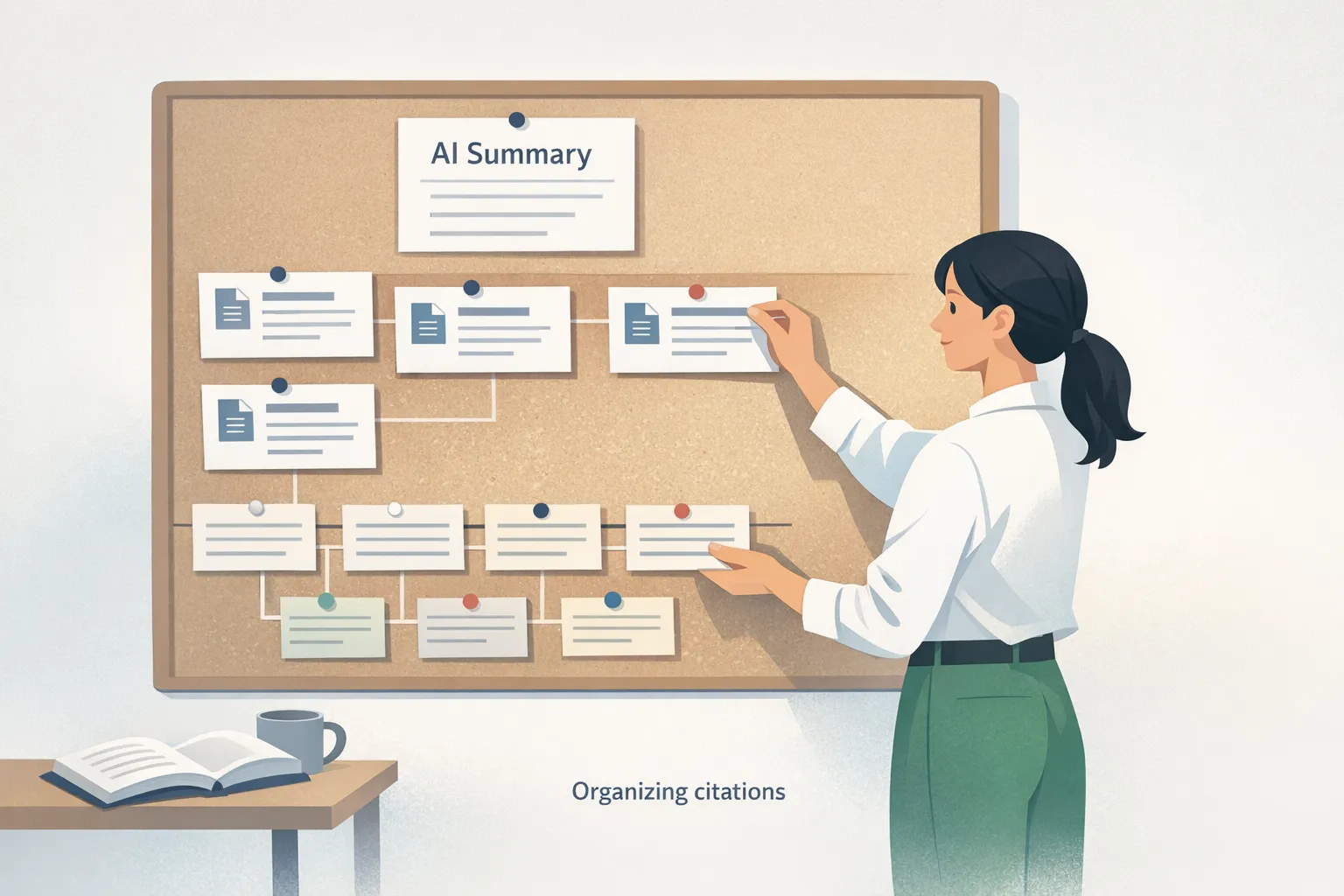
How to Confirm Your SaaS Content Is Being Cited in AI Overviews
Verification for AI Overview optimization looks different from traditional rank tracking. You are not just checking keyword positions but confirming that AI systems are actively extracting and citing your content in generated answers. Start by reviewing your AI visibility tool for citation frequency and share of voice across engines, then cross reference that data with changes in organic click behavior in Google Search Console and Google Analytics. Use these signals together to build a clear picture of whether your optimizations are producing real visibility gains.
- Your target pages appear as indexed in Google Search Console with no crawl errors or access restrictions
- Structured data on priority pages passes validation with no errors and matches visible page content
- Your AI SEO tool is recording citations or mentions of your brand across at least three AI engines
- The first paragraph of each optimized page contains a standalone answer to the target query
- Each priority page addresses the primary query and covers related follow up questions within the same page or through linked supporting content
- Your topic hub has a pillar page linking to supporting articles and supporting articles linking back to the pillar with descriptive anchor text
- At least one original data point, SME quote, or first hand example appears on each priority page
- Author bios include real credentials and pages cite credible external sources where relevant
- Core Web Vitals are within acceptable ranges and images carry descriptive alt text
- A quarterly refresh calendar is documented, assigned, and has been followed at least once
- AI visibility share of voice is tracked against a baseline reading taken before optimizations began
- Third party mentions of your brand or content exist in at least one credible industry publication or expert roundup
| Checkpoint | What good looks like | How to test | If it fails, try |
|---|---|---|---|
| Page indexing and crawlability | All priority pages return a 200 status, are indexed, and have no robots.txt blocks preventing AI system access | Check indexing status and crawl coverage in Google Search Console and review robots.txt for unintended blocks | Remove noindex tags, resolve canonical conflicts, and confirm no login walls or hard paywalls are blocking access to optimized pages |
| Structured data accuracy | Schema markup passes validation with zero errors and the structured data matches exactly what a user sees on the page | Run each priority page through Google's structured data testing tool and compare schema claims against visible page content | Update schema to reflect current page content, remove outdated markup, and revalidate after every significant content change |
| Answer placement in first paragraph | The clearest and most direct answer to the target query appears in the first paragraph with no preamble required | Read only the first paragraph of each optimized page and assess whether it answers the query as a standalone statement | Rewrite the opening paragraph to lead with the conclusion and move any introductory or contextual content further down the page |
| Fan out question coverage | The page or its linked supporting articles address the primary query and at least three to five related follow up questions | Use your AI SEO tool to identify related queries and manually verify each one is addressed on the page or in a linked article | Add new sections to existing pages or create supporting articles that close identified topic gaps and link them from the primary page |
| AI citation and share of voice tracking | Your AI SEO tool is recording brand citations across multiple AI engines and share of voice is stable or improving against baseline | Review citation frequency and share of voice reports in your AI visibility tool and compare against the baseline taken before optimizations began | Verify the tool is tracking the correct prompts and queries, expand prompt coverage, and check whether recently optimized pages have been re-crawled since changes were made |
| Content differentiation signals | Each priority page contains original data, a first hand example, or an SME quote that does not appear on competitor pages | Compare your page content against the top competing pages for the same query and confirm at least one unique data point or perspective is present | Conduct a short SME interview, pull a proprietary metric from your platform data, or add an anonymized client example to give the page a differentiated signal |
| Topic hub connectivity | A pillar page links to supporting articles covering the topic from multiple angles and those articles link back to the pillar | Manually trace internal links from the pillar page to supporting articles and back, and confirm anchor text is descriptive rather than generic | Update internal links on both the pillar and supporting pages, replace generic anchor text with topic specific language, and publish any missing supporting articles identified in the fan out mapping step |
| Quarterly refresh cadence | A documented refresh calendar exists with assigned owners and at least one full audit cycle has been completed | Check whether the editorial calendar includes quarterly review dates, confirm ownership is assigned, and verify the most recent refresh was completed on schedule | Create a simple shared document listing priority pages, refresh dates, and owners, and schedule the first review cycle within the next 30 days if one has not already been completed |
Troubleshooting Common AI Overview Optimization Problems for SaaS Teams
Even well structured optimizations can stall for reasons that are not immediately obvious. The issues below represent the most common failure patterns that SaaS teams encounter after completing their initial AI Overview optimization work. Each one has a specific cause and a direct fix that you can act on without restarting the entire process from scratch.
-
Symptom:
Your pages are indexed but never appear as cited sources in AI Overviews.
Why it happens: The content is technically accessible but structured in a way that makes it difficult for AI systems to extract a clean, standalone answer. Long introductions, vague headings, and dense paragraphs without clear takeaways all reduce the likelihood of citation even when the page ranks well in traditional search.
Fix: Return to each priority page and confirm the first paragraph contains a direct, self contained answer to the target query. Replace any vague or clever headings with descriptive ones that state exactly what the section covers, and break dense paragraphs into shorter, scannable units that AI systems can extract independently.
-
Symptom:
Structured data is implemented but AI Overviews continue to ignore your pages.
Why it happens: The schema markup does not match the visible content on the page, either because the content was updated after schema was written or because the schema was copied from a template and never customized. Mismatched schema erodes AI system trust and reduces the likelihood of citation.
Fix: Run every priority page through Google's structured data testing tool and compare each schema claim against what a user actually sees on the page. Update the schema to reflect current content, remove any outdated or irrelevant markup, and revalidate after every significant content change going forward.
-
Symptom:
Content covers the topic thoroughly but AI visibility metrics are flat.
Why it happens: The content is comprehensive but generic, meaning it covers the same ground as dozens of competitor pages without offering any unique data, perspective, or first hand insight. AI systems have no particular reason to cite your page over alternatives that cover the same information.
Fix: Identify at least one proprietary data point, anonymized client example, or SME quote for each priority page and integrate it into the content in a way that directly supports the main answer. A single original statistic that no competitor publishes is often enough to shift citation preference toward your page.
-
Symptom:
Your AI visibility tool shows citations on some engines but not others.
Why it happens: Different AI engines weight different signals when deciding which sources to cite. A page optimized primarily for Google AI Overviews may lack the structural or authority signals that ChatGPT, Perplexity, or Gemini require, or your tracking setup may not cover all relevant engines and queries.
Fix: Review your tool configuration and confirm you are tracking the correct prompts across all target engines. Cross reference the pages that earn citations on one engine against those that do not, identify what structural or authority differences exist, and apply those patterns to pages performing poorly on underrepresented engines.
-
Symptom:
Topic hub articles exist but internal linking between them is weak or inconsistent.
Why it happens: Supporting articles were published at different times without a deliberate linking strategy, leaving the hub disconnected. Pillar pages may not link out to newer supporting content, and supporting articles may not link back to the pillar, which means the topical authority signal the hub is meant to create is never fully established.
Fix: Conduct a manual internal link audit across your topic hub. Update the pillar page to link to every relevant supporting article using descriptive anchor text, and update each supporting article to link back to the pillar. If your site runs on WordPress, an internal linking tool can help surface missed opportunities at scale.
-
Symptom:
Optimized pages exist but are not being re-crawled after updates.
Why it happens: Search engine and AI crawlers do not always revisit pages immediately after changes are made, particularly on large sites with many pages competing for crawl budget. Updated content that has not been re-crawled will not reflect your optimizations in AI generated answers.
Fix: Use the URL Inspection tool in Google Search Console to request indexing for each recently updated priority page. Review your crawl budget allocation and ensure your most important pages are not competing with low value pages for crawler attention. Submit an updated sitemap after completing a significant batch of content changes.
-
Symptom:
AI visibility metrics show no movement after 90 days of optimization work.
Why it happens: Either the optimizations have not yet been re-crawled and processed by AI systems, the baseline was set incorrectly making progress invisible in the data, or the tool is tracking prompts that do not align closely enough with the queries where your content should be competing.
Fix: Verify that all optimized pages have been re-indexed since changes were made. Review the prompts your tool is tracking and refine them to match the specific queries your target audience uses when searching for your product category. Reset your baseline if necessary and allow a full crawl cycle before drawing conclusions from the data.
-
Symptom:
Content earns AI Overview citations but click through rates remain low.
Why it happens: AI Overviews present answers directly at the top of the search results page, which can reduce the perceived need for a user to click through to the source. This is a known pattern in AI driven search where users receive enough information from the summary to satisfy their immediate query without visiting the cited page.
Fix: Structure cited content so the AI Overview answer creates curiosity or surfaces a follow up need rather than resolving the query entirely. Use the cited page to go deeper into the topic with original data, case studies, and tool recommendations that the AI Overview cannot replicate in a short summary, giving users a clear reason to click through for the complete picture.
-
Symptom:
Enterprise team members cannot access or act on AI visibility data because of security or permission gaps.
Why it happens: Enterprise AI SEO tools often gate security features such as SSO, SAML, and role based permissions behind higher pricing tiers. Teams that select a tool without confirming enterprise security requirements upfront may find that the tool cannot be deployed at the organizational level or that access controls do not meet compliance standards.
Fix: Define your security and compliance requirements before finalizing tool selection. Confirm whether SSO, SAML, SOC 2 Type II compliance, and role based access controls are available on the plan you are evaluating or require an enterprise upgrade. Budget for the correct tier from the start rather than discovering the limitation after onboarding the team.
Questions SaaS Teams Ask After Starting AI Overview Optimization
- Does ranking on page one guarantee inclusion in AI Overviews? No. AI Overviews pull from multiple sources and prioritize content that is structured for extraction, not just content that ranks highly. A page outside the top positions can earn a citation if it is better structured and more authoritative than a higher ranking competitor.
- How is optimizing for AI Overviews different from traditional SEO? Traditional SEO focuses on ranking signals like backlinks and keyword density, while AI Overview optimization focuses on answer structure, topical depth, original data, and credibility signals that AI systems use when deciding which sources to cite. Both matter, but the emphasis shifts toward content clarity and authority rather than position alone.
- Can AI generated content appear in Google AI Overviews? Yes, but only if it meets a quality threshold and includes verified claims, original value, and a consistent editorial voice. Purely AI generated content without human review and differentiation is unlikely to earn citations because it tends to lack the originality and credibility signals AI systems weigh heavily.
- How often should SaaS teams refresh content to stay visible in AI Overviews? A quarterly audit and refresh cadence is the minimum recommended approach. AI Overviews favor recently updated content, and allowing high value pages to go stale for more than a few months increases the risk of being displaced by a competitor that updates more frequently.
- Do review platforms like G2 and Capterra influence AI Overview citations for SaaS? Yes. AI Overviews can pull data from review platforms like G2 and Capterra when constructing answers about software categories, making it worthwhile for SaaS teams to maintain accurate and complete profiles on those platforms as part of a broader AI visibility strategy.
- What percentage of Google queries currently show AI Overviews? AI Overviews currently appear in less than 15 percent of queries for logged in US users, and the likelihood varies significantly by industry and query type. Informational and research oriented queries are more likely to trigger AI Overviews than transactional or navigational ones.
- Which AI SEO tools are best for tracking AI Overview visibility for SaaS teams? The right choice depends on your growth stage and integration requirements. Tools like Profound are built specifically for multi engine AI visibility tracking with enterprise security, while platforms like Surfer SEO and SE Ranking offer AI tracking as part of broader SEO workflows, with AI visibility available as an add on feature.
- Does content behind a paywall or login wall get cited in AI Overviews? No. AI systems cannot access content that requires authentication to view, which means any page behind a login wall or hard paywall is effectively invisible to AI Overview systems regardless of its quality or structure.
- How long does it take to see results after optimizing for AI Overviews? Results depend on how quickly AI systems re-crawl your updated pages and how competitive your topic area is. Teams that complete a full optimization cycle and request re-indexing typically see measurable shifts in citation frequency within 60 to 90 days, though ongoing gains continue to build as the content refresh cadence compounds over time.
Frequently Asked Questions About AI Overviews SEO for SaaS
What are the key benefits of using AI SEO tools for B2B SaaS growth?
AI SEO tools help B2B SaaS growth teams scale content production, track brand visibility across multiple AI engines, and identify content gaps faster than manual research allows. For teams prioritizing AI Overview citations specifically, the right tool provides citation frequency data and share of voice metrics that traditional rank tracking platforms do not offer, giving teams a clearer picture of where they stand in AI driven search.
How do AI Overviews decide which sources to cite?
Google AI Overviews are powered by the Gemini AI language model and pull information from multiple sources rather than a single page. They favor content that is clearly structured with direct answers, descriptive headings, original data, and strong topical authority signals. Technical factors like structured data accuracy, crawlability, and page experience also influence whether a page is considered a trustworthy enough source to cite in a generated answer.
How do AI SEO tools support content gap analysis for SaaS teams?
AI SEO tools analyze competitor content, keyword landscapes, and topic clusters to surface areas where your content library is thin or missing entirely. Platforms like MarketMuse and Surfer SEO identify which subtopics and related queries your site has not yet addressed, allowing teams to prioritize new content that fills those gaps and strengthens topical authority signals that AI Overview systems respond to when selecting citation sources.
Which analytics platforms should SaaS teams integrate with their AI SEO tools?
The most important integrations for B2B SaaS teams are Google Analytics, Google Search Console, Looker Studio, and Salesforce. Google Search Console provides indexing and crawl data essential for technical verification, Google Analytics tracks traffic and conversion behavior, Looker Studio supports custom reporting across data sources, and Salesforce connects content performance to pipeline and revenue outcomes for teams that need to tie AI visibility investments to business results.
What security and compliance features should enterprise SaaS teams require from AI SEO tools?
Enterprise SaaS teams should require SSO and SAML authentication support, SOC 2 Type II compliance, role based access controls, and API access as baseline requirements before selecting a tool. These features ensure the platform can be deployed across a larger organization without creating security gaps or compliance risks. Some tools, such as Profound at the enterprise tier and Surfer SEO at the enterprise plan, include these capabilities, while others reserve them for higher pricing tiers.
How do AI SEO tools help optimize content for large language models beyond Google?
The best AI SEO tools track brand and content citations across multiple AI engines including ChatGPT, Perplexity, and Gemini in addition to Google AI Overviews. This multi engine visibility data allows SaaS teams to identify which engines are citing their content, which are not, and what structural or authority differences might explain the gap. Optimizing for answer extraction rather than keyword ranking tends to improve performance across all major AI engines simultaneously.
What should SaaS teams consider when evaluating pricing and ROI for AI SEO tools?
Teams should model the total cost of ownership including base subscription fees, add on costs for AI visibility tracking and content generation features, and the number of users, prompts, and articles included at each tier. The ROI calculation should connect tool costs to realistic lead generation and deal conversion scenarios, with a defined break even threshold and a target return ratio before committing to a plan. Treating add ons as optional often understates the true cost of a tool that requires them for core functionality.
Can smaller SaaS teams compete in AI Overviews against larger competitors?
Yes. AI Overviews prioritize content quality, answer clarity, and topical authority over domain size alone. A smaller SaaS team that leads every page with a direct answer, builds a focused topic hub with original data, and maintains a consistent refresh cadence can earn citations ahead of larger competitors whose content is comprehensive but poorly structured for AI extraction. Focused coverage of a narrow topic often outperforms broad but shallow coverage from a larger site.