Choosing a keyword clustering tool for topical maps depends on your workflow, data needs, and budget. If your goal is rigorous topical authority backed by SERP reality, prioritize tools that deliver SERP based clustering with live data , strong coverage, and the ability to export briefs and outlines for writers. For teams that must move quickly on large keyword sets, look for high processing speed, scalable clustering, and clear visuals that map pillar topics to subtopics. If you rely on a specific platform, seek seamless integration with that ecosystem to minimize setup and ensure data portability. For project leaders testing feasibility, start with trial or free options that offer SERP signals and respectable coverage, then scale to full feature plans as workflow maturity grows. In short, map your priority: accuracy, scale, or ecosystem fit, and pick a tool that aligns with that priority.
TLDR:
- SERP based clustering with live data yields the most accurate topical maps, especially for pillar and spoke structures.
- For large keyword sets, choose tools with fast processing and scalable clustering plus clear pillar to subtopic mapping.
- If you rely on a particular marketing ecosystem, prioritize seamless integration to minimize setup and data transfer friction.
- Start with a free tier or trial to verify SERP signals and coverage before committing.
- For content workflows, look for export options and the ability to generate briefs or outlines from clusters.
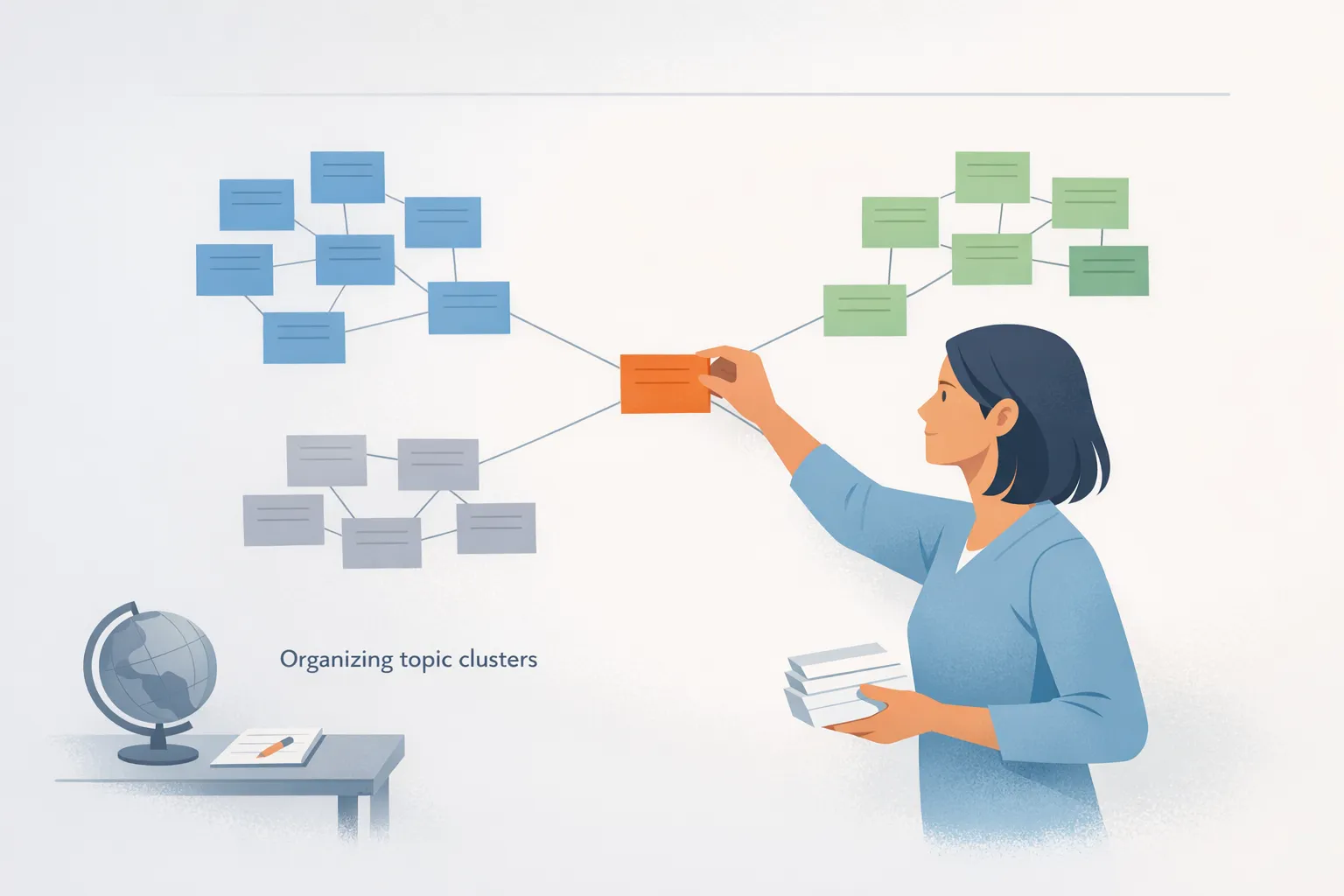
Topical maps keyword clustering tools compared by use case and strength
This section provides a concise, evidence based comparison of ten keyword clustering tools used to build topical maps. It highlights each option’s intended use, core strengths, and known tradeoffs so readers can identify which tool aligns with their priorities whether that is end to end workflow coverage, speed, or ecosystem fit. The framing reflects the diverse capabilities and pricing found in the evidence set.
| Option | Best for | Main strength | Main tradeoff | Pricing |
|---|---|---|---|---|
| Keyword Insights Pro | Best for complete SEO workflow with high coverage | reported high coverage and robust workflow | pricing and ongoing access considerations | $58+ PAYG |
| Keyword Insights (Trial) | Best for trial users seeking broad coverage on a budget | trial oriented with full SERP based clustering signals | limited duration and long term use not defined | $1 trial |
| Ahrefs Keywords Explorer | Best for speed and ecosystem integration within Ahrefs | fast results and ecosystem compatibility | workflow depth not described in sources | $99+ |
| SEMrush Keyword Strategy Builder | Best for users already in the Semrush ecosystem | ideas generation and visualization within the Semrush suite | may involve higher cost and complexity for new users | $119+ |
| LowFruits | Best for fast SERP clustering and quick results | speed and focus on potentially low competition clusters | coverage levels vary and some results may be incomplete | $25+ PAYG |
| Serpstat Clustering Tool | Best for handling large seed keyword sets | high keyword limit and scalability | workflow and clarity of clustering signals may be limited | $69+ |
| Keyword Cupid | Best for SERP overlap clustering on large keyword lists | budget friendly and strong overlap signals | discovery capabilities may be limited | $9.95/mo |
| ZenBrief Keyword Clustering | Best for NLP based clustering with a free option | free option and fast turnarounds | clustering may be incomplete without SERP validation | Free option |
| Writersonic AI Keyword Clustering | Best for integrated content workflows and strong user experience | writer workflow integration and ease of use | may lack SERP based accuracy | $19+ |
| SEO Scout Keyword Grouping | Best for pattern based clustering with solid coverage | steady coverage and straightforward clustering | fewer advanced workflow features reported | Not stated |
How to read this table
- Match your priority first: accuracy with SERP signals, speed for large projects, or ecosystem compatibility for a specific platform
- Assess whether you need end to end workflow features or a standalone clustering tool
- Check bulk keyword support to ensure scalability for your dataset
- Consider data freshness and whether live SERP data is used
- Evaluate pricing in relation to feature depth and long term needs
- Review each tool's main strength to determine fit with pillar and spoke content planning
- Factor in export options to support downstream optimization and reporting
Option by option comparison for topical maps keyword clustering tools
Keyword Insights Pro
Best for: Best for complete SEO workflow with high coverage
What it does well:
- Reported high coverage and a robust workflow
- End to end content pipeline from clustering to publishing
- Workspaces with automatic irrelevant cluster detection
- Content priority scoring to guide editorial focus
Watch-outs:
- Pricing and ongoing access considerations
- Long term scalability depends on plan choices
Notable features: Keyword Insights Pro is described as providing a complete SEO workflow from clustering through to publishing, and it emphasizes governance through workspaces and cluster prioritization. These elements support a unified content strategy rather than isolated clustering.
Setup or workflow notes: The tool centers on a structured workflow with dedicated workspaces, which facilitates managing clusters, briefs, and writer assignments. Expect to configure teams, assign priorities, and export briefs for production.
Keyword Insights (Trial)
Best for: Best for trial users seeking broad coverage on a budget
What it does well:
- Trial oriented with full SERP based clustering signals
- Offers broad coverage within a limited trial window
- Supports SERP based clustering to reflect intent
Watch-outs:
- Limited duration of access
- Long term use not defined within the trial terms
Notable features: The trial emphasizes SERP based signals and broad coverage as a preview of full capabilities, enabling quick feasibility assessment.
Setup or workflow notes: Start with the trial to gauge clustering speed and coverage; there is no long term commitment required, and results can inform whether to upgrade to a paid plan.
Ahrefs Keywords Explorer
Best for: Best for speed and ecosystem integration within Ahrefs
What it does well:
- Fast results with quick clustering signals
- Strong compatibility within the Ahrefs ecosystem
- High clustering output for rapid ideation
Watch-outs:
- Workflow depth not described in sources
- Potential limitations in end to end content workflow
Notable features: Known for speed and ecosystem alignment, enabling rapid access to clustered ideas within a familiar toolset.
Setup or workflow notes: Integrated into the Ahrefs suite; users can leverage existing project structures and export options typical of Ahrefs workflows.
SEMrush Keyword Strategy Builder
Best for: Best for users already in the Semrush ecosystem
What it does well:
- Ideas generation and visualization within the Semrush suite
- Seed based topic mapping that supports topic development
- Integrated workflow within an all in one platform
Watch-outs:
- May involve higher cost and complexity for new users
- Longer setup for teams new to the Semrush environment
Notable features: Emphasizes topic ideas and visual exploration inside Semrush, aiding planning and ranking discussions.
Setup or workflow notes: Leverage existing Semrush accounts to access topic ideas and maps; plan for onboarding if users are not familiar with the platform.
LowFruits
Best for: Best for fast SERP clustering and quick results
What it does well:
- Speed and focus on potentially low competition clusters
- Direct SERP based clustering signals for fast mappings
- Useful for rapid ideation in low competition spaces
Watch-outs:
- Coverage levels vary and some results may be incomplete
- Quality can depend on overlap and edge cases in SERP data
Notable features: Prioritizes speed and targeted clustering with an emphasis on uncovering low competition opportunities.
Setup or workflow notes: Suitable for quick benchmarking; results can be exported and shared, with constant updates as data changes.
Serpstat Clustering Tool
Best for: Best for handling large seed keyword sets
What it does well:
- High keyword limit and scalability
- Clustering signals from SERP and overlap data
- Supports large scale topic exploration
Watch-outs:
- Workflow and clarity of clustering signals may be limited
- Longer processing times for very large datasets
Notable features: Noted for handling big seed lists and providing scalable clustering capabilities within a single toolset.
Setup or workflow notes: Plan for larger data imports; expect a broader clustering output and potential need for manual refinement.
Keyword Cupid
Best for: Best for SERP overlap clustering on large keyword lists
What it does well:
- Budget friendly with strong overlap signals
- SERP overlap based clustering on extensive lists
- Efficient for detecting related terms through top result similarities
Watch-outs:
- Discovery capabilities may be limited
- Clustering depth may be narrower than full featured tools
Notable features: Centers on SERP overlap as the basis for clustering, emphasizing cost efficiency while preserving signal quality.
Setup or workflow notes: Suitable for quick cluster generation on large keyword sets; consider supplementing with additional tools for deeper analysis.
ZenBrief Keyword Clustering
Best for: Best for NLP based clustering with a free option
What it does well:
- NLP based clustering with fast turnarounds
- Free option provides an accessible starting point
- Simple interface supports quick experiments
Watch-outs:
- Clustering may be incomplete without SERP validation
- Less emphasis on live SERP signals in some workflows
Notable features: Leverages NLP methods to produce topic groupings rapidly, offering a no-cost entry point for experimentation.
Setup or workflow notes: Ideal for initial exploration; plan to validate results with SERP data or supplementary tools for production use.
Writersonic AI Keyword Clustering
Best for: Best for integrated content workflows and strong user experience
What it does well:
- Writer workflow integration and ease of use
- AI driven clustering supports rapid content idea generation
- Focus on UX and accessible clustering processes
Watch-outs:
- May lack SERP based accuracy
- Export options and direct optimization signals vary by plan
Notable features: Emphasizes content creation workflows alongside clustering, streamlining the path from ideas to drafts.
Setup or workflow notes: Designed for quick start with minimal setup; expect AI assisted outlines and drafting features integrated into the clustering results.
SEO Scout Keyword Grouping
Best for: Best for pattern based clustering with solid coverage
What it does well:
- Steady coverage with straightforward clustering
- Pattern based approach aids predictable topic maps
- Good baseline for teams prioritizing clarity
Watch-outs:
- Fewer advanced workflow features reported
- May require complementary tools for full content planning
Notable features: Focuses on consistent pattern based clustering, providing dependable results for standard topical maps.
Setup or workflow notes: Use as a dependable clustering layer within a broader content planning process; pair with briefs or outlines as needed.

Decision support for picking a keyword clustering tool for topical maps
Decision making centers on three priorities: accuracy through SERP based clustering, scale to handle large keyword sets, and alignment with your existing marketing ecosystem. If you need a full content workflow from clustering to briefs and publishing, prioritize tools with end to end coverage. If speed is critical, opt for options designed for rapid clustering and easy export. If you are testing feasibility or working within a specific platform, start with free or trial offerings before committing to a paid plan.
- If you need end to end workflow from clustering to publishing choose Keyword Insights Pro because it provides a complete SEO workflow with high coverage.
- If you want a fast trial to gauge SERP signals on a budget choose Keyword Insights (Trial) because it offers a $1 trial and broad SERP based clustering signals.
- If speed and ecosystem integration within a known platform are priorities choose Ahrefs Keywords Explorer because it offers fast results and ecosystem compatibility.
- If you are already in Semrush, choose SEMrush Keyword Strategy Builder because of seed based topic mapping and integrated visuals.
- If you need fast SERP mapping for quick wins and low cost, choose LowFruits because of SERP based clustering and speed.
- If handling large seed keyword sets and scalability matters choose Serpstat Clustering Tool because of high keyword limit and scalability.
- If SERP overlap clustering on large keyword lists is the priority choose Keyword Cupid because of budget-friendly approach and strong overlap signals.
- If NLP based clustering with a free option is preferred, choose ZenBrief Keyword Clustering because of NLP and free tier.
- If integrated content workflows and strong user experience are important, choose Writersonic AI Keyword Clustering because of writer workflow integration.
- If pattern based clustering with solid coverage is the priority choose SEO Scout Keyword Grouping because of steady coverage and straightforward clustering.
People usually ask next
- What is keyword clustering? Answer in 1-2 sentences.
- How does SERP based clustering differ from NLP? Answer in 1-2 sentences.
- Can I upload my own keywords for clustering? Answer in 1-2 sentences.
- Do these tools generate content briefs or outlines? Answer in 1-2 sentences.
- Which tool is best for multi language campaigns? Answer in 1-2 sentences.
- What export formats are available? Answer in 1-2 sentences.
Common questions about keyword clustering tools for topical maps
What is keyword clustering in the context of topical maps?
Keyword clustering in the context of topical maps is the process of grouping related search terms into topic clusters that reflect pillar topics and their subtopics. The goal is to create a map that guides content planning, reduces cannibalization, and aligns with user intent. SERP based clustering uses live search results to shape groups, while NLP approaches rely on semantic similarity without necessarily reflecting current ranking signals or competition.
How does SERP based clustering differ from NLP?
SERP based clustering uses live search results and ranking signals to determine groupings, aiming to mirror how Google interprets intent and relevance at the moment of query. NLP clustering focuses on semantic relationships between terms and may ignore live SERP dynamics, potentially producing coherent topic trees that do not track current competition or user behavior on the results pages.
Can I upload my own keywords for clustering?
Most tools supporting keyword clustering offer some form of bulk input, typically via CSV upload, to process large datasets quickly. The exact limits and formats vary by tool, and some free or trial options may restrict uploads or seed only inputs. Always verify upload capabilities before choosing, especially if you work with client lists or large archives.
Do these tools generate content briefs or outlines?
Several tools provide content briefs or outlines generated from clusters, to help writers plan pillar and spoke articles. Some offer writer workflow integration or export to production briefs, while others focus more on clustering output alone. If an end to end production flow matters, look for tools explicitly advertising briefs or outline features within the clustering solution.
Which tool is best for multi language campaigns?
Language support varies by tool. Some options advertise broad language coverage; for example one trial option lists 127 languages across 212 countries, which can be important for global campaigns. For multilingual projects, verify both the languages supported and how clusters behave when localized to different markets.
What export formats are available?
Export formats differ by tool. Common options include CSV or Sheets for data portability, and some tools offer SVG or PDF exports of visual maps. Check whether the platform supports downstream production workflows and whether non textual assets such as visuals can be exported to fit your content calendar and reporting needs.
How should I balance accuracy and speed when choosing a tool?
Accuracy is typically higher with SERP based clustering, but speed varies by platform and data size. If you work with large keyword sets, favor tools that handle bulk processing efficiently and offer scalable clustering. If your priority is rapid ideation for quick wins, a faster option may be acceptable even if accuracy is slightly reduced.
Are there free or trial options available to test clustering?
Several tools offer free tiers or trial access to evaluate clustering signals and coverage before purchasing. Trials often emphasize SERP based clustering signals and core features but may have restrictions on volume, duration, or export options. Use trials to validate alignment with your editorial needs before committing to a paid plan.