Direct answer: The Long-Form Content Playbook: Crafting Deep Guides That Rank lays out a practical, evidence-driven approach to planning, writing, and optimizing in-depth guides that earn visibility, authority, and durable traffic. The core thesis is that depth, clear structure, and disciplined distribution outperform shallow content when the topic is complex or decision-critical. The guide emphasizes a pillar-and-cluster architecture, a six-elements ranking framework, E-E-A-T credibility, and AI-friendly formatting that supports passage indexing and AI overviews. Key data points include typical long-form word ranges (roughly 1,500–2,500 words for top results; many successful pieces exceed 3,000 words in contested topics), the value of internal and external signals, and the need for regular refreshes. It prescribes concrete steps: define the focus topic and audience intent, perform SERP gap analysis, design the pillar structure, draft self-contained sections with explicit definitions, and implement verification checkpoints, localization, and accessibility considerations.
This is for you if:
- Content teams plan in-depth, data-backed guides to improve rankings and authority.
- SEO practitioners focus on pillar/cluster architecture, internal linking, and topical depth.
- Marketers seek durable, evergreen content with a clear update cadence.
- Agencies need scalable, multi-format long-form workflows including localization.
- Product teams or B2B brands require thorough buyer guides and decision-support content.
- Content strategists aim to balance depth with readability and AI-friendly formatting.
Core thesis and scope
The Long-Form Content Playbook argues that deep, well-structured guides outperform shallow pieces when the topic is complex, decision-heavy, or requires credible, methodical exploration. A pillar and cluster architecture, combined with a disciplined six‑elements ranking framework, yields stronger topical authority, more durable search visibility, and better support for AI-assisted discovery. The playbook emphasizes clear scope, human readability, and rigorous sourcing, while still prioritizing practical execution. It centers on how to design content that answers the core questions readers bring, demonstrates expertise through authoritative evidence, and remains adaptable to changing SERP layouts and AI indexing signals. By starting with a precise focus topic, mapping related subtopics, and planning a sustainable distribution, this approach creates a living asset that compounds in visibility and credibility over time.
The outline targets a comprehensive, data-informed path: define the focus topic and audience intent, perform SERP gap analysis, construct pillar and cluster content, draft self-contained sections with explicit definitions, and embed verification checkpoints. It also frames the work around accessibility, localization, and ongoing maintenance, so the final piece serves readers across markets and formats while remaining robust against shifting search-engine expectations.
Definitions and terminology
Long-form content
Content typically exceeding 1,500 words, designed to deliver depth, nuance, and practical guidance rather than a surface-level overview.
Pillar and topic cluster
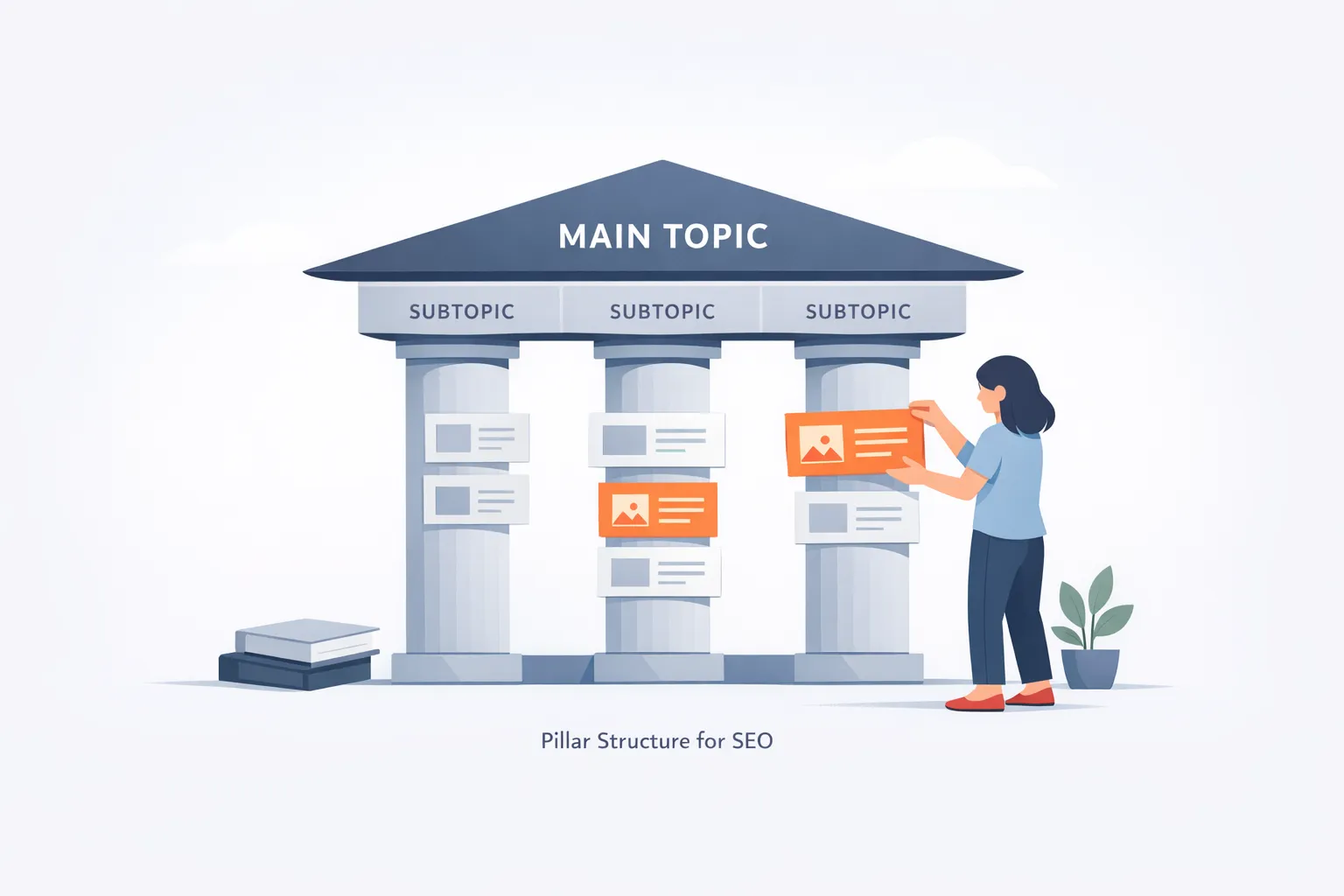
A central pillar page backed by a set of related subtopics that link back to reinforce topical authority and improve crawlability.
EEAT
Experience, Expertise, Authority, Trust; a credibility framework used to assess the reliability and usefulness of content, especially for YMYL topics.
AI overviews
AI-generated summaries or overviews that extract key takeaways from a page to assist quick interpretation and discovery.
Passage indexing and jump links
The concept that search engines can index individual passages; jump links provide fast navigation and aid AI extraction.
Focal formats and types
Includes pillar posts, long-form blog posts, whitepapers, case studies, evergreen content, and tutorials.
Internal linking and semantic depth
Linking between related topics to signal relationships, build topical authority, and improve crawlability.
SERP‑aware formatting
Emulating successful top results formats (checklists, tables, how-to guides) to meet reader expectations while preserving originality.
Schema and structured data
Use of structured data such as Article, FAQPage, and HowTo to improve rich results and extraction potential.
Jump links and TOC-like navigation
Internal anchors that enable quick navigation and AI-friendly segmenting of content.
Mental models and frameworks (core models)
Pillar/Topic Cluster model
Build a central pillar page around a core topic with 3–5 related subtopics, all interlinked to signal breadth and depth.
Six-elements ranking framework
Align content with intent, semantic depth, skimmability, technical optimization, cluster connectivity, and E‑E‑A‑T signals to maximize ranking potential.
AI-overviews and passage indexing framework
Structure each paragraph to be standalone for AI extraction; use descriptive headings, short paragraphs, and lists to support AI summaries.
SERP‑aware formatting model
Analyze top results to identify preferred formats and mirror successful layouts while maintaining originality and value.
E‑E‑A‑T credibility model
Integrate author credentials, credible sources, and original insights to elevate trust and expertise in the piece.
Content cluster governance framework
Plan hub-and-spoke content with a consistent update cadence, internal-link health checks, and a clear ownership model.
Outline skeleton for a ~3500-word piece
Section plan and coverage map
The outline envisions 6–9 main sections, each supported by 2–4 subpoints, forming a logical progression from aims to execution to measurement. The structure is designed to satisfy informational, analytical, and decision-oriented intents, with explicit opportunities for AI-friendly extraction.
Jump links and navigational scaffolding
Plan explicit jump links between sections to enable quick navigation on desktop and mobile, and to aid AI summarization without losing context.
Depth targets by section
Each major section targets roughly 300–450 words, with tighter sub-sections to preserve readability while delivering depth and nuance.
Step-by-step implementation (ordered steps)
Step 1: Define focus topic and audience intent
Start with a precise focus topic that invites in-depth exploration. Identify the primary reader questions the piece will answer and map them to intent categories such as learn, compare, and decide.
Step 2: Conduct SERP and gap analysis
Review high-ranking long-form content to identify formats, depths, and gaps. Note where existing guidance is thin and where readers may seek more practical, data-backed insights.
Step 3: Design pillar + cluster architecture
Map a central pillar page around the core topic and define 3–5 related subtopics. Plan internal links that reinforce topical authority and guide readers through the cluster.
Step 4: Create a structured outline with explicit word counts
Develop a multi-section outline using a clear H2/H3 hierarchy and assign word-count targets per section. Include explicit definitions, steps, and decision points within each block.
Step 5: Draft self-contained sections
Write sections so each contains standalone value, with clear definitions, actionable guidance, and data-backed examples where possible.
Step 6: Integrate data, case studies, and credible quotes
Add verifiable data points and concrete examples to bolster depth and credibility, ensuring each claim is contextual and clearly explained.
Step 7: Technical optimization and accessibility
Address crawlability, page speed, mobile usability, and accessible formatting, including alt text and legible typography, to improve user experience and indexing signals.
Step 8: Add AI-friendly features and FAQ
Embed explicit definitions, step-by-step processes, and a concise FAQ to support AI extraction and reader comprehension.
Step 9: Review, revise, and finalize
Conduct a rigorous review for clarity, consistency, and factual accuracy. Verify alignment with intent and ensure sources or careful framing for uncertain points.
Verification checkpoints (how to know it worked)
Checkpoint 1: On-page metrics and behavior
Monitor time on page, scroll depth, and engagement signals to confirm readers spend meaningful time with the content.
Checkpoint 2: Topical authority signals
Track internal-link health, the breadth of the cluster, and the distribution of related content across the topic.
Checkpoint 3: SERP and positioning
Assess ranking for target terms, presence of FAQ and passage indexing opportunities, and progress relative to competitors.
Checkpoint 4: AI extraction readiness
Confirm that paragraphs are self-contained, headings are descriptive, and jump links enable accurate AI summarization.
Checkpoint 5: Accessibility and localization readiness
Verify readability, alt text coverage, and preparation for localization workflows if multi-market distribution is planned.
Gaps and opportunities (what SERP misses)
- Concrete ROI benchmarks for long-form content across industries, showing how depth translates into leads, pipeline velocity, and revenue.
- Standardized templates for pillar outlines and 3–5 supporting article briefs to accelerate briefing and consistency.
- Explicit guidance on when to gate content and how to balance gated versus ungated assets for lead generation without hindering value.
- Templates and checklists for topic clusters, including internal-link maps and anchor text strategies that maximize topical authority.
- Deeper treatment of localization and multilingual long-form content, including right-to-left scripts and localization QA workflows.
- Practical workflows for data collection, citation management, and fact-checking to strengthen credibility in high-stakes topics.
- Visual design patterns for long-form layouts (tables, charts, infographics) that improve readability and backlinks.
- Templates for editorial calendars tailored to long-form formats, with cadence guidance and resourcing plans.
- Quantified guidelines for updating evergreen content, including a measurable refresh cadence and red flags.
- Cross-channel repurposing playbooks (video, audio, social, email) with timelines and asset specs.
- Platform-specific long-form strategies beyond blog and whitepaper (LinkedIn Articles, YouTube series) with formatting nuances.
- Accessibility and inclusive design guidelines for long-form text, visuals, and multimedia assets.
- Governance models for multinational teams, ownership, and quality gates to maintain consistency across markets.
- Case-study templates with before/after results, enabling measurable storytelling of impact.
- Data-backed scoring systems to evaluate content coverage depth and topic breadth before drafting.
- Promotional cadences and KPI dashboards that connect long-form outputs to revenue signals and customer lifecycle metrics.
Data, stats and benchmarks
- Top long-form posts often exceed 2,000 words, with many thriving between 2,000 and 3,000 words.
- Average long-form blog posts commonly hover around 1,400–1,500 words in many industries, yet top results exceed this baseline for depth.
- Word-count guidance for pillar content tends toward 3,000–4,000 words to ensure coverage and robustness.
- Long-form content tends to accumulate more backlinks when it delivers unique data, case studies, and practical frameworks.
- Internal linking around a hub piece strengthens topical authority and content discoverability over time.
- Attention span considerations imply careful use of headings, summaries, and skimmable blocks to maintain engagement.
- Consistency in publishing and distribution correlates with steady traffic growth and audience retention.
- Multi-format repurposing expands reach and creates multiple signals for discovery across platforms.
Step-by-step processes found in sources
Process A: Planning Long-Form Content for SEO (6-8 steps)
- Define the aims and the core focus topic with a single guiding question and two or three supporting questions.
- Identify the target audience and map reader intents (learn, compare, decide) to each section.
- Review SERP results to identify common formats, depth, and gaps to fill.
- Outline a pillar structure and 3–5 related subtopics that anchor a content cluster.
- Sketch a detailed section map with defined definitions, steps, data points, and real-world examples.
- Estimate word counts per section to ensure balanced depth and skimmability.
- Prepare a sourcing plan with credible references and, where possible, original data or insights.
- Draft with an emphasis on standalone clarity for AI overviews and passage indexing.
Process B: How to Make Long-Form Content by Type (6-8 steps)
- Choose the long-form type that best serves the goal (pillar post, in-depth blog, whitepaper, or case study).
- Define the target word-count range appropriate for the chosen type.
- Gather data, case studies, and visuals that strengthen arguments and demonstrate credibility.
- Create a clear outline that maps sections to user intent and keywords.
- Draft in a structured, scannable format with descriptive headings and landable definitions.
- Incorporate SEO considerations (LSI terms, internal links, alt text) without sacrificing readability.
- Include lead-generation or conversion elements when appropriate (CTAs, downloads).
- Review for clarity, accuracy, and relevance; ensure each section can stand alone for AI extraction.
Process C: How to Make Long Form Content Longer (6-8 steps)
- Open with a compelling but precise introduction that states value and intent.
- Expand coverage by adding real-world examples and supporting data points.
- Include concise FAQs that address related questions and improve discoverability.
- Insert diagrams, charts, or checklists that summarize complex ideas.
- Break dense sections into digestible subsections with clear transitions.
- Use quotes from credible sources to add authority and perspective.
- Validate every claim with sources or frame it as a reasoned interpretation when uncertain.
- Plan for updates to keep content evergreen and relevant over time.
Edge cases, pitfalls, and failure modes
- Overly long pieces that lack practical value or actionable steps reduce usefulness.
- Misalignment between depth and reader intent leads to disengagement and higher bounce.
- Underestimating the importance of credible data and sources harms trust, especially for YMYL topics.
- Overreliance on templates without tailoring to the topic or audience diminishes relevance.
- Inadequate internal linking weakens topical authority and navigability.
- Poor accessibility or readability deters diverse audiences and can affect indexing.
- Failure to plan distribution results in limited reach and slow growth of signals.
- Gating can deter readers if the offered value is not clearly compelling.
- Edge topics or niche subtopics may be overlooked, weakening semantic depth.
- Inconsistent tone or voice across sections harms perceived expertise and trust.
- Lack of regular updates makes evergreen content stale and less competitive.
- Cached or outdated data undermines credibility; maintain a revision calendar.
- Not testing different formats (video, audio, transcripts) can miss audience preferences.
- Word-count targets that are too rigid can force filler rather than meaningful depth.
- Ignoring mobile navigation and jump links reduces AI-friendly accessibility.
Next steps and practical considerations
Use these gaps, benchmarks, and processes to tighten the article plan, validate with data, and align the content with both human readers and AI discovery systems. Prioritize credible sourcing, a clear pillar-and-cluster structure, and a sustainable distribution plan to maximize long-term rankings and value.
Next steps and practical considerations
Step-by-step implementation (ordered steps)
Step 10: Ongoing distribution and maintenance
After publication, the work shifts from creation to conservation and amplification. Establish a formal distribution cadence that treats repurposing as an ongoing activity rather than a one-off push. Create a content calendar that assigns quarterly themes to expand the hub, with monthly assets derived from the core piece. Break the long-form into modular segments that can be sliced into social threads, email snippets, infographics, podcasts, and short videos. Schedule these assets to go out across channels with consistent CTAs back to the pillar and related subtopics. Maintain a living parent article that receives updates as new data, frameworks, or case studies become available. This approach keeps the content fresh, extends its reach, and reinforces topical authority over time.
Practical actions:
- Draft a 12-month repurposing plan mapping each major section to at least two secondary formats (e.g., infographic plus LinkedIn post).
- Set up reusable content blocks for social posts, pull quotes, and checklists that can be updated with new data.
- Schedule quarterly reviews to refresh data points, add new case studies, and refresh CTAs.
- Keep an internal link map current, adding new cluster entries as related assets publish.
Step 11: Data-driven optimization and measurement
A long-form deep dive should be continuously evaluated against both engagement signals and business outcomes. Define a core set of leading and lagging metrics that align with the article’s aims: SEO visibility, dwell time, scroll depth, and conversion-related actions (newsletter signups, demos, or downloads). Build a dashboard that tracks these signals at the pillar level and across the cluster. Use the data to identify coverage gaps, opportunities for new subtopics, and sections that need deeper evidence or clearer definitions.
Specific practices:
- Monitor time on page, scroll depth, and exit rate for each major section; compare early versus later sections to identify where readers disengage.
- Track internal-link flow: how readers navigate from the pillar to subtopics and back; adjust the anchor text and linking density to improve topical authority signals.
- Assess backlink quality and volume over time; correlate increases with newly added subtopics, updated data, or case studies.
- Validate schema usage and rich results appearance in SERP, ensuring FAQPage and HowTo schemas where appropriate.
- Establish a refresh cadence: schedule updates for high-value sections at 6–12 month intervals or when new data becomes available.
Step 12: Governance, updates, and localization
For multinational audiences, governance combines content standards with localization workflow. Define ownership, review cadences, and quality gates for both original content and localized adaptations. Leverage local market experts to adapt terminology, examples, visuals, and platform preferences. Maintain a clear policy for citations and data validation across markets, ensuring that local data supports claims where relevant. Establish a localization SLA that aligns with the publication calendar and internal review cycles.
Actionable steps:
- Assign a content owner for the hub and each cluster; require quarterly sign-offs for major updates.
- Document localization requirements in a living brief that includes language variations, cultural nuances, and platform preferences per market.
- Coordinate with the LIME network or equivalent local experts to validate translations, examples, and visuals.
- Embed localized data points where available; otherwise, clearly mark data as global or context-specific.
Verification checkpoints (how to know it worked)
- On-page performance: time on page, scroll depth, and completion rate meet pre-defined thresholds across pillar and cluster pages.
- Topical authority signals: steady growth in internal links to the hub, and a widening breadth of related subtopics with consistent linking.
- SERP positioning: target keywords maintain or improve rankings; presence of FAQ snippets and passage-indexable content confirmed via search results and structured data testing tools.
- AI extraction readiness: sections remain self-contained with clear definitions and explicit steps; jump links reliably navigate to relevant content blocks.
- Localization readiness: localized assets publish on schedule with approved translations, culturally appropriate visuals, and market-specific keywords visible in search.
Troubleshooting: Pitfalls and fixes
- Pitfall: Distribution stalls after launch. Fix: enforce the 20/80 distribution rule by assigning dedicated team members to multi-channel repurposing and editorial calendars; introduce recurring cadences and alerts.
- Pitfall: Content becomes outdated quickly. Fix: establish a formal refresh schedule and assign owners to monitor industry changes; keep a living document of key data points with update dates.
- Pitfall: Localization introduces misinterpretations. Fix: involve local market experts early; validate idioms, references, and visuals; perform quality checks before publication.
- Pitfall: Internal linking weakens over time. Fix: maintain a living sitemap of cluster relationships; add new posts as you publish to preserve topical authority.
- Pitfall: AI overviews misquote or misinterpret. Fix: ensure explicit definitions and step-by-step sections are clearly delineated; provide source-driven citations for non-obvious claims.
- Pitfall: Accessibility gaps emerge. Fix: audit for color contrast, keyboard navigability, alt text for all visuals, and readable typography; test with assistive technologies.
- Pitfall: Data credibility challenged in high-stakes topics. Fix: elevate sourcing, triangulate data with multiple credible references, and prefer primary sources when possible.
What to monitor in the long run
Beyond immediate rankings, track the content’s role in the broader marketing funnel. Look for improvements in brand authority, increases in inbound inquiries, and sustained engagement across formats. A well-maintained long-form guide acts as a living resource that compounds value as the topic evolves and as distribution channels mature.

Credibility anchors for Long-Form Content Playbook: Crafting Deep Guides That Rank
- The pillar/cluster architecture anchors a topic hub with 3–5 related subtopics to reinforce breadth and depth in search signals. Source
- EEAT—experience, expertise, authority, and trust—serves as the guiding credibility model for quality long-form content, especially on YMYL topics. Source
- AI-friendly structuring, including standalone paragraphs and explicit steps, improves AI overviews and passage indexing. Source
- Word-count guidance indicates that top results typically exceed 2,000 words, with pillar content often reaching 3,000–4,000 words for depth. Source
- Internal linking around a hub strengthens topical authority and overall site navigation signals. Source
- Regular refresh cadence is essential to maintain evergreen relevance and sustain SERP performance over time. Source
- Using tables and checklists within the piece supports both AI extraction and human skimming for quick decision making. Source
- Jump links and TOC-like navigation improve user experience and enhance AI-friendly content extraction. Source
- Schema markup (Article, FAQPage, HowTo) enhances rich results and provides explicit signals to search engines. Source
- Distribution discipline, such as the 20% production / 80% distribution rule, is critical to sustaining momentum and signals across channels. Source
- Localization and accessibility planning, guided by local market experts, improves credibility across multi-market audiences. Source
- A robust citation strategy with credible sources reduces risk on high-stakes topics and strengthens reader trust. Source
Key credible sources for Long-Form Content Playbook
- Pillar/Cluster architecture overview — https://content-zen.com Source
- EEAT and trust signals for long-form content — https://content-zen.com Source
- AI-friendly formatting and passage indexing techniques — https://content-zen.com Source
- Word-count benchmarks and depth guidelines — https://content-zen.com Source
- Internal linking and topical authority practices — https://content-zen.com Source
- Regular refresh cadences for evergreen content — https://content-zen.com Source
- Table and checklist usage to aid AI extraction — https://content-zen.com Source
- Jump links and TOC navigation strategies — https://content-zen.com Source
- Schema markup for Article, FAQPage, HowTo — https://content-zen.com Source
- Distribution discipline and the 20/80 rule — https://content-zen.com Source
- Localization and accessibility planning for multi-market reach — https://content-zen.com Source
- Citation strategy and credible sourcing in high-stakes topics — https://content-zen.com Source
Key sources underpinning the Long-Form Content Playbook
- Pillar/Cluster architecture overview | https://content-zen.com
- EEAT and trust signals for long-form content | https://content-zen.com
- AI-friendly formatting and passage indexing techniques | https://content-zen.com
- Word-count benchmarks and depth guidelines | https://content-zen.com
- Internal linking and topical authority practices | https://content-zen.com
- Regular refresh cadences for evergreen content | https://content-zen.com
- Table and checklist usage to aid AI extraction | https://content-zen.com
- Jump links and TOC navigation strategies | https://content-zen.com
- Schema markup for Article, FAQPage, HowTo | https://content-zen.com
- Distribution discipline and the 20/80 rule | https://content-zen.com
- Localization and accessibility planning for multi-market reach | https://content-zen.com
- Citation strategy and credible sourcing in high-stakes topics | https://content-zen.com
Use these sources responsibly by cross checking claims with multiple references, attributing ideas to credible origins, and citing data only when it strengthens trust. Treat them as building blocks for structuring a pillar with related subtopics, informing localization decisions, and shaping a sustainable distribution plan. Avoid overreliance on a single source; verify data points, adapt insights to your audience, and regularly refresh citations as the topic evolves.
Putting the Playbook into Action: A Practical Next Step Plan
This closing section translates the Long-Form Content Playbook into a concrete path for immediate action. The approach hinges on building a living content asset that compounds authority over time through deep topical coverage, disciplined structuring, and sustained distribution. By starting with a precise focus topic and a clear pillar-and-cluster map, teams can unlock AI-friendly workflows, richer user value, and stronger crawl signals that endure amid shifting search-engine expectations.
If you already publish long-form content, begin with a focused content audit. Map existing pieces to a potential pillar topic and identify gaps where related subtopics are missing. Evaluate internal linking patterns, semantic depth, and consistency of citations. Ensure each piece can stand alone for AI overviews while contributing to a coherent cluster that signals topical authority.
A practical implementation plan: select one core topic, draft a pillar page in the 3,000–4,000 word range, and develop 3 related subtopics in the 1,500–2,000 word range. Build a robust internal-link network between the pillar and subtopics, adding jump links and a table of contents style navigation. Apply schema markup where appropriate and schedule regular updates to keep data fresh and relevant.
The decision you make now sets a measurable trajectory. Commit to a 90-day pilot that includes publishing the pillar page and at least two supporting posts, then monitor engagement, dwell time, and internal-link signals. Use the results to refine topics, depth, and format choices, consistently aligning with reader intent and business goals.