Define your business goals and map them to specific content KPIs. Identify your target audience and map their journey from awareness to decision. Create 3 to 5 content pillars that cover core topics and fill gaps. Decide formats and channels based on where your audience spends time. Build a simple end to end workflow with clear owners, timelines, and review points. Develop a central content calendar and a governance process for publishing and updates. Implement a measurement plan with dashboards, track key metrics, and iterate using data. Start with a minimum viable plan and scale by adding formats, repurposing content, and aligning distribution across owned channels. This approach keeps content focused, consistent, and designed to convert readers into customers.
This is for you if:
- You are a marketing or content team building a repeatable, results driven process
- You need a unified plan that links business goals audience and messaging
- You want clear ownership timelines and governance for content work
- You aim to measure performance and optimize based on real data
- You are scaling content and need a framework that supports growth
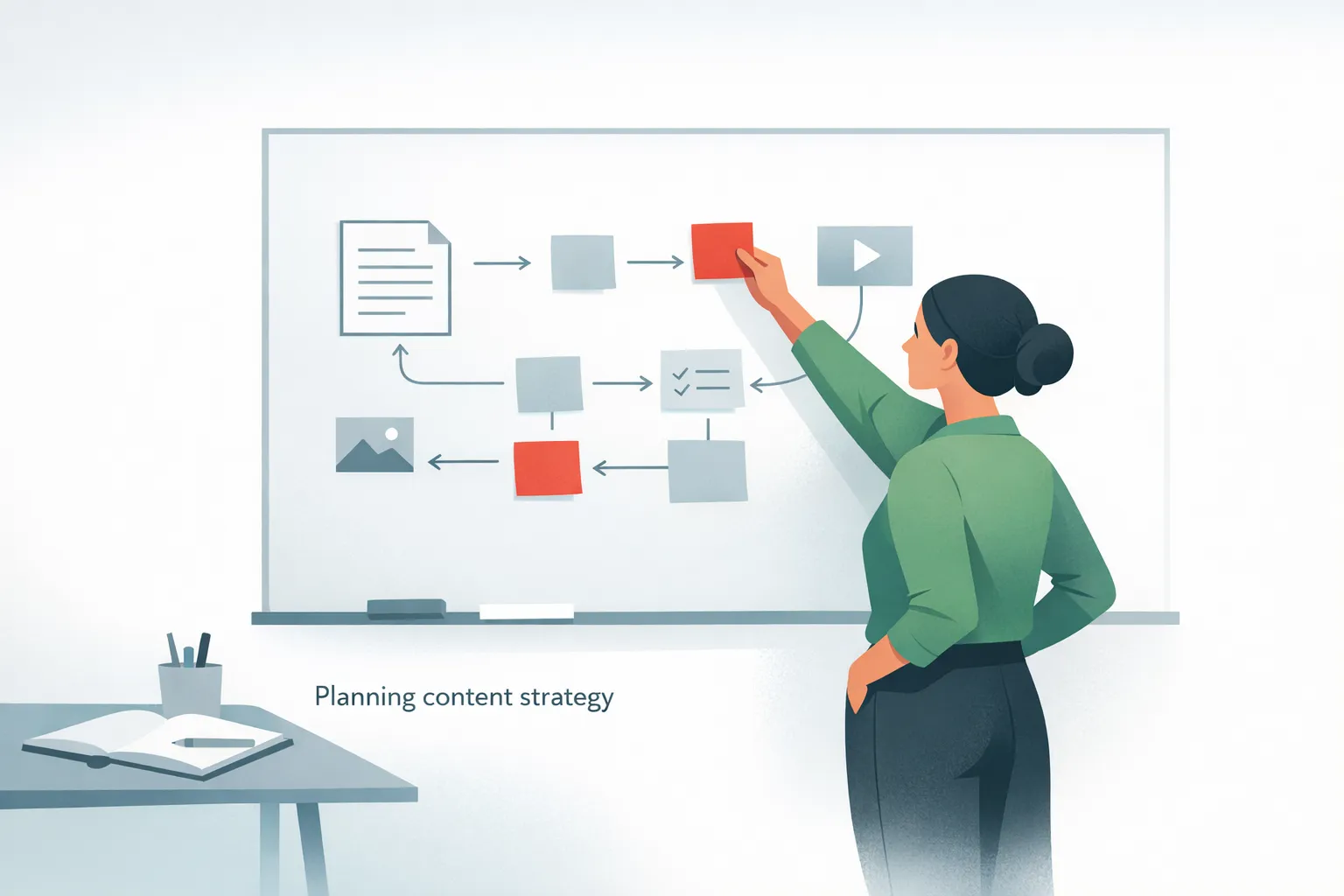
Prerequisites for a Strong Content Strategy
Prerequisites matter because they align goals, audience, and messaging before you craft a plan, reducing rework and speeding execution. When you enter the process with clear objectives, defined audiences, and a governance framework, you can design content pillars and workflows that scale. These foundations ensure every decision supports business outcomes, channel choices are deliberate, and measurement begins at the start so you can prove value and optimize over time.
Before you start, make sure you have:
- Clear business goals and a plan for measuring results
- Documented audience personas and buyer journeys
- Brand voice guidelines and a messaging map
- Defined content pillars with coverage gaps identified
- Initial content calendar with ownership assignments
- Access to templates for calendars workflows and governance
- Tools for creation collaboration publishing and analytics
- A governance framework for reviews approvals and updates
- A centralized measurement plan with dashboards and KPIs
- Understanding of the target distribution channels owned earned and paid
- A budget and resource plan for content creation and promotion
- Access to subject matter experts or credible sources for content validation
Launch a Converting Content Strategy Now: Step by Step
Prepare for a practical, time efficient process that yields a repeatable framework you can reuse. You will start by clarifying goals and metrics and finish with a live calendar and governance for ongoing optimization. The steps emphasize concrete tasks, clear ownership, and decisions tied to audience needs and business outcomes. By following this approach you will build content that consistently moves readers toward action, while maintaining quality and coherence across channels. The result is a convergent strategy that guides creation, distribution, and measurement with confidence.
-
Define Goals and Metrics
Clarify business goals and translate them into concrete content KPIs. Create SMART targets and attach them to expected outcomes from the start. This alignment ensures every asset supports a defined result. This alignment mirrors the idea that content strategy is the why behind what you create. Source
How to verify: Goals and KPIs are documented with time-bound targets.
Common fail: Goals are vague or not tied to concrete actions.
-
Define Audience and Map Journeys
Identify buyer personas and map their needs to awareness consideration and decision stages. Ensure content addresses questions and tasks at each point in the journey. This alignment informs prioritization and reduces wasted effort.
How to verify: Personas exist and journeys align with content topics.
Common fail: Audience segments are generic or not tied to content topics.
-
Establish Messaging and Brand Voice
Draft tone and language guidelines with examples to maintain consistency across channels. Use a messaging map to keep campaigns aligned with value propositions. Clear voice and tone guidelines reduce miscommunication across channels. Source
How to verify: A published voice and messaging guide is accessible to the team.
Common fail: Voice drifts between channels or teams.
-
Create Content Pillars and Topics
Define 3 to 5 pillars that reflect core topics and fill gaps. Under each pillar, brainstorm topic clusters that answer audience questions and support the journey. Pillars provide topical authority and guardrails against scope creep. Source
How to verify: Pillars exist with a mapped topic list and coverage map.
Common fail: Topics duplicate coverage or pillars become stale.
-
Choose Formats and Channels
Decide formats and channels that fit where your audience engages. Plan a mix that supports awareness through conversion and enables omnichannel experiences. Think of video-first content as a guiding principle. Source
How to verify: A formats and channels plan shows each piece aligns with a stage and channel.
Common fail: Channels chosen without audience fit or misaligned formats.
-
Build Workflow and Assign Roles
Map the end-to-end process from idea to publish and assign owners timelines and sign-offs. Create templates to reduce bottlenecks and ensure accountability.
How to verify: A documented workflow with owners and due dates exists.
Common fail: Bottlenecks occur due to unclear ownership or missing templates.
-
Create Content Calendar
Consolidate topics owners deadlines and channels into a single calendar. Use it to identify gaps and align with quarterly goals.
How to verify: Calendar is live with assignments and milestones.
Common fail: Publishing cadence slips or ownership is unclear.
-
Plan Distribution and Measurement
Outline distribution across owned earned and paid channels. Set up dashboards to track progress against KPIs and schedule regular reviews.
How to verify: Dashboards exist and review cadence is established.
Common fail: Metrics are scattered or not acted upon.

Verification: Confirm Conversion Ready Strategy
This section shows how to verify that your content strategy is positioned to convert. You will confirm that goals are measurable and aligned with business outcomes, audiences are defined and journey mapped, and the plan includes pillars formats and channels. You will validate that workflows calendars governance and measurement are in place and that data drives ongoing optimization. By running through these checks you ensure every asset supports a clear result and that performance can be demonstrated over time.
- Goals aligned with business objectives are documented
- Audience personas and buyer journeys are clearly mapped
- Content pillars coverage gaps have been identified
- End to end workflow and ownership are defined
- Central calendar with deadlines and owners exists
- Governance for reviews approvals and updates is in place
- Distribution plan across owned earned and paid channels is defined
- Measurement dashboards and KPIs are active and reviewed regularly
| Checkpoint | What good looks like | How to test | If it fails, try |
|---|---|---|---|
| Goals alignment | Documented SMART goals linked to content KPIs | Review goals with stakeholders and compare to planned assets | Refine targets and attach timelines and owners |
| Audience mapping | Defined personas and stage-specific needs | Walkthrough with the team using sample content paths | Update personas and map additional journey stages |
| Pillars and topics | 3 to 5 pillars with mapped topic clusters | Conduct a gap analysis across pillars | Adjust pillars and fill gaps with new topics |
| Workflow and ownership | End to end process with clear owners and deadlines | Check onboarding and sign off times on recent pieces | Clarify roles and publish an updated workflow |
| Editorial calendar | Calendar populated with topics owners channels and milestones | Spot check upcoming publish dates and owner confirmations | Reassign responsibilities and adjust cadence |
| Governance | Defined review approvals and update cycles | Review recent content shows version history and approvals | Implement required briefs templates and approval gates |
| Measurement plan | Dashboards tracking KPIs with data sources | Inspect dashboards for recency and accuracy of data | Add missing data feeds and recalibrate KPI definitions |
| Distribution plan | Integrated owned earned and paid plan with cadence | Run a cross channel performance check on a sample campaign | Rebalance channels and adjust promotion tactics |
Troubleshooting: Quick Fixes for a Converting Content Strategy
When a converting content strategy stalls you need fast, concrete remedies that address root causes. This section identifies common symptoms and provides actionable steps to restore alignment, improve governance, and accelerate results. Use these fixes to eliminate bottlenecks, stabilize publishing, and ensure every asset moves readers toward a clear next step. Apply them iteratively and recheck the outcomes to maintain momentum.
-
Symptom: Goals are vague or misaligned with business objectives.
Why it happens: SMART targets and KPI mapping are missing, so decisions lack direction.
Fix: Define SMART goals and attach measurable content KPIs; create a one page alignment document for the team.
-
Symptom: Audience research is incomplete or generic.
Why it happens: Personas and journey maps are not documented or regularly updated.
Fix: Develop explicit buyer personas and map needs to awareness consideration and decision stages.
-
Symptom: Content pillars or topics lack focus.
Why it happens: Pillars are broad or not tied to audience questions and business goals.
Fix: Define three to five pillars and build topic clusters that address gaps and common questions.
-
Symptom: End-to-end workflow is unclear.
Why it happens: Roles, responsibilities, and timelines are not documented.
Fix: Map the full process from idea to publish, assign owners, set deadlines, and publish templates for repetitive steps.
-
Symptom: Content calendar is sparse or inconsistent.
Why it happens: No centralized calendar or cadence policy to guide publishing.
Fix: Create a centralized calendar with topics owners channels and milestones; establish a regular publishing cadence.
-
Symptom: Governance and approvals are weak or missing.
Why it happens: There are no formal review gates or version control.
Fix: Implement clear review approvals update cycles and maintain briefs templates for every asset.
-
Symptom: Distribution is siloed and under optimized.
Why it happens: No cross-channel plan or repurposing strategy.
Fix: Outline a cross-channel distribution plan and repurpose core assets into multiple formats for different channels.
-
Symptom: Metrics and testing are not driving decisions.
Why it happens: Dashboards are incomplete or not reviewed regularly.
Fix: Centralize data sources, create dashboards, and schedule routine performance reviews to inform tweaks.
What People Ask Next About Defining a Converting Content Strategy
- How long does it take to implement this content strategy? Implementation depends on team readiness, but you can establish goals audience mapping and pillars within days and begin publishing on a regular cadence soon after.
- What should be the very first step? Start by clarifying SMART goals and mapping them to content KPIs then identify the audience and outline their journey.
- Should I start with video or written content? Video can boost engagement but choose formats that align with audience preferences and channel goals, then plan a harmonized mix.
- How do I measure content impact? Set up dashboards that track conversions leads and engagement and connect them to business outcomes to prove ROI.
- How can I keep messaging consistent? Create a living brand voice guide and use governance with templates and clear sign offs to ensure uniform tone.
- How often should I refresh content? Schedule evergreen audits and refresh assets when data shows opportunities or shifts in trends.
- Can pillars change over time? Yes pillars should evolve with audience needs and market shifts; review and adjust them periodically.
- What if distribution is underperforming? Analyze channel performance wean from underperforming channels and repurpose successful assets across channels.
People Also Ask Next About Defining a Converting Content Strategy
How long does it take to implement this content strategy?
Implementation time depends on team readiness and existing systems, but the core steps stay the same. Start by defining SMART goals and mapping them to content KPIs, then map your audience and their journey, and establish your pillars. From there you can build a governance process, a calendar, and simple workflows. As you gain momentum you can expand formats and scale distribution while tracking results.
What should be the very first step?
Begin by setting clear SMART goals and tying them to measurable content KPIs. Next, identify who you are talking to and outline their journey from awareness to decision. This ensures every early decision anchors to a concrete outcome and guides topic selection and channel choices. Keeping alignment at the start reduces rework later.
Should I start with video or written content?
Rather than choosing a single format, assess audience preference and channel behavior. A harmonized mix tends to perform best, and a video first approach is often effective for reach, while blogs support depth and SEO. Start with a small, balanced slate that covers awareness through conversion and then expand as you learn what resonates.
How do I measure content impact?
Set up dashboards that track conversions, lead quality, engagement, and ROI. Tie each metric back to a business objective and ensure data is available in a central place. Use regular reviews to spot trends, test changes, and prove whether content moves people along the funnel. Avoid vanity metrics by focusing on actionable signals that predict revenue impact.
How can I keep messaging consistent?
Create a living brand voice guide with tone vocabulary and examples, then enforce it with a lightweight governance process. Regularly review outputs against the guide and provide quick sign-offs for major asset types. This consistency builds trust and strengthens cross channel performance over time. Significantly.
How often should content be refreshed?
Schedule evergreen audits and refresh cycles aligned to performance data and evolving audience needs. Keep content fresh by updating stats adding newer examples and retiring outdated pieces. Tie refresh timing to performance dips or stage transitions in the buyer journey so assets stay relevant over time.
Can pillars change over time?
Yes pillars should evolve with audience needs and market shifts. Schedule periodic reviews to retire underperforming topics and introduce new ones that reflect current priorities and questions. This keeps the strategy responsive without losing coherence. Regularly realign topics with feedback from analytics and audience insights.
What if distribution underperforms?
If distribution underperforms, reassess channel mix and timing. Rebalance by moving budget toward high performing channels, repurpose top assets into formats that fit other platforms, and test revised CTAs and headlines. Establish a cross channel promotion cadence and ensure new assets align with pillars and journey stages. Continuous optimization is essential for turning underperforming campaigns into revenue drivers.