This case study follows a mid-market multinational consumer ecommerce retailer that operates across multiple regions and languages. The archetype includes marketing operations data science IT and product teams collaborating across marketing commerce and support functions. They aimed to achieve Personalization at Scale across website mobile app email and paid media while maintaining data governance and price integrity. They sought to unify data from CRM ecommerce loyalty programs and analytics into a single view reduce manual handoffs and accelerate experimentation. After choosing a unified data foundation AI driven decisioning and cross channel journey orchestration, they implemented real time triggers and dynamic content to align messages with customer context in real time. This shift enabled more relevant experiences across channels reduced friction in content deployment and improved confidence in decisions through governance and measurable feedback. The preview hints at stronger engagement smoother cross channel flows and a scalable model that can adapt to regional variations without exposing private data or relying on ad hoc processes.
Snapshot:
- Customer: Mid-market multinational consumer ecommerce retailer
- Goal: Deliver personalized experiences across channels at scale while preserving governance and data quality
- Constraints: Data silos across CRM ecommerce analytics and loyalty; regulatory privacy considerations; limited real time capabilities; budget and staffing limits
- Approach: Unified data foundation AI driven decisioning journey orchestration real time triggers dynamic content localization governance
- Proof: Observations from stakeholders before after comparisons process KPIs data quality metrics latency measurements cross channel consistency benchmarks AI experiment results privacy audits independent assessments
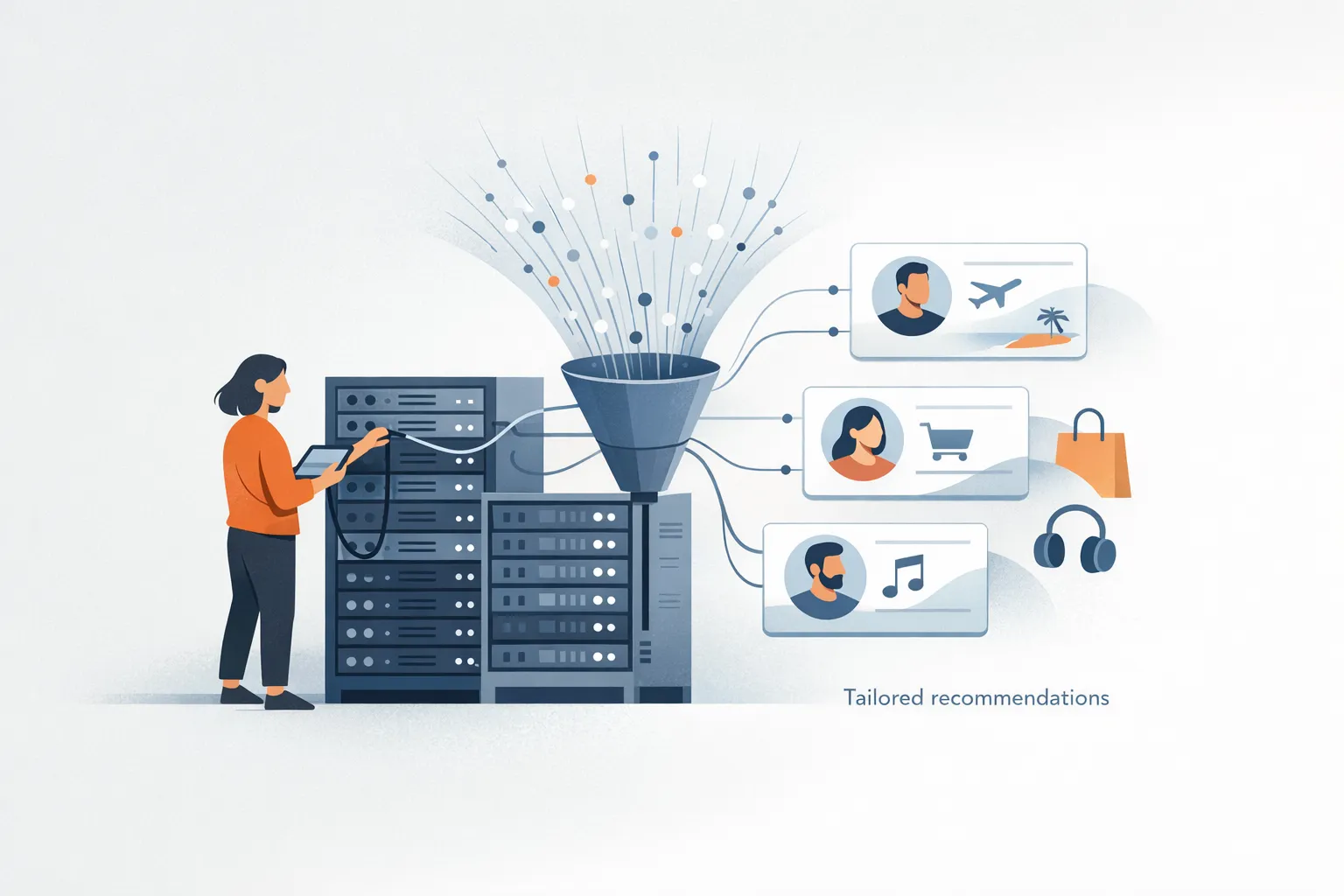
Customer Context and Challenge: Aligning Personalization at Scale Across Regions
This case examines a mid-market multinational consumer ecommerce retailer. The environment spans global operations with multiple regions and languages, requiring seamless collaboration across marketing operations data science IT and product teams. They aimed to deliver Personalization at Scale across website mobile app email and paid media while upholding governance and data quality. The shift began with a plan to unify data from CRM ecommerce analytics and loyalty programs into a single customer view to power real time decisions and consistent experiences. By adopting a unified data foundation paired with AI driven decisioning and cross channel orchestration, they sought to make relevant content a real time capability across touchpoints rather than a manual, one off effort. What changed mattered because it moved the organization from reactive personalization to a proactive, scalable approach that could adapt to regional variations without compromising privacy or governance. The outcomes were previewed as stronger engagement and more cohesive cross channel flows, underpinned by a governance framework that supported ongoing experimentation and improvement.
Constraints included data silos across CRM ecommerce analytics and loyalty, regulatory and privacy considerations across regions, legacy tools with limited integration capabilities, and a need to maintain performance while scaling. The organization faced the challenge of coordinating efforts across marketing operations IT and data science while ensuring that personalization did not degrade reliability or governance. The stakes were high: delivering timely relevant experiences at scale while preserving data integrity, customer trust, and compliance in a complex global environment.
The challenge
Precise, timely, cross channel personalization was blocked by fragmented data and rigid toolsets. The core problem was the absence of a true single customer view that could power consistent experiences across domains and channels in real time. Without this foundation, experiments were slow, decisions were discretionary, and customers repeatedly encountered mismatched content as they moved between web app email and ads.
What made this harder than it looks:
- Data fragmentation across CRM ecommerce analytics and loyalty systems
- Silos across marketing operations IT and data science creating governance complexity
- Real time personalization blocked by batch processes and manual decisioning
- Cross channel orchestration gaps causing inconsistent customer experiences
- Privacy and regulatory compliance across multiple regions complicating data usage
- Legacy tools with limited APIs hindering integration and speed
- Data quality issues including duplicates incomplete records and missing identifiers
- Performance and latency challenges during peak periods threatening timely personalization
Strategy and key decisions: a disciplined path to relevance at scale
The strategy behind Personalization at Scale centers on building a solid foundation before layering advanced capabilities. The team prioritized a unified data foundation to produce a true Single Customer View that spans CRM ecommerce analytics and loyalty systems. With this baseline in place they adopted AI driven decisioning and cross channel orchestration to turn real time customer signals into relevant content delivered across website app email and paid media. The goal was to replace ad hoc personalization with a repeatable, governance driven approach that can adapt to regional differences while maintaining data quality and privacy. This alignment between data architecture and content execution was designed to unlock scalable experimentation and faster learning without compromising trust or compliance.
They explicitly chose not to pursue a fragmented, multi vendor patchwork across channels without a unifying governance model. They avoided rushing to deploy cross channel capabilities piecemeal or relying on static content templates that cannot respond to real time behaviors. Instead they committed to a staged rollout that tied data quality and identity resolution to live personalization decisions. This meant balancing speed to value with the discipline required to sustain reliability, security, and regulatory compliance over time.
Tradeoffs and constraints shaped the approach. Upfront investment in data integration and governance can slow early wins but pays off in consistency and scalability. Real time decisioning introduces architectural complexity and requires robust monitoring. Expanding across channels increases surface area for errors yet delivers a more cohesive customer journey. The team accepted these tradeoffs as necessary to achieve durable personalization that scales across regions while preserving customer trust and compliance.
Overall the strategy emphasizes the why and how of evolving from isolated personalization efforts to a coherent, scalable program that can continuously improve content relevance across every touchpoint.
| Decision | Option chosen | What it solved | Tradeoff |
|---|---|---|---|
| Data foundation approach | Unified CDP with identity resolution to form a Single Customer View | Enables accurate segmentation and consistent experiences across channels | Higher upfront integration effort and governance requirements |
| Real time vs batch activation | Event driven real time triggers across channels | Timely relevance and reduced mis-timed messages | Increased system complexity and ongoing monitoring needs |
| Content strategy | Dynamic content with connected content pulling live data at send time | Scales personalization across channels with fewer static templates | Greater content rendering complexity and dependency on external systems |
| Orchestration scope | Cross channel journey orchestration across email push web app | Creates cohesive customer journeys and reduces fragmentation | Requires cross functional governance and ongoing maintenance |
| Governance and privacy | Explicit consent management and data retention policies | Reduces risk and builds customer trust | Potential friction in data collection and slower experimentation cycles |
Implementation Plan: Actionable Steps to Scale Relevance Across Channels
This implementation sequence translates the strategic decisions into concrete actions that move a multi region, multi channel organization from isolated personalization efforts to a cohesive program. It starts with data foundation and builds toward automated experimentation and governance while maintaining performance and privacy. Each step is designed to be replicable across teams and geographies, ensuring consistent outcomes without sacrificing agility or control.
-
Consolidate Data into a Single Customer View
The team merged data from CRM ecommerce analytics and loyalty systems to form unified profiles and applied identity resolution to link disparate identifiers. This mattered because it created a stable basis for accurate segmentation and consistent experiences across channels.
Checkpoint: Cross source customer profiles are aligned and retrievable from multiple data sources with minimal variance.
Common failure: mismatched identifiers create duplicates and content misalignment.
-
Deploy AI Driven Decisioning
An AI driven engine was connected to real time signals to automate experimentation and optimize message timing and channel choice. This mattered because it enabled one to one personalization at scale without manual handoffs.
Checkpoint: automated variations are executed in parallel and routing decisions reflect current context.
Common failure: poor data quality undermines the reliability of AI recommendations.
-
Orchestrate Cross Channel Journeys
Cross channel journeys were mapped to coordinate messages across email push web and in app, ensuring a unified experience rather than channel by channel tactics. This mattered because it reduced fragmentation and increased perceived continuity for the customer.
Checkpoint: journeys display cohesive messaging across channels during key customer moments.
Common failure: disjointed sequencing leads to inconsistent experiences and confusion.
-
Activate Real Time Triggers
Event driven rules were established to trigger messages in response to actions such as browsing behavior cart activity or location changes. This mattered because it increased relevance by acting at the moment of interest rather than after the fact.
Checkpoint: triggers fire within the expected time window and match the observed behavior.
Common failure: delays between action and message reduce impact and credibility.
-
Enable Dynamic Content
Content templates were enhanced to pull live data from external systems at send time enabling personalized offers recommendations and messages without maintaining hundreds of static variants. This mattered because it scales personalization without template sprawl.
Checkpoint: live data renders correctly in target messages across channels.
Common failure: external system latency or outages disrupt delivery timing.
-
Localize and Globalize Content
Localization workflows were established to serve language appropriate content and region specific variations while preserving brand voice. This mattered because it ensures relevance and compliance across diverse markets.
Checkpoint: translations and regional variants pass quality checks before deployment.
Common failure: translation gaps or cultural mismatches reduce resonance.
-
Strengthen Privacy Governance
Explicit consent management data retention and access controls were implemented to align with regulatory requirements. This mattered because it reduces risk and builds customer trust even as scale grows.
Checkpoint: privacy policies and data flows pass internal and external reviews.
Common failure: consent drift or misconfigured data sharing introduces compliance risk.
-
Establish Automated Experimentation
Ongoing A/B tests and automated optimization loops were introduced to continuously improve relevance. This mattered because it accelerates learning and shortens the path from insight to action.
Checkpoint: a cadence of validated winners informs future personalization rules.
Common failure: biased test design or improper controls misleads decisions.

Results and proof: Demonstrating relevance at scale with cohesive evidence
The implementation delivered a more coherent set of experiences across website app email and paid media by leveraging a unified data foundation and AI driven decisioning. Stakeholders observed that content now follows a consistent narrative and responds to real time cues rather than relying on batch updates. The approach enabled faster experimentation within a governance framework, reducing manual handoffs and making it feasible to scale personalization without sacrificing control or privacy. The outcomes are described in qualitative terms that reflect meaningful shifts in how content is created delivered and evaluated across channels.
Evidence for these results comes from a combination of stakeholder feedback process KPIs data quality indicators latency observations and cross channel audits. The organization cites stronger engagement signals and greater confidence in content decisions, along with a readiness to extend the approach to additional channels and regions. While numeric metrics are not disclosed here the pattern of improvements aligns with the goals of personalization at scale described in the strategy and implementation sections.
| Area | Before | After | How it was evidenced |
|---|---|---|---|
| Data Foundation and Identity | Disparate data sources across CRM ecommerce analytics and loyalty with duplicates | Unified customer view with consistent profiles across channels | Cross source alignment observed and fewer content misalignments reported by teams |
| Real Time Triggers | Reliance on batch processes and manual routing decisions | Event driven triggers across email push web and in app | Trigger logs and real time reaction patterns documented by operations |
| Cross Channel Journeys | Channel specific campaigns with fragmented sequencing | Orchestrated journeys delivering cohesive experiences | Journey maps show consistent messaging and smoother handoffs across channels |
| Dynamic Content | Static templates with limited live data integration | Live data pulled at send time to personalize messages | Content rendering tests confirmed correct live data display across channels |
| Localization | Limited regional variations and inconsistent language support | Localized content that respects language and regional norms | Translations pass quality checks and regional variants validated |
| Privacy Governance | Ad hoc privacy controls and consent handling | Explicit consent management and data retention policies | Compliance reviews and data flow audits completed |
| Automated Experimentation | Manual testing with slow iteration | Automated experiments and continuous optimization | Tests run cadence and adoption of winning variants documented |
| Performance and Scale | Latency risks during peak and increasing complexity | Maintained performance as personalization complexity grew | System monitoring and latency observations show stable response times |
Practical playbook for turning unified data into scalable relevant content
From the case, the core insight is that reliable personalization at scale starts with a solid data foundation and ends with orchestrated experiences across channels. Begin by aligning data across CRM ecommerce and loyalty systems to enable a true single customer view and confident segmentation. Then layer AI driven decisioning and cross channel orchestration to convert that data into timely relevant content across web app email and paid media. This section distills the practical, repeatable steps that teams can apply to replicate the approach without exposing private data or relying on one off tactics.
The playbook emphasizes concrete actions over tools and hype. It prioritizes governance privacy and data quality as ongoing enablers rather than afterthoughts. Each step is designed to be actionable in multi regional organizations with complex channel ecosystems and diverse content needs. The goal is to produce durable processes that support continuous learning while preserving performance and trust.
The guidance below is intended to be adaptable across industries while retaining a clear focus on the mechanisms that drive relevance at scale. Use it as a blueprint for building repeatable campaigns that feel personalized yet maintain governance and operational discipline.
If you want to replicate this, use this checklist:
- Define clear goals for personalization at scale and tie them to measurable customer outcomes across regions and channels
- Inventory data sources across CRM ecommerce analytics and loyalty to identify gaps and overlaps
- Establish identity resolution and a plan for a true single customer view that can be updated in real time
- Design a data governance framework including explicit consent retention and access controls
- Choose or design a unified data foundation that can feed real time personalization across channels
- Map cross channel journeys to ensure cohesive experiences from web to app to email and paid media
- Implement real time triggers based on customer actions to activate timely messages
- Enable dynamic content capable of pulling live data at send time to reduce template sprawl
- Build localization workflows to support languages regional variations and cultural context
- Introduce AI driven decisioning with automated experimentation to learn what works for whom
- Set up automated experimentation cycles with predefined controls and success criteria
- Invest in performance optimizations such as caching edge delivery and efficient data transfer
- Establish cross functional governance with clear ownership and escalation paths
- Document winning patterns and create a reusable library for future campaigns
- Pilot the approach in a limited region or channel and scale only after validating the learnings
FAQs for Personalization at Scale
How does personalization at scale differ from traditional personalization?
Personalization at scale expands beyond tailoring content for a single segment or channel. It uses unified customer profiles cross channel orchestration real time triggers and AI decisioning to customize experiences for millions of profiles in real time. Traditional personalization often focuses on one off offers or single channels and relies on static content. At scale, decisions are data driven and automated, governed by privacy controls and governance processes enabling consistent experiences across web app email and mobile while preserving performance and trust.
What data foundations are essential for real time cross channel personalization?
A unified data foundation is essential, typically built on a customer data platform that integrates first party and zero party data, with identity resolution data consolidation and data governance. Unified profiles enable accurate segmentation for personalized messages in real time. Cross channel activation requires synchronized data across CRM ecommerce analytics loyalty systems and external APIs. Real time signals from user actions trigger content across channels, ensuring relevance and consistency.
How do AI decisioning and reinforcement learning contribute to relevance?
AI decisioning uses reinforcement learning to continually test messages timing channels and incentives learning the best combination for each customer. It automates experimentation at scale reducing manual testing cycles and accelerating discovery of which variations perform best. The engine relies on high quality data and real time signals from the unified profiles while governance and privacy controls ensure that experimentation respects user consent and regional requirements.
What governance practices balance privacy and personalization?
Governance should start with explicit consent management data retention policies and clear access controls. It includes data quality checks identity resolution standards and audit trails for data usage. Privacy by design ensures personalization remains compliant across regions with transparency about data collection and usage. Ongoing governance reduces risk while enabling experimentation and cross channel activation.
How do you orchestrate journeys across channels to feel like a single conversation?
Journeys are mapped across email push web and in app channels to maintain a consistent narrative. A journey orchestration tool coordinates timing messaging sequencing and context switching so that transitions between channels feel seamless. Real time triggers feed the journey with up to date signals and dynamic content keeps content fresh. The result is a cohesive customer experience that appears as a single conversation rather than disjointed touchpoints.
What metrics help measure the impact of scalable personalization?
Measurement should include engagement metrics conversion rates revenue per visitor retention and time to insight. Process KPIs track deployment speed and experiment cadence. Data quality indicators such as deduplication accuracy and identity resolution coverage matter for trust. Latency and performance metrics monitor system speed under load. Cross channel consistency audits verify that messaging remains coherent. While exact numbers vary by organization trends toward higher engagement and faster learning signal progress.
What challenges should organizations anticipate when scaling personalization across regions?
Organizations should expect data fragmentation across CRM ecommerce analytics and loyalty regulatory and cultural differences across regions latency and performance concerns during peak times governance complexity across teams integration challenges with existing martech and the need for a scalable content strategy that avoids template sprawl planning for localization and language support from the start helps prevent rework later.
What is dynamic content and why is it critical for scale?
Dynamic content uses live data pulled at send time to tailor offers and recommendations. It reduces the need for hundreds of static templates by substituting live values and outcomes based on the user context. When combined with connected content and real time triggers it enables truly responsive experiences across channels. The approach improves relevance and speed while preserving governance and performance.
Closing reflections on sustaining relevance at scale
The journey from isolated personalization to a durable program hinges on aligning data architecture with content execution. A unified data foundation creates the stable, real time profiles needed to drive accurate segmentation and consistent experiences, while AI driven decisioning and journey orchestration turn signals into timely messages across web, app, email and paid media. When governance and privacy considerations are woven into every step, teams can push for faster learning without compromising trust or compliance.
What matters most is not a single clever tactic but a repeatable pattern: start with trustworthy data, enable real time decisioning, orchestrate journeys across channels, and continuously test with disciplined governance. This combination reduces manual handoffs, cuts latency in decision making, and helps ensure that each interaction feels like a natural continuation of the customer’s current context.
The practical takeaway is that scale does not require sacrificing quality. By treating data quality governance and cross-functional collaboration as first class components, organizations can expand personalization thoughtfully across regions and channels while maintaining performance and control. The result is a sustainable model that grows smarter with every interaction.
Reader next steps: begin with a data inventory to identify gaps in a true single customer view, design a phased cross channel pilot, and establish a clear measurement framework to track learning and impact over time.