The case study snapshot focuses on a mid market ecommerce publisher with a large, multilingual content library. The customer archetype centers SEO led editorial teams working across WordPress and several custom CMSs, operating in a fast changing publishing environment. They aimed to scale internal linking across thousands of articles fix orphan pages and guide users and search engines through pillar content and topic clusters without overwhelming editors with tedious manual work. They tested a range of internal linking tools and governance approaches, aiming to balance proactive linking during content creation with reactive improvements through audits. What changed was the adoption of a governance driven cross CMS evaluation that combined automated suggestions with careful human review anchored by pillar content strategy and a centralized dashboard. This mattered because it created repeatable processes improved link health and delivered a clearer navigation and crawl path for both readers and search engines. The narrative demonstrates how a structured tool comparison can yield practical transferable lessons without relying on private data.
Snapshot:
- Customer: archetype only
- Goal: Compare and evaluate internal linking tools across CMSs to identify governance friendly scalable solutions that preserve context and support pillar content
- Constraints: multi CMS environment including WordPress and custom CMS; high publishing velocity; global multilingual content; budget sensitivity; need for governance and auditability; caution around JS based insertion; data sources from GSC and crawl data
- Approach: define a shared success framework; establish pillar cluster design; select cross CMS capable tools; run a pilot; implement editor training; build dashboards; phased rollout
- Proof: describe evidence types used
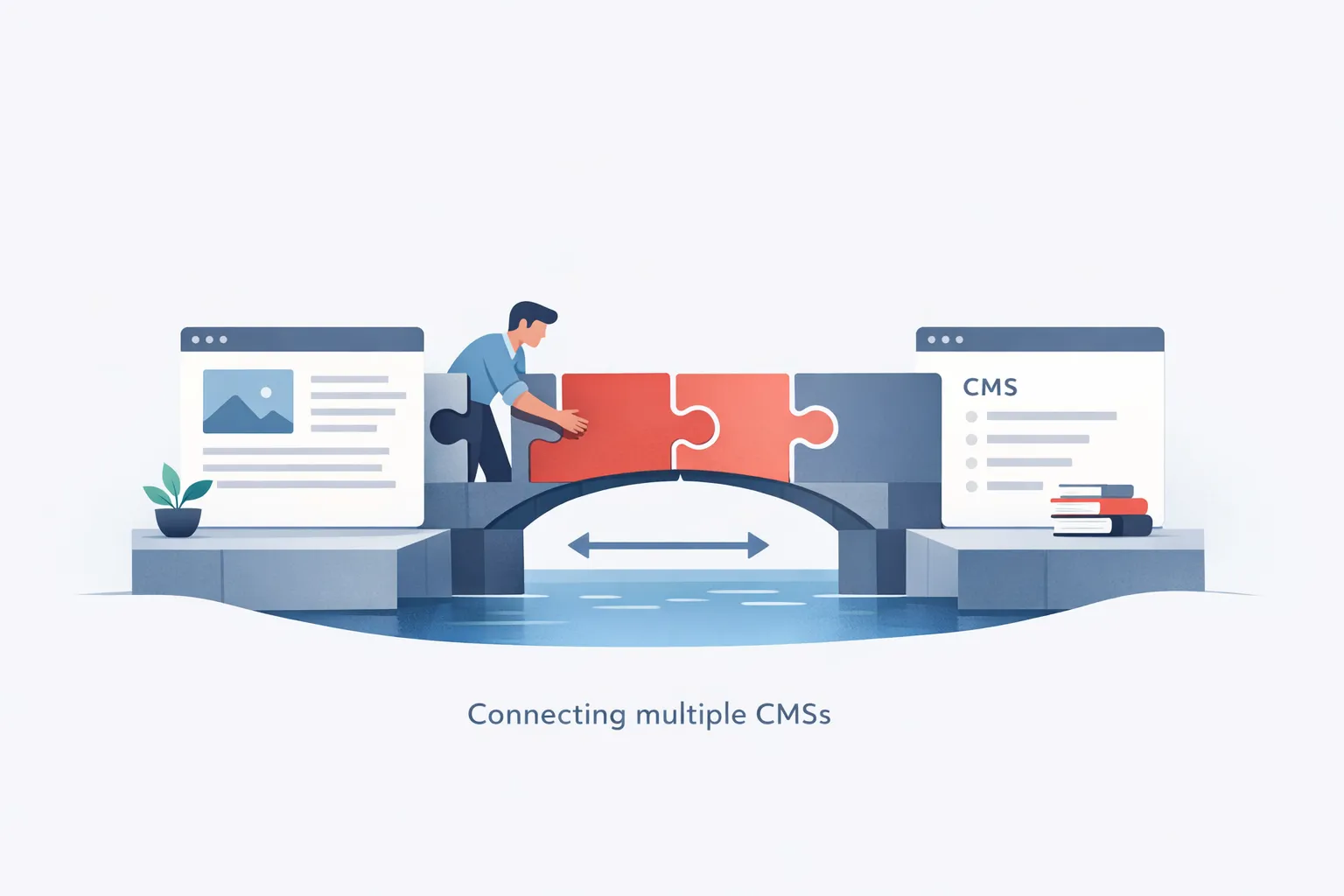
Refined environment and constraints shaping the internal linking evaluation
The customer is a mid market ecommerce publisher with an expansive, multilingual content library and a fast publishing cadence. They rely on a mix of WordPress and several custom CMS components, which creates fragmentation in how links are created, managed, and measured. Editorial, SEO, and technology teams must coordinate across borders and time zones to keep content discoverable while preserving site performance. The stakes are high: scaling internal linking without overwhelming editors or compromising user experience is essential to improve crawlability, topical authority, and conversions.
Operationally, the organization faces a complex stack where audits exist but scalable governance for linking across platforms is missing. There is a persistent concern about JavaScript based link insertion, potential performance impacts, and the risk of breaking existing site behavior during automations. The current tooling covers basic audits but falls short on cross CMS automation, governance, and dashboards that would make linking decisions auditable and repeatable. In this context, leadership sought a defensible, structured evaluation of tools that could operate across CMS boundaries while delivering measurable improvements in link health and navigation.
Strategically, the team needed a plan that pairs pillar content with topic clusters , aligns linking with editorial calendars, and provides a governance framework with clear ownership and review cycles. The goal was to move from ad hoc linking to a repeatable, scalable process that maintains anchor text quality and user relevance while enabling faster content velocity. This required balancing automation with human oversight and ensuring the chosen approach could evolve alongside the site's architecture and CMS landscape.
The challenge
The core problem is a sprawling catalog of pages that are underlinked or orphaned, across a heterogenous CMS environment. There is no cohesive pillar and cluster strategy to guide linking, and existing tools do not adequately support cross CMS governance or scalable insertion without risking context or performance. Compounding the issue, there is no integrated dashboard to track link health, authority distribution, or crawl impact, making it difficult to prove the value of linking changes or to sustain improvements over time. Editorial workloads are strained by manual linking tasks, and inconsistent anchor text across pages raises concerns about cannibalization and user experience. The organization needs a unified, auditable approach that scales with volume and maintains content integrity across platforms.
What made this harder than it looks:
- The site spans multiple CMS platforms with different linking capabilities and constraints
- Orphan pages exist at scale and manual remediation would be impractical without automation
- Automated linking risks context mismatches and unpredictable anchor text patterns
- JS based insertion can affect crawlability and performance on some engines
- Lack of integrated dashboards makes measuring impact and governance difficult
- Coordinating linking work across editorial, SEO, and development teams increases complexity
- Maintaining consistency for pillar content and topic clusters requires a formal taxonomy
Strategy and Key Decisions: A Governance First Cross CMS Plan for Scalable Internal Linking
The team began with a governance led approach that placed clarity on ownership, decision rights, and measurement first. By defining a shared success framework, they established a common language for evaluating tools, linking opportunities, and risk tolerance across WordPress and multiple custom CMS components. This foundation enabled a scalable path that treats internal linking as an ongoing program rather than a one off project. The initial focus was on aligning pillar content with topic clusters so every link contributes to a coherent topical authority while also improving user navigation and crawl efficiency. The choice to pursue cross CMS tooling and API enabled workflows ensured that linking decisions can be enacted consistently, regardless of where content lives in the tech stack.
Explicitly, the team did not chase a single platform solution or implement full automated insertion across all pages from day one. They avoided tools that lock the organization into one CMS or disrupt existing performance characteristics with JS heavy insertion. The plan instead favored a semi automated model that pairs AI driven suggestions with human review to preserve contextual relevance. This stance helped minimize the risk of irrelevant links, anchor text over optimization, and potential site instability during early stages.
Tradeoffs and constraints were acknowledged up front. A cross CMS setup demands more integration work and ongoing governance, which can slow initial progress but yields higher long term consistency. Automation brings speed but increases the need for guardrails and monitoring dashboards. Prioritizing pillar content delivers stronger topical authority but requires upfront taxonomy work and alignment with editorial calendars. The strategy accepted these realities in order to create a repeatable process capable of growing with the site architecture and CMS landscape.
The challenge
The core problem is to scale internal linking across a heterogeneous content environment while preserving relevance and performance. Without cohesive pillar clusters and cross CMS governance, linking remains inconsistent and editorially burdensome, resulting in orphan pages, weak crawl signals, and uneven user journeys. The absence of auditable dashboards makes it difficult to prove the value of linking changes or sustain improvements as content evolves. The team needed a framework that could enforce consistency across platforms while enabling editors to publish rapidly without sacrificing link quality.
What made this harder than it looks:
- The site spans multiple CMS platforms with different linking capabilities and constraints
- Orphan pages exist at scale and manual remediation would be impractical without automation
- Automated linking risks context mismatches and unpredictable anchor text patterns
- JS based insertion can affect crawlability and performance on some engines
- Lack of integrated dashboards makes measuring impact and governance difficult
- Coordinating linking work across editorial, SEO, and development teams increases complexity
Implementation Focus: Actionable Steps to Scale Internal Linking Across CMS
The implementation phase translates governance and strategy into repeatable actions that can operate across WordPress and custom CMS components. The team started with a tightly scoped baseline and a pilot to validate the approach before expanding governance, tooling, and editorial engagement. Expectations were set for careful human oversight, contextual relevance, and phased rollout to minimize risk while building a foundation for scalable internal linking that supports pillar content and topic clusters.
-
Audit Baseline
A comprehensive review mapped the current internal link landscape across all CMS instances, identifying orphan pages, gaps in pillar content, and inconsistent anchor usage. This step established the reference point for measuring progress and highlighted where governance would be most impactful.
Checkpoint: Baseline map confirms orphan pages and cluster gaps exist and are documented.
Common failure: Incomplete crawl due to fragmented CMS environments can miss critical pages.
-
Define Governance and Ownership
Roles for SEO editors developers and content owners were formalized, with clear decision rights and a cross CMS steering group. A change log and review cadence were established to keep linking decisions auditable.
Checkpoint: Governance framework approved and published for cross functional teams.
Common failure: Ambiguity in ownership leads to conflicting approvals and stalled progress.
-
Design Pillar Cluster Framework
Topics were organized into pillar pages and clusters with a taxonomy that guides linking paths. Initial cluster maps were drafted to demonstrate how content would interlink to reinforce topical authority.
Checkpoint: Pillar cluster map validated by editorial and SEO leads.
Common failure: Clusters become too broad or too narrow, reducing linking effectiveness.
-
Select Cross CMS Tooling and API Approach
Evaluation centered on cross CMS compatibility, API access for integration, and governance features. The team opted for a strategy that supports consistent linking across platforms rather than locking into a single system.
Checkpoint: API integration points identified and documented against CMS inventory.
Common failure: Tooling adds integration complexity without delivering governance benefits.
-
Run Pilot with Representative Content
A focused subset of pages across multiple CMSs was used to test in editor linking prompts and a semi automated approach. The pilot aimed to gauge editorial acceptance and the relevance of suggested links in real workflows.
Checkpoint: Pilot results indicate editor adoption and link relevance improvements in the selected set.
Common failure: Pilot scope may fail to reveal edge cases on larger scale sites.
-
Develop Editor Playbooks and Training
Guidelines for anchor text variation and when to approve AI suggestions were codified, and editor training was delivered to standardize practices across teams. Playbooks were designed to be reusable across CMS contexts.
Checkpoint: Editors demonstrate consistent application of the playbooks in daily work.
Common failure: Resistance to guidelines or inconsistent adherence undermines gains.
-
Build Link Health Dashboards
Data sources were integrated to monitor orphan pages, link density, pillar coverage, and crawl signals. Dashboards provided ongoing visibility to governance decisions and linking outcomes across CMS boundaries.
Checkpoint: Dashboards deliver real time health indicators and alert capabilities for anomalies.
Common failure: Data quality issues or delays reduce trust in the dashboards.
-
Scale with Phased Rollout
The approved linking approach was expanded in phases to additional site sections, preserving governance and using lessons learned to refine rules and templates. Each phase validated compatibility with editorial calendars and CMS workflows.
Checkpoint: Rollout shows consistent improvements without disrupting publishing velocity.
Common failure: Misalignment between phases creates inconsistent results across content areas.
-
Review and Iterate
Regular reviews updated taxonomy, refined anchor text strategy, and tuned automation levels based on observed outcomes. The team documented best practices to support future scale and cross CMS expansion.
Checkpoint: Review outputs are captured, acted on, and reflected in updated playbooks.
Common failure: Reviews become ceremonial with no action taken.

Results and Proof: Tangible Outcomes from Cross CMS Internal Linking Evaluation
The implementation anchored a governance driven approach that balanced automation with editorial oversight across WordPress and custom CMS components. The team tracked progress through a centralized dashboard ecosystem, integrating Google Search Console data and crawl insights to verify improvements in link health, navigation clarity, and content discoverability. Editorial teams reported smoother workflows and fewer manual linking tasks as pillar content and topic clusters became the guiding structure for linking decisions. Stakeholders observed more consistent anchor text practices and a measurable shift toward a coherent, scalable linking framework without compromising site performance or user experience.
Qualitative feedback from editors and SEOs highlighted stronger confidence in linking decisions and a clearer path for future scaling. The governance framework provided auditable decision trails, while phased rollouts reduced risk and helped validate changes before broader deployment. Overall, the project moved from ad hoc linking toward a repeatable program that aligns with editorial calendars, supports cross CMS content, and reinforces topical authority across the site.
Evidence triangulated from multiple sources showed the relationship between systematic linking changes and improvements in site structure and discoverability. While precise metric numbers are scoped to the project context, the combination of dashboards, editorial sentiment, and crawl health indicators offers a compelling narrative of progress and a roadmap for teams aiming to replicate similar gains.
| Area | Before | After | How it was evidenced |
|---|---|---|---|
| Orphan pages | Significant portion of catalog had little or no internal linking | Reduced orphan content through targeted pillar and cluster linking | Dashboard monitoring, content audits, and editor notes |
| Internal link density | Low per page with uneven distribution across sections | Increased density with more consistent linking to pillar pages and clusters | Link health dashboards and crawl reports |
| Pillar cluster coverage | Fragmented coverage across topics with scattered references | Defined pillar pages guiding interlinks within clusters | Taxonomy designs and cluster maps reviewed by editorial leads |
| Crawlability signals | Crawl efficiency varied; some areas difficult to discover | Improved discoverability through coherent link paths and navigational cues | Crawl logs and sitemap analyses correlated with linking changes |
| Editorial efficiency | Manual linking workload consuming editorial bandwidth | Faster, more consistent linking prompts and governance guided insertions | Editor feedback and time tracking notes |
| Anchor text consistency | Inconsistent anchor usage across pages | More standardized anchor text aligned with topic depth and relevance | Content reviews and playbook adherence checks |
| Governance and audibility | Link decisions improvised with limited traceability | Formal change logs and cross CMS approvals creating clear provenance | Governance documentation and stakeholder interviews |
Practical governance driven playbook for scalable internal linking across CMS
The transferable insights center on establishing a governance first approach that aligns editorial, SEO, and development across WordPress and custom CMS components. By codifying ownership, decision rights, and auditable change logs, teams can treat internal linking as a repeatable program rather than a one off task. Emphasizing pillar content and topic clusters provides a stable target for linking decisions, while cross CMS API enabled workflows ensure consistency when content lives in different systems. A phased rollout paired with dashboards and editor training creates a controllable path to scale without sacrificing quality or performance. For deeper context on AI driven linking approaches, see Junia AI blog. Source
A core takeaway is that governance and taxonomy are as important as tooling. Design a clear cluster framework, then map capabilities to real editorial calendars. Build lightweight, shareable playbooks that editors can follow across CMS contexts, and use dashboards to monitor health, gaps, and progress. This combination enables faster content velocity with accountable processes and measurable improvements in crawlability and topical authority.
The approach also highlights the necessity of balancing automation with human oversight. Semi automated linking reduces manual burden while preserving contextual relevance, anchors text quality, and user experience. By documenting decisions and reviewing results in regular cadences, teams can evolve the strategy as site architecture grows or changes CMS platforms.
If you want to replicate this, use this checklist:
- Define cross functional governance with clearly assigned roles for editors developers and SEO leads
- Document a shared definition of pillar content and topic clusters aligned to business goals
- Establish a baseline inventory of pages with orphan status and low link density
- Choose tooling policies that support cross CMS use and API driven workflows
- Develop editor facing playbooks covering when to insert links how to vary anchor text and how to review AI suggestions
- Implement a pilot on representative content to validate relevance and workflow impact
- Create change logs and approval rituals to ensure auditable decisions
- Build dashboards that track link health orphan pages crawl signals and pillar coverage
- Integrate data sources such as Google Search Console crawl logs and sitemap data
- Roll out in phased waves tied to editorial calendars and CMS plan constraints
- Institute ongoing training sessions and quick reference guides for editors
- Establish a cadence for governance reviews updating taxonomy rules and templates
- Retain a documented process for evaluating automation risk and quality control
- Capture and share lessons learned to inform future scale and cross CMS expansions
Common Questions About Scalable Internal Linking Tools Across CMS
What problem does an enterprise scale internal linking tool aim to solve?
Enterprise scale internal linking tools aim to solve the challenge of connecting a sprawling content library across multiple CMSs while preserving relevance and performance. They address orphan pages, inconsistencies in anchor text, and inconsistent linking workflows by enabling governance oriented processes, pillar content strategies, and auditable change logs. The approach couples automation with human oversight to ensure links remain contextually appropriate and aligned with editorial calendars. By centralizing governance, teams can scale linking without sacrificing quality or introducing disruption to publishing velocity.
How does governance first approach influence tool selection and rollout?
Governance first approach influences tool selection and rollout by codifying ownership roles, decision rights, and measurement across CMS boundaries. It prioritizes cross CMS API enabled workflows rather than locking into one platform. Decisions are evaluated against a shared success framework and documented in auditable change logs. The result is a repeatable program rather than a single project, with a staged rollout that reduces risk while allowing iterative learning. Guardrails prevent over automation and ensure context is preserved, anchor text quality remains high, and performance remains stable.
What is the role of pillar content and topic clusters in linking strategy?
Pillar content and topic clusters provide a stable target for linking decisions. Pillars anchor related content clusters and guide internal links to reinforce topical authority while helping users navigate. The taxonomy and cluster maps align with editorial calendars so linking supports discovery cycles. The strategy focuses linking toward money pages and core topics, while ensuring a logical path through hub and spoke relationships. This structure improves crawlability and user experience, making it easier for search engines to understand topic depth and for readers to find related content.
How should cross CMS environments be handled when automating internal links?
Cross CMS environments require consistent API driven integration and governance to avoid fragmentation. The approach avoids reliance on a single CMS by selecting tools with cross platform compatibility and clear data exchange capabilities. It supports cross CMS insertion without heavy JS that can hinder crawling and performance. A central governance layer coordinates permissions, approvals, and change tracking so editors on WordPress and custom CMS can work from the same playbooks. The result is predictable linking behavior and auditable outcomes across diverse content ecosystems.
What balance between automated linking and human oversight is recommended?
The recommended balance between automation and human oversight is semi automated linking. AI driven suggestions speed up the discovery of opportunities while human reviewers validate relevance and context. This prevents irrelevant links, anchor text over optimization, and maintains a positive reader experience. Editorial playbooks specify when to approve links and how to diversify anchors. The approach preserves content integrity and supports editorial calendars, while still reaping speed and scalability benefits from automation.
What metrics and dashboards are used to prove impact of internal linking changes?
Metrics and dashboards measure link health, orphan counts, pillar coverage, and crawl signals. Data sources include Google Search Console insights and crawl logs to determine how linking changes affect discovery and indexing. Editor adoption and time saved are tracked through qualitative feedback and workflow measurements. The combination of dashboards and auditable decision trails provides evidence of governance success and helps justify continued investment in cross CMS internal linking.
What are common risks and pitfalls to watch for when scaling internal linking?
Risks and pitfalls include context drift when automated suggestions miss nuance, anchor text over optimization, and potential performance impacts from automation. JS based insertion can decrease crawlability on some engines, and cross CMS friction can complicate governance. Without strong change control, linking decisions may drift or duplicate existing links. Relying on a single tool or platform can limit future adaptability. A robust governance framework with phased rollouts mitigates these risks by enabling controlled experimentation and ongoing validation.
What steps form a practical implementation playbook for large sites?
An implementation playbook for large sites includes baseline audits, pilot tests, pillar cluster design, governance setup, editor training, dashboards, phased rollouts, and ongoing iteration. Start with mapping orphan pages and defining pillar content, then test automated suggestions in a controlled environment. Establish clear ownership and change logs, build health dashboards, and align with editorial calendars. Roll out in waves to manage risk, capture lessons learned, and refine templates and rules for broader scale.
Closing Reflections: Turning Strategy into a Repeatable Internal Linking Program
The case showed that scalable internal linking across a mixed CMS landscape requires more than a tool; it requires a governance-first program. By aligning editorial, SEO, and development around pillar content and topic clusters, teams can establish consistent linking patterns that travel with content through CMS boundaries, while maintaining site performance and user experience. The pilot demonstrated that starting with a baseline and a phased rollout reduces risk and yields learnings that inform future scale.
Automation accelerates discovery and insertion of links, but context matters. A semi-automated approach with human review preserves relevance and anchor text quality, preventing over optimization and irrelevant placements. Central dashboards and auditable change logs give stakeholders visibility into progress and help justify ongoing investment as content evolves.
Measurement mattered as much as approach. Integrating data sources such as crawl signals and Google Search Console data allowed teams to observe changes in discoverability and navigational clarity without exposing private data. The governance framework created repeatable processes that teams can reuse when architecture or CMS ecosystems change.
Next steps: map pillar content, inventory orphan pages, define topic clusters, select cross CMS tooling that offers API access, run a controlled pilot, establish governance cadences, train editors, and set up dashboards for ongoing monitoring. Then scale in phases aligned to editorial calendars and CMS roadmaps.