Data-Driven Personalization: From Data Collection to Content Personalization at Scale guides you through turning scattered customer data into timely, relevant experiences across web, mobile, email, and beyond. In this guide you will map the customer journey, unify data sources into a single, actionable view, and design automated, cross-channel experiences that adapt in real time. The simplest correct path starts with identifying key personalization moments, then building a central data layer (CDP or equivalent), connecting channels, and layering AI-driven decisioning and dynamic content. You’ll implement real-time triggers, run controlled experiments, and establish governance to protect privacy while proving ROI. By following this procedural approach you’ll move from data collection to live personalization at scale, delivering consistent value to customers and measurable business impact.
This is for you if:
- You are a marketing leader, data engineer, or product team responsible for delivering personalized experiences at scale.
- You want to move beyond basic segmentation to end-to-end, data-driven personalization across multiple channels.
- You have multiple data sources that must be unified into a single customer view.
- You need to demonstrate ROI and governance for privacy and compliance.
- You plan to implement AI-driven decisioning and real-time activation to optimize interactions.
Prerequisites for Data-Driven Personalization at Scale
Prerequisites matter because data-driven personalization at scale relies on a solid foundation. Without a unified view and real-time data activation, experiences will feel generic and late. Establishing clear goals, governance, and a scalable data and content infrastructure reduces risk, accelerates delivery, and proves ROI. By aligning data, technology, and teams upfront, you create reliable personalization that serves each customer while preserving privacy and compliance.
Before you start, make sure you have:
- A clearly defined business goal for personalization and ROI, with executive ownership.
- Real-time access to customer data from web, mobile, email, and other touchpoints.
- A centralized data layer or CDP to unify data sources into a single profile.
- Cross-channel orchestration capability to connect channels (email, web, mobile, push, etc.).
- AI/automation readiness to drive decisions and instant activation.
- A data governance and privacy framework aligned with regulatory requirements.
- A centralized content repository or CMS capable of dynamic, data-driven content.
- A plan for identity resolution and persistent customer profiles across devices.
- Initial personalized content assets and data feeds to support rapid pilots.
- An experimentation and measurement culture with defined KPIs.
- A scalable infrastructure to handle large audiences and high throughput (Contentful resource).
- Stakeholder alignment across marketing, product, data, and IT.
Take Action: Step-by-Step Procedure for Data-Driven Personalization
This procedural guide outlines a practical, action-oriented sequence to move from data collection to live content personalization at scale. You will map meaningful moments, build a unified data foundation, connect channels, and deploy AI-driven decisioning with dynamic content. The process emphasizes governance, experimentation, and ROI tracking so teams stay aligned and outcomes improve steadily. Expect cross-functional collaboration, careful data governance, and iterative pilots that scale as confidence grows. By following these steps, you’ll transform data into timely experiences across web, mobile, email, and beyond.
-
Map Personalization Moments
Chart the customer journey from first touch to post-purchase and identify moments where timely messages add value across web, mobile, email, and in-app channels.
How to verify: Moments are documented with context signals and stakeholder sign-off.
Common fail: Key moments are missed or misaligned with business goals.
-
Unify Data into a 360-Degree View
Set up a central data layer to merge data from all sources, resolve identities, and create unified profiles Source.
Validate that profiles include signals from web, mobile, commerce, and service interactions, and establish governance to handle consent.
How to verify: Unified profiles exist with linked data sources and identity resolution.
Common fail: Data remains siloed or identities remain unresolved.
-
Integrate MarTech Stack for Cross-Channel Data Flow
Connect CRM, marketing automation, analytics, and content systems so data events flow automatically between tools.
How to verify: Data signals move between tools and audiences receive signals across channels.
Common fail: Integrations are fragmented, causing inconsistent experiences.
-
Architect AI-Driven Decisioning for Content, Timing, and Channel
Configure an AI-powered decision engine to select the right content, timing, and channel for each user based on context and signals.
How to verify: Real-time decisions trigger appropriate actions in the chosen channels.
Common fail: Rules diverge from goals or drift over time.
-
Build Dynamic Content Assets and Feeds
Create modular templates and connect live data feeds to populate messages in real time, including product data and contextual signals.
How to verify: Content updates reflect current data and feed into channels without delay.
Common fail: Static content or stale feeds reduce relevance.
-
Activate Real-Time Triggers Across Channels
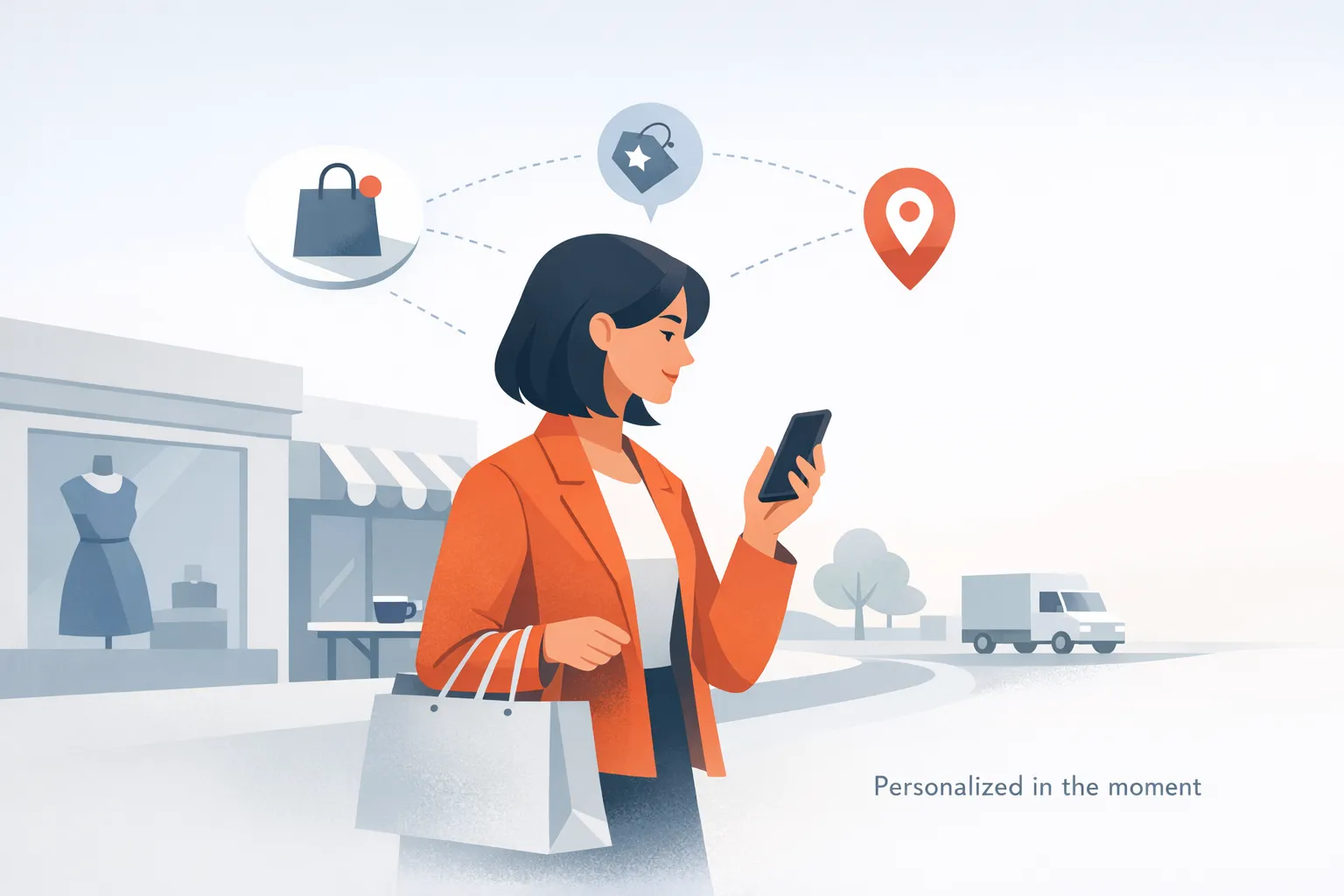
Implement triggers that fire in real time based on user behavior, location, or context, across web, mobile, email, and other touchpoints.
How to verify: Triggers fire promptly and messages appear in the intended channels.
Common fail: Latency or missed events break the user experience.
-
Automate Experimentation and Optimize Continuously
Set up automated tests to compare content, timing, and offers; iterate quickly using data-driven results.
How to verify: Experiments yield clear winners and the winning variants are deployed.
Common fail: Experiments lack control or proper sample size.
-
Scale with Governance, Measurement, and ROI Tracking
Define enterprise KPIs, establish dashboards, and monitor engagement, conversions, and revenue impact while enforcing privacy and data quality standards.
How to verify: ROI indicators trend upward and governance practices are in place.
Common fail: ROI is unclear or governance is lax.
Verification: Validate Real-Time Personalization at Scale
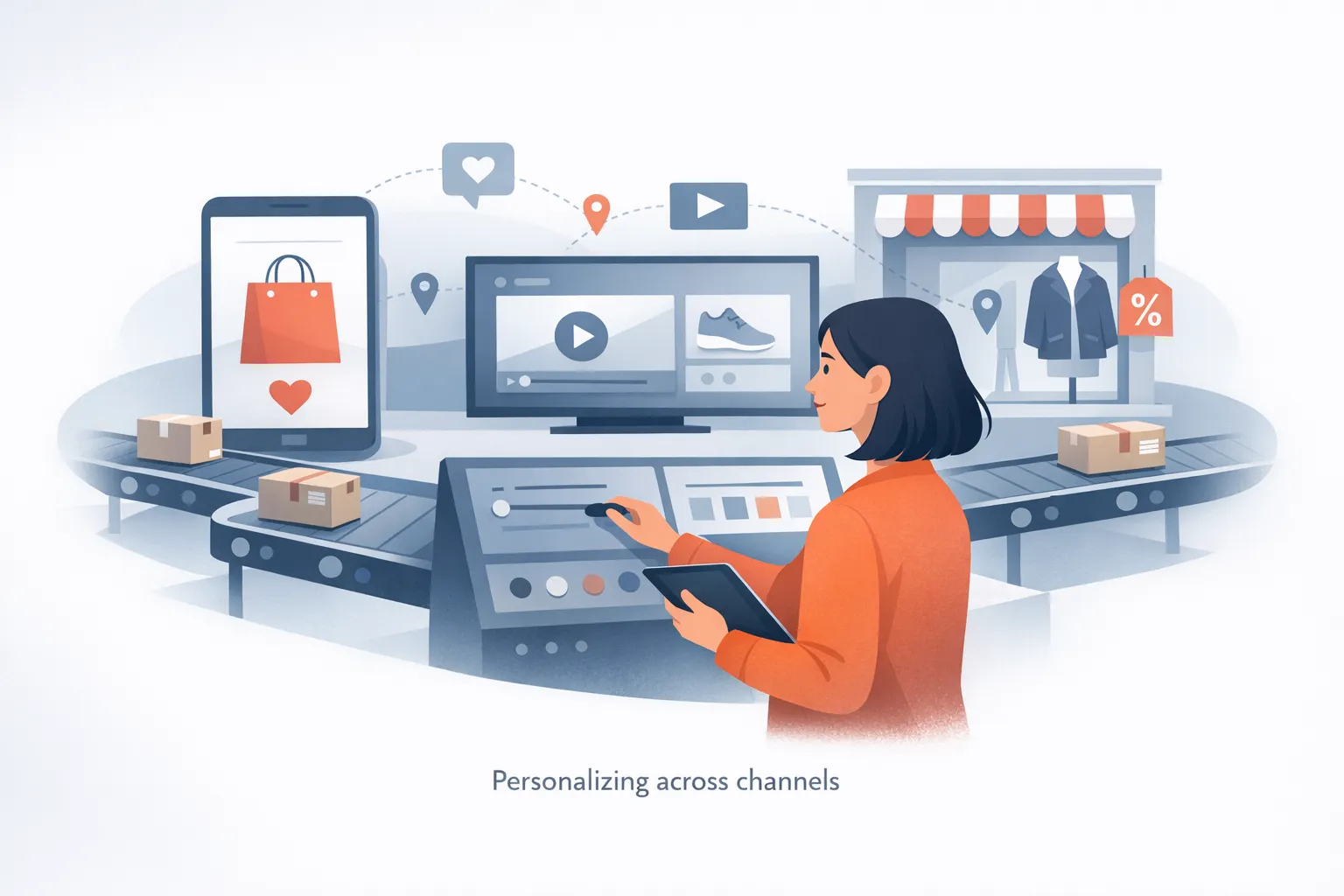
This section explains how to confirm that data-driven personalization operates as intended across channels. You’ll verify a unified customer view, real-time activation, cohesive journeys, AI-driven decisioning, and dynamic content that updates with live data. In addition, you’ll check governance, privacy controls, and ROI dashboards to ensure compliance and measurable impact. By following these checks, you’ll establish confidence that the system delivers timely, relevant experiences consistently as you scale.
- Unified customer view with linked data sources
- Real-time activation across channels for prioritized channels
- Cross-channel journey cohesion and consistent messaging
- AI-driven decisions selecting content and timing
- Dynamic content feeds that reflect live data
- Governance, consent, and privacy controls enforced
- ROI and engagement dashboards tracking impact
- Identity resolution accuracy and data quality maintained
| Checkpoint | What good looks like | How to test | If it fails, try |
|---|---|---|---|
| Data unification validated | A 360-degree view with linked sources and identity resolution | Run sample identity resolution checks; verify profiles include web, mobile, and commerce signals | Review data mappings; re-run identity stitching |
| Real-time activation across channels | Signals trigger appropriate actions in near real time across channels | Simulate user actions and confirm messages appear in intended channels | Inspect event pipelines; increase throughput or reduce latency |
| Cross-channel journey cohesion | Consistent messaging and timing across channels for a given user | Audit a few journeys end-to-end; compare timestamps and content | Normalize templates; adjust orchestration rules |
| AI decisioning accuracy | Relevant content and offers selected per context | Run controlled tests and review recommendations against objectives | Retrain model; tune features and data freshness |
| Privacy governance compliance | Consent captured; data usage aligned with policy | Run privacy/audit checks; verify data handling matches policy | Update consent workflows; patch data processing |
| ROI and engagement visibility | Dashboards show engagement, conversion, revenue signals | Inspect KPI dashboards; compare pre/post metrics after experiments | Refine KPI definitions; add missing data sources |
Troubleshooting: Immediate Fixes for Real-Time Personalization Slowness
Use this quick-reference guide to diagnose common failures in data-driven personalization at scale. Focus on identifying whether the problem is data latency, identity resolution, or governance, then apply targeted, actionable fixes that restore real-time activation, cohesive cross-channel journeys, and compliant data handling without disrupting existing workflows.
-
Symptom: Real-time triggers fail to fire across channels.
Why it happens: Data latency or broken event streams prevent timely actions; time-window misconfigurations can delay signals.
Fix: Audit data pipelines, enable streaming with proper buffering, implement retry and backoff logic, and test end-to-end across key channels.
-
Symptom: Duplicate or fragmented customer profiles impair personalization.
Why it happens: Incomplete identity resolution and inconsistent identifiers across sources.
Fix: Consolidate identity graph, enforce persistent identifiers, run deduplication, and validate against a sample of known users.
-
Symptom: Dynamic content fails to reflect live data.
Why it happens: Live feeds are not connected or caching hides updates.
Fix: Connect live data feeds, reduce caching TTL, and implement event-driven content refresh rather than scheduled batches.
-
Symptom: Personalization is blocked by privacy or consent checks.
Why it happens: Consent workflows or regional rules prevent data use for personalization.
Fix: Update consent management, ensure policy alignment across regions, and enforce data usage rules in all channels.
-
Symptom: AI recommendations drift from business goals.
Why it happens: Model drift, stale features, or mis-specified objectives degrade relevance.
Fix: Re-train with fresh data, recalibrate feature sets, and adjust objective functions with clear KPIs.
-
Symptom: Channel integrations break or signals arrive late.
Why it happens: API changes, credential expiry, or misconfigurations disrupt data flow.
Fix: Validate credentials, refresh tokens, monitor API health, and re-point connectors to the correct endpoints.
-
Symptom: Personalization adds noticeable latency to the user experience.
Why it happens: Rendering dynamic content inline increases response time or heavy templates block rendering.
Fix: Move heavy processing to edge or asynchronous delivery, optimize templates, and implement caching for non-critical elements.
People Also Ask: Next Questions on Personalization at Scale
- What is data-driven personalization at scale, and why does it matter? It combines unified customer data with AI-driven decisioning to tailor content and offers across web, mobile, email, and other channels in real time. It matters because timely, relevant experiences drive engagement, loyalty, and revenue.
- What data sources are essential for scale personalization? Essential data includes first-party data from purchases and app usage, zero-party data, real-time event streams, and product data. A unified view across sources enables consistent, contextual decisions.
- How does a CDP enable a single customer view? A CDP consolidates data from multiple sources, resolves identities, and builds 360-degree profiles that feed real-time personalization. It provides a reliable foundation for cross-channel activation.
- What is cross-channel journey orchestration, and why is it needed? Cross-channel orchestration connects channels like email, push, SMS, in-app, and web into coordinated journeys. It ensures consistent timing and messaging across touchpoints.
- What about privacy and governance in personalization? Establish consent management, data residency rules, and governance policies before activation. This guards compliance and maintains customer trust.
- How do you measure the success of personalization programs? Track KPIs such as engagement, conversion, revenue, and customer lifetime value; use dashboards to show cross-channel impact. Align metrics with business goals and run controlled experiments.
- What are common challenges when scaling personalization, and how can they be mitigated? Common challenges include data silos, latency, and governance gaps. Mitigate with a unified data foundation, real-time data pipelines, and clear privacy policies.
- What is real-time triggering, and how do you implement it? Real-time triggers fire messages immediately in response to user actions or context. Implement streaming data pipelines, reliable event sources, and low-latency delivery.
Common Questions About Data-Driven Personalization at Scale
- What is data-driven personalization at scale, and why does it matter?
Data-driven personalization at scale combines unified customer data with AI-driven decisioning to tailor content and offers across web, mobile, email, and other channels in real time. It matters because timely, relevant experiences drive higher engagement, loyalty, and revenue. By orchestrating data, technology, and teams, you create a dependable foundation for consistent, context-aware interactions that adapt as customer behavior evolves.
- What data sources are essential for scale personalization?
Essential data includes first-party data from purchases and app usage, zero-party data, real-time event streams, and product data. A unified view across sources enables consistent, contextual decisions that feel timely and relevant. By combining behavior, preferences, and catalog signals, you tailor messages and recommendations with confidence, reducing waste and improving engagement across channels.
- How does a CDP enable a single customer view?
A CDP collects data from multiple sources, resolves identities, and builds 360-degree profiles that feed real-time personalization. It acts as a centralized foundation for cross-channel activation, ensuring consistent signals and reducing data gaps. With robust identity resolution, you can recognize users across devices, sessions, and channels, enabling cohesive journeys.
- What is cross-channel journey orchestration, and why is it needed?
Cross-channel journey orchestration connects email, push, SMS, in‑app, and web into coordinated paths. It ensures messages arrive with correct timing and context, creating a seamless conversation across touchpoints. Without orchestration, experiences feel disjointed, forcing customers to repeat themselves and diminishing impact.
- What about privacy and governance in personalization?
Privacy and governance require consent management, data residency considerations, and clear policies governing data use. Establish regional controls, transparent disclosures, and ongoing audits to maintain trust while enabling personalization. A privacy-first approach prevents regulatory risk and improves customer confidence in how data is used.
- How do you measure the success of personalization programs?
Measure success with cross-channel KPIs such as engagement, conversion, revenue, and customer lifetime value. Use dashboards to monitor ROI and run controlled experiments to validate improvements. Align metrics with business goals and maintain governance so data quality and privacy do not slip as programs scale.
- What are common challenges when scaling personalization, and how can they be mitigated?
Common challenges include data silos, latency, and governance gaps. Mitigate with a unified data foundation, real-time data pipelines, and clear privacy policies. Invest in cross-functional governance, scalable AI, and automated content generation to keep experiences consistent and timely.
- What is real-time triggering, and how do you implement it?
Real-time triggering fires messages immediately in response to user actions or context. Implement streaming data, reliable event sources, and low-latency delivery across preferred channels. Start with a small set of high-impact triggers and expand as data quality and infrastructure improve.