Content Zen is best for teams that need rapid content velocity and scalable output with data driven optimization. Its AI assisted production supports high volume asset creation and faster iteration while maintaining quality through human oversight, making it suited to growth focused marketing programs that require quick proof of ROI from multi touch attribution. Traditional agencies excel at governance brand stewardship and established processes that reduce risk and ensure consistency across campaigns channels and regions, which is valuable for complex branding regulatory compliance and large enterprises. The choice depends on whether speed and scale or governance and stability are the priority; a blended approach can balance both when both needs exist. The key is aligning the model with your most important outcomes time to value risk tolerance and measurement discipline.
TLDR:
- Content Zen shines on speed and scale with AI assisted production and rapid testing.
- Traditional agencies provide governance brand stewardship and established processes.
- ROI measurement emphasizes time to value and attribution readiness for Content Zen; governance driven ROI for traditional agencies.
- Choose Content Zen when you need fast time to value and high volume output.
- Choose traditional agencies when risk management brand consistency and regulatory compliance are priorities.
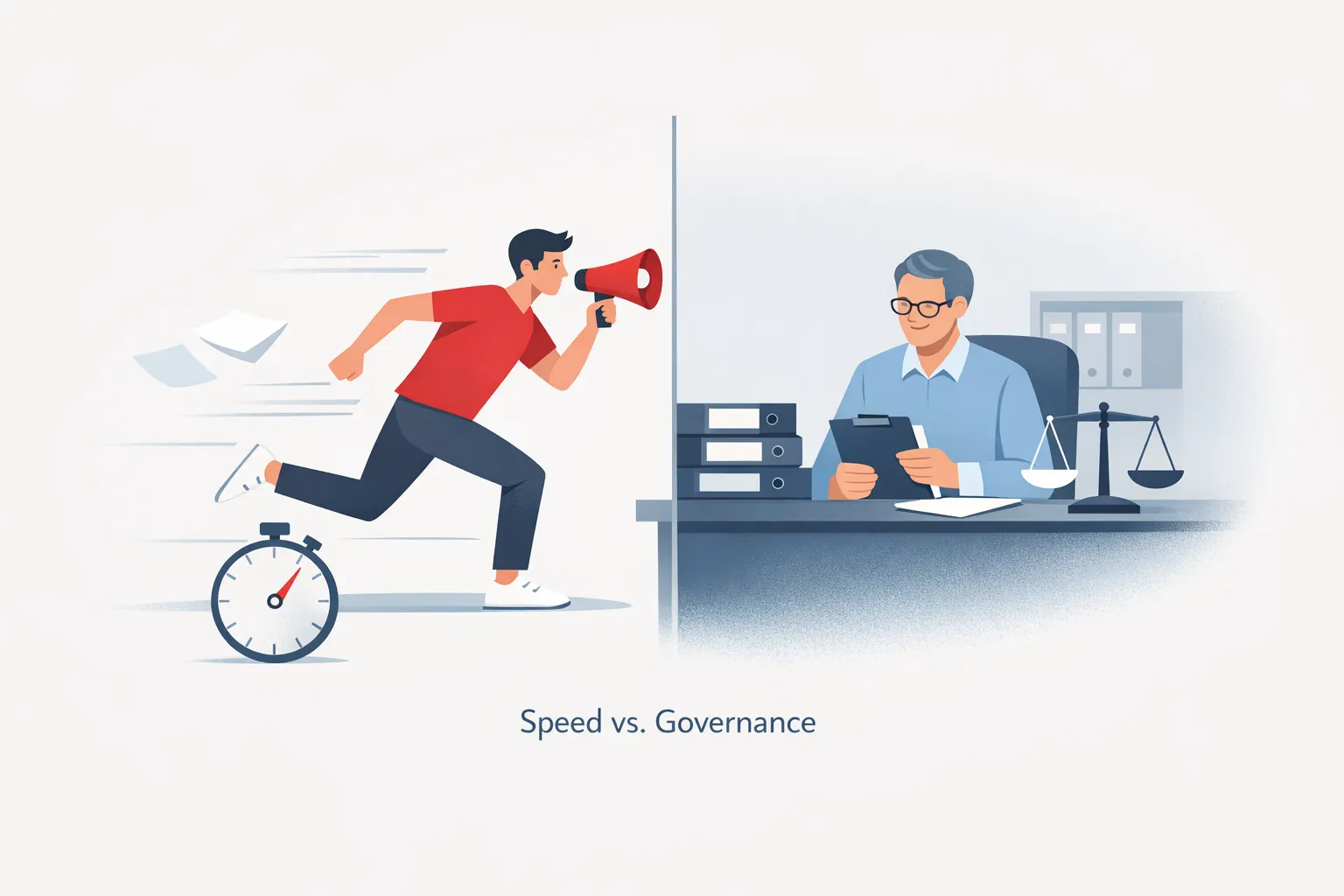
Content Zen vs Traditional Agencies Turnaround Quality and ROI Compared
This section presents a side by side view of Content Zen and traditional agencies across turnaround speed output quality and ROI. The options are described using evidence based language so you can see where rapid AI assisted production shines and where governance and brand stewardship provide stability. The goal is to help teams decide whether speed and scale or governance and risk management should drive the choice with a focus on time to value and measurable results.
| Option | Best for | Main strength | Main tradeoff | Pricing |
|---|---|---|---|---|
| Content Zen | Best for rapid turnaround and scalable content output | Rapid content velocity and AI assisted production with human oversight | Requires strong measurement discipline and governance to ensure ROI accuracy | Not stated |
| Traditional agencies | Best for governance brand stewardship and established processes | Governance brand stewardship and established processes across campaigns channels and regions | Longer time to value relative to AI driven options | Not stated |
| AI marketing agency | Best for real time AI driven optimization | Real time AI driven optimization and rapid iteration | Potentially less governance and brand safety oversight | Not stated |
| Hybrid agency | Best for balancing AI speed with human strategy | Combination of AI acceleration with human strategy | Coordination complexity and higher management needs | Not stated |
| The Ad Alchemist | Best for AI first real time optimization and cognitive resonance | Real time AI optimization and resonance mapping | Requires live data signals and alignment with cognitive framework | Not stated |
| Market Veep | Best for ROI benchmarks and case studies | ROI benchmarks and case studies | May lack real time optimization capability | Not stated |
| Content marketing | Best for long term value and evergreen ROI | Long term value and evergreen ROI | Long ramp to ROI requiring ongoing content production | Not stated |
| Hashmeta | Best for regional cost efficiencies and influencer campaigns | Regional cost efficiencies and influencer campaigns | Influencer dependent results variability | Not stated |
How to choose:
- ROI demonstration and attribution approach which model aligns with your measurement requirements
- Time to value how quickly you need to realize measurable ROI
- Output quality and governance whether you prioritize brand safety and consistency
- Cost efficiency and total ownership which option fits your budget and long term needs
- Scalability and operations maturity the ability to grow output without sacrificing quality
- Analytics and CRM integration ease of connection to your existing tech stack
Option by option comparison frames for turning around content programs
Content Zen
Best for: Rapid turnaround and scalable content output with AI assisted production and human oversight.
What it does well:
- Rapid content velocity and AI assisted production
- Maintains quality through human oversight
- Supports high volume asset creation and fast iteration
- Data driven optimization aligned to ROI and attribution
Watch-outs:
- Requires strong measurement discipline
- Needs governance to ensure ROI accuracy
- Heavy reliance on data quality and system integrations
Notable features: AI assisted production paired with governance checks enables rapid testing at scale. This approach supports frequent iteration while tracking multi touch attribution to demonstrate ROI.
Setup or workflow notes: Requires data pipelines and analytics alignments. Teams coordinate with analysts and editors, with governance reviews embedded in the workflow. The model emphasizes rapid testing cycles and ongoing optimization.
Traditional agencies
Best for: Governance and brand stewardship through established processes.
What it does well:
- Governance and brand stewardship across campaigns
- Established processes that reduce risk
- Consistency across channels and regions
Watch-outs:
- Longer time to value compared with AI driven options
- Less agility for rapid testing and iteration
Notable features: Strong governance frameworks and proven brand safety practices support risk management for large scale programs. Structured sign off processes help maintain consistency.
Setup or workflow notes: Involves formal discovery phases and multi stakeholder approvals. Workflows emphasize documentation, approval gates, and cross functional coordination.
AI marketing agency
Best for: Real time AI driven optimization and rapid iteration.
What it does well:
- Real time AI driven optimization
- Rapid experimentation and learning cycles
- Adaptive messaging based on live signals
Watch-outs:
- Potentially less governance and brand safety oversight
- Requires robust data integration to perform well
Notable features: Uses machine learning to tune programs as audience responses shift and supports quick wins through fast iterations.
Setup or workflow notes: Needs strong data feeds and clean integration with analytics tools. Ongoing monitoring and governance checks help protect brand outcomes.
Hybrid agency
Best for: Balancing AI speed with human strategy and oversight.
What it does well:
- Combines AI acceleration with human strategic input
- Supports flexible resource allocation
- Maintains governance while enabling faster iteration
Watch-outs:
- Coordination complexity and potential management overhead
- Requires alignment between automation and strategy
Notable features: Blends automated testing with human guidance to preserve brand direction while scaling outputs.
Setup or workflow notes: Involves joint planning between AI operators and strategists. Workflows are designed to balance speed with oversight and governance checks.
The Ad Alchemist
Best for: AI first real time optimization and cognitive resonance.
What it does well:
- Real time optimization driven by live signals
- Dynamic resonance mapping to adapt messaging
Watch-outs:
- Requires continuous data flow and alignment with a cognitive framework
- Effectiveness depends on signal quality
Notable features: Focuses on aligning messaging with audience response using a cognitive based approach and fast feedback loops.
Setup or workflow notes: Requires live data feeds and a diagnostic process to guide messaging adjustments. The workflow centers on rapid decision making and governance around changes.
Market Veep
Best for: ROI benchmarks and case studies to guide planning and targets.
What it does well:
- Provides ROI benchmarks and case studies
- Supports data driven decision making with proven results
Watch-outs:
- May lack real time optimization capabilities
- Benchmarks may not match every industry context
Notable features: Emphasizes measurable results through documented case studies and comparative metrics.
Setup or workflow notes: Planning relies on reference targets and historical data. It supports scenario planning and KPI targeting.
Content marketing
Best for: Long term value and evergreen ROI through sustained content programs.
What it does well:
- Long term value from evergreen content
- Consistent ROI from ongoing content production
Watch-outs:
- Long ramp to ROI requiring ongoing content production
Notable features: Focuses on building authority and enduring audience engagement through regular content creation and distribution.
Setup or workflow notes: Requires a sustained content calendar and a governance model to maintain quality and alignment with goals.
Hashmeta
Best for: Regional cost efficiencies and influencer campaigns across multiple markets.
What it does well:
- Regional cost efficiencies
- Influencer campaign capabilities
Watch-outs:
- Influencer dependent results variability
Notable features: Combines regional advantages with influencer outreach to expand reach efficiently in multiple markets.
Setup or workflow notes: Involves coordinated campaigns with influencers and local teams. It requires governance to manage brand safety and regional compliance.

Decision help for choosing Content Zen versus Traditional Agencies
Decision making between Content Zen and traditional agencies centers on whether speed and scale or governance and risk management should drive the choice, and how ROI will be demonstrated. If speed to value and high volume output are required, choose Content Zen because AI assisted production enables rapid turnaround with governance checks to protect quality. For teams prioritizing governance brand stewardship and cross channel consistency, traditional agencies provide stability through established processes. Align the selected model with measurement discipline and time to value targets to guide the decision.
- If speed to value and high-volume output matter, choose Content Zen because AI assisted production accelerates turnaround with governance checks.
- If governance brand stewardship across regions is essential, choose Traditional agencies because established processes reduce risk and preserve consistency.
- If you need rapid ROI demonstration through quick experimentation, choose Content Zen because fast testing supports near-term ROI signals.
- If durable brand assets and cross channel consistency are priorities, choose Traditional agencies because governance sustains long-term campaigns.
- If you want flexible agile workflows with rapid iterations, choose Content Zen because data driven optimization enables quick cycles.
- If risk management and brand safety oversight are top concerns, choose Traditional agencies because formal governance frameworks safeguard the brand.
- If your analytics stack needs tight integration with attribution tools, choose Content Zen because data alignment can accelerate measurement.
- If you operate in multiple markets needing proven regional coordination, choose Traditional agencies because regional processes ensure alignment.
- If you prioritize scalable content production with clear ownership, choose Content Zen because governance checks and scalable output enable clear ROI signaling.
People usually ask next
- What is the typical time to value difference between Content Zen and traditional agencies? Content Zen aims for faster time to value through high velocity testing while traditional agencies often have longer lead times due to governance steps.
- How is ROI measured across these models? ROI is tracked through multi touch attribution and time to value; Content Zen emphasizes rapid attribution and testing cycles.
- How is governance maintained with Content Zen? Governance checks and human oversight are built into the AI assisted production workflow to safeguard brand outcomes.
- Can these models scale to large content programs? Yes, Content Zen scales via AI driven production and governance; traditional agencies scale with additional staff and resources.
- How do regional capabilities impact the choice? Traditional agencies often have established regional processes; Content Zen relies on data pipelines to support localization where feasible.
- What are the first steps to pilot either option? Start with a small pilot focused on a single asset type and define clear metrics for time to value and ROI.
Decision questions to guide choosing Content Zen vs Traditional Agencies
What defines Content Zen's turnaround speed compared to traditional agencies?
Content Zen uses AI assisted production with governance checks to enable rapid turnaround and scalable output, while human oversight helps preserve quality. This combination allows faster iteration and more frequent testing across channels, with results directed toward multi touch attribution. Traditional agencies, by contrast, operate with established governance that lengthens lead times but can provide stronger early risk management and brand control. The choice hinges on timing and risk tolerance.
How does Content Zen ensure quality at high output levels?
Content Zen maintains quality through AI assisted production with human oversight and governance checks that safeguard brand safety. Humans review outputs, governance gates enforce standards, and iterative testing cycles help catch issues early while maintaining speed. Dependence on data integrity and tool integrations means performance hinges on clean data feeds and reliable analytics, but the model supports consistent quality at scale when processes are well managed.
How is ROI measured with Content Zen versus traditional agencies?
ROI is measured with multi touch attribution and time to value; Content Zen emphasizes rapid attribution and testing cycles to demonstrate ROI quickly, making the business case visible sooner for executives. Traditional agencies rely on established governance frameworks and historical case studies to demonstrate ROI, which can provide a different but slower signal. Both approaches aim to show impact, but the timing and attribution methods differ.
When should a company choose Content Zen over a traditional agency?
If speed to value and high-volume output are top priorities in a fast changing market, Content Zen fits well because AI driven production can be scaled quickly. If governance risk management and brand consistency are paramount, traditional agencies are preferable for stable, regulated campaigns. For blended needs, a hybrid approach may be considered.
What governance or safety measures are in Content Zen?
Content Zen includes governance checks and human oversight aimed at safeguarding brand outcomes. Data pipelines and analytics align with attribution models, and ongoing reviews help ensure compliance across channels. For some teams, formal governance practices from traditional agencies provide reassurance about risk management and cross channel consistency.
Can Content Zen scale for large campaigns and multi channel programs?
Yes Content Zen scales through AI driven production that can handle high output across multiple channels and campaign types, enabling rapid experimentation with governance. It preserves quality via human reviews while maintaining cost discipline. Traditional agencies scale by expanding staff and resources, which can increase cost and lead times.
How does attribution work with Content Zen?
Attribution in Content Zen relies on multi touch attribution and real time signals; rapid testing cycles help isolate which inputs drive conversions, though attribution remains complex and may require ongoing refinement. Traditional agencies rely on established measurement frameworks and case studies that show ROI but may lag in real time feedback.