Video Marketing for SaaS: A Practical Framework from Creation to Distribution gives you a proven, step-by-step approach to turn a single video into a repeatable growth engine. In this guide, you will define a SMART goal linked to a single KPI, map a funnel stage to the right video format, and build a lean production framework (Strategy, Creative Brief, Execution Checklist). You will then create lightweight assets, publish with UTM-tracked distribution, optimize for search and accessibility, and measure ROI. The simplest path starts with a clear goal, a single KPI, and a lean production plan, then expands to multi-channel distribution and iterative testing. By following this framework, you’ll turn video into a reliable source of demos, trials, or sign-ups, scaling your SaaS growth without bloated production cycles.
This is for you if:
- SaaS founders seeking a scalable, repeatable video system that consistently drives demos, trials, or sign-ups
- Product, marketing, and growth teams aiming for a framework-first approach rather than one-off productions
- Teams that want lean production, quick-turn assets, and predictable timelines
- Organizations prioritizing multi-channel distribution and lightweight SEO optimization from day one
- Stakeholders who need alignment across product, marketing, and sales on KPIs and downstream metrics
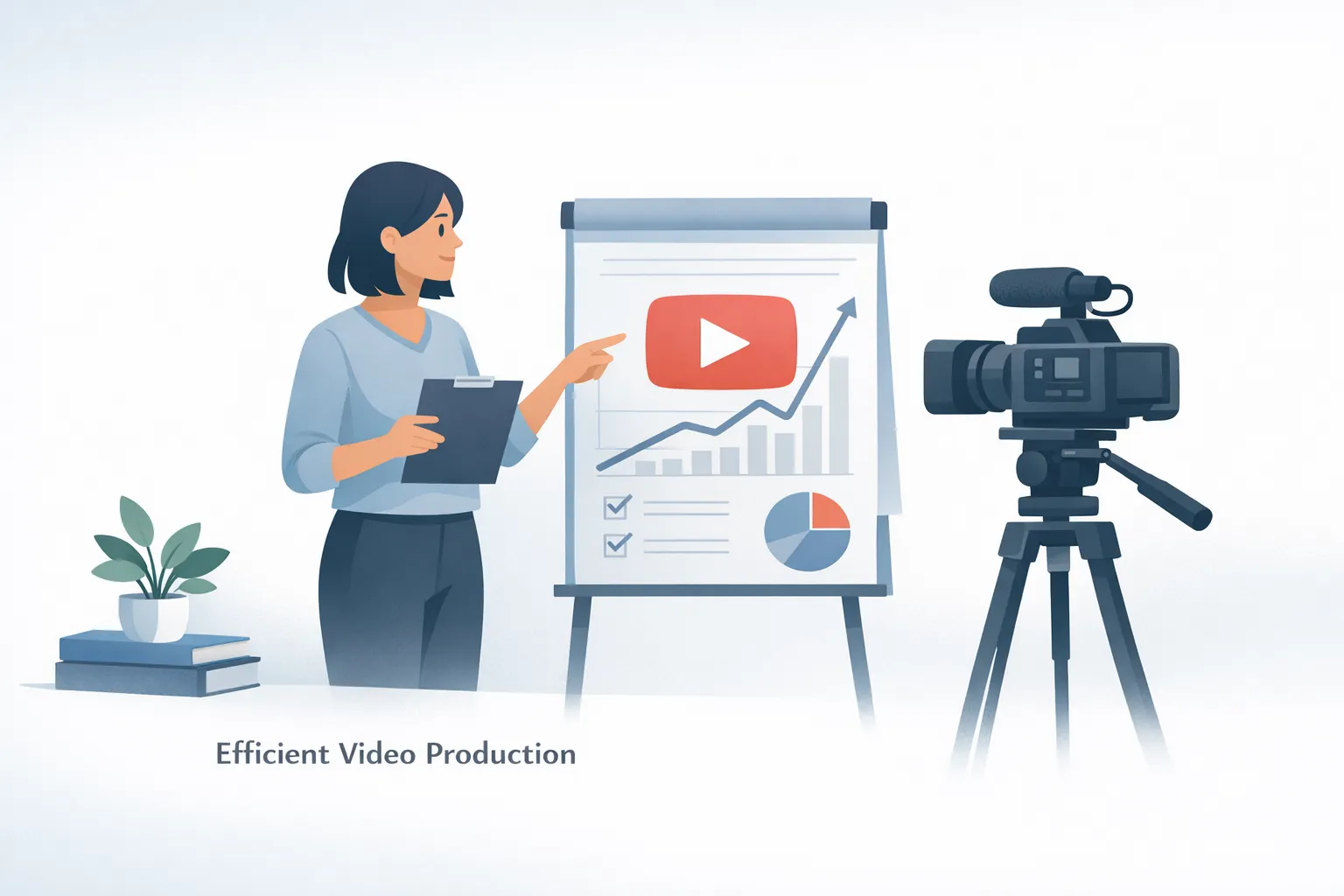
What You Need Before You Start: Prerequisites for a Practical SaaS Video Marketing Framework
Prerequisites set the foundation for a fast, repeatable video program. By aligning goals, KPIs, and audience focus upfront, you prevent scope creep, speed up production, and ensure every asset serves a measurable business outcome. These prerequisites turn a first video into a scalable system—one that consistently drives demos, trials, or sign-ups while enabling disciplined testing and optimization across channels.
Before you start, make sure you have:
- A documented SMART goal for video marketing tied to a single KPI
- Cross-functional alignment among product, marketing, and sales on the goal and KPI
- A defined funnel stage for the video (awareness, consideration, or decision)
- A lean production framework (Strategy, Creative Brief, Execution Checklist)
- Access to lightweight production tools (screen capture, quick-turn video) and optional AI tools
- A multi-channel distribution plan with initial channels and cadence
- An SEO and accessibility plan (keyword-optimized title, description, captions, transcripts, and schema)
- A plan to tag distribution links with UTM parameters
- A living log to capture video URLs, versions, and assets
- A plan to measure downstream metrics and ROI
- A plan to embed videos in landing pages or product docs as appropriate
- A basic understanding of video analytics and ROI modeling
- Optional: use resource links for guidance, such as LinkedIn workshop and Marketing Update podcast episodes
Launch the Framework with a Clear Action Plan
Set a concrete pathway that you can follow from idea to distribution. Establish a SMART goal and a single KPI, then align across teams to ensure everyone is working toward the same outcome. Choose a funnel stage and a matching lightweight format to keep speed and clarity intact. Build a lean production framework that guides creation, review, and iteration. This aligns with the LinkedIn workshop framework. Source
-
Define SMART Goal and KPI
Capture a precise objective that ties to a single KPI and a downstream metric. Document the goal in a shared sheet and confirm cross functional alignment. Select a KPI such as demos or sign ups and set a realistic evaluation window. Link this goal to your distribution plan and the video format you will use. This aligns with the LinkedIn workshop framework. Source
How to verify: The goal, KPI, and downstream metric are documented and approved by product, marketing, and sales.
Common fail: Setting multiple conflicting KPIs or vague targets.
-
Map Funnel Stage to Format
Identify the funnel stage you want to influence and pick a format that moves viewers toward the KPI. Ensure the format is appropriate for the channels you plan to use. Keep production lean to maintain speed. This approach is echoed in the Marketing Update podcast. Source
How to verify: Each stage has a defined format and a corresponding distribution channel.
Common fail: Mismatched format and funnel stage that fails to move the needle.
-
Create Lean Production Framework
Build three pillars: Strategy, Creative Brief, and Execution Checklist. Use them to guide decisions, asset needs, and deadlines. Keep documents concise so a junior teammate can execute. This framework reduces ambiguity and speeds up delivery.
How to verify: The three pillars are documented and accessible to the production team.
Common fail: Overly long briefs that stall production.
-
Draft Creative Brief and Execution Plan
Outline core message, tone, visuals, length, and platform specs. Specify required assets, captions, and accessibility needs. Align the brief with distribution expectations so the final video fits the intended channels.
How to verify: A one page brief with clear specs is approved by stakeholders.
Common fail: Vague brief leading to misaligned footage or wasted edits.
-
Produce Lightweight Asset
Use quick turn tools such as screen capture to create a Demo or Explainer. Keep it under a couple of minutes and ensure captions are included. Maintain consistent branding and messaging.
How to verify: The final asset meets length and accessibility requirements and is ready for distribution.
Common fail: Overproduction or missing accessibility features.
-
Publish and Embed with UTMs
Publish the video to the chosen channels and embed on the target page or docs. Add UTM parameters to every link to enable reliable attribution across platforms.
How to verify: All links carry UTMs and the video is accessible on the target pages.
Common fail: Missing UTMs or broken embeds.
-
Measure ROI and Iterate
Track downstream metrics and compute ROI using your chosen model. Identify which channels and formats drive the strongest results and plan one small improvement per iteration.
How to verify: ROI and downstream metrics are updated in the analytics dashboard.
Common fail: Failing to close the loop with data and tests.
-
Iterate with Data Driven Tests
Run small A/B tests on hook, length, and CTA. Document hypotheses, test results, and next steps. Refine the asset and distribution plan based on evidence.
How to verify: A/B test results are recorded and acted upon within the next sprint.
Common fail: No formal testing cadence or documentation.
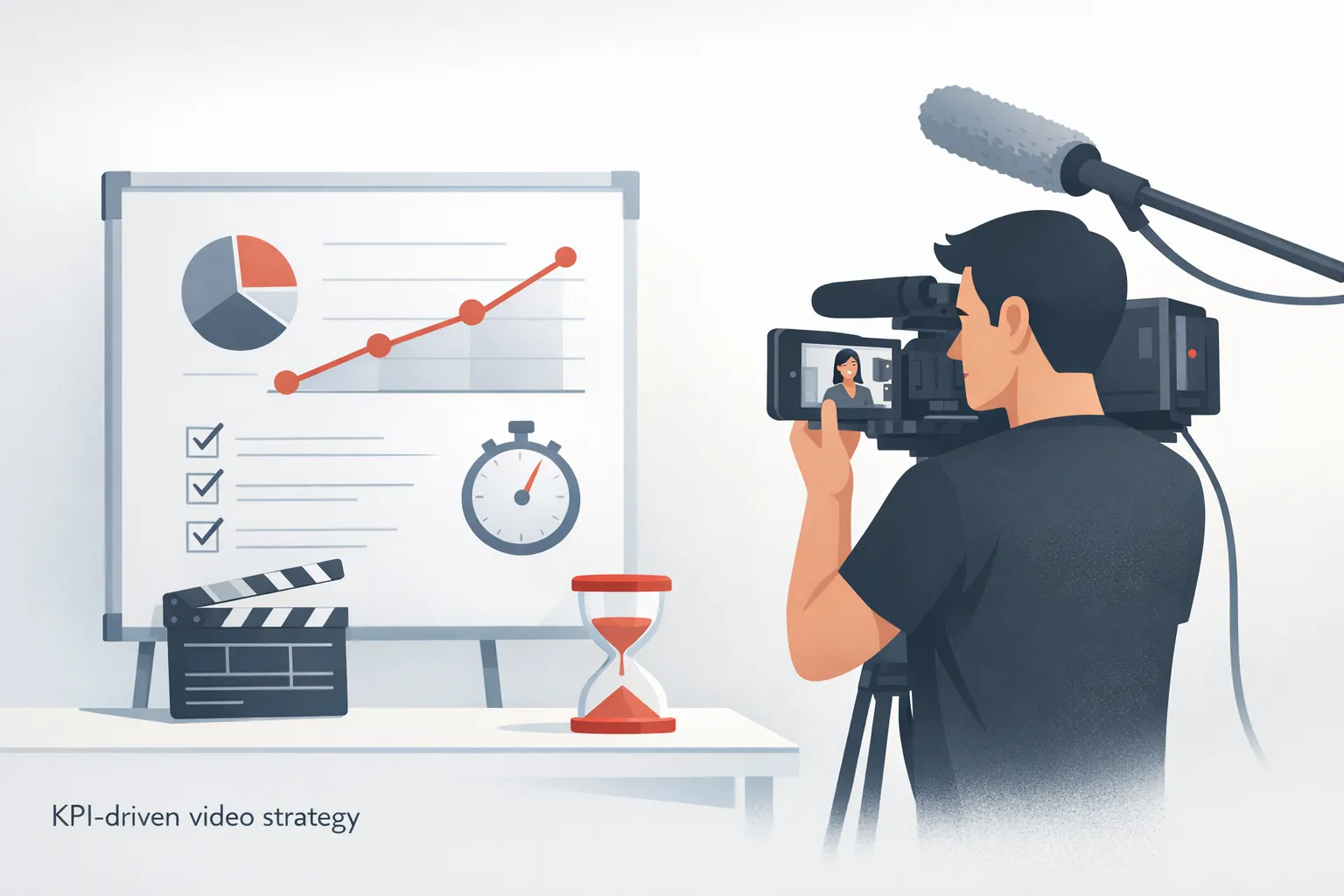
Verification: Concrete checks to confirm your video framework is delivering
Verification ensures the framework is actually producing results you can trust. You will confirm that goals and KPIs are documented and signed off, that formats align with funnel stages, and that the lean production process yields assets that are ready for distribution. You’ll verify tracking, tagging, and analytics are in place, and that the ROI and iteration plans are actionable. By performing these checks, you’ll know whether to scale the approach or refine the strategy before investing in broader production and distribution.
- Goals and KPI are documented and approved by cross-functional stakeholders
- Lean production framework (Strategy, Creative Brief, Execution Checklist) is published and accessible
- Video format maps to funnel stage with defined distribution channels
- Asset produced with captions, branding, and platform-ready specifications
- UTMs are added to all links and analytics dashboards are configured
- SEO basics applied on hosting pages (title, description, transcripts, schema)
- Downstream metrics identified and ROI modeling in place
- A plan for ongoing iteration with documented test cadence
| Checkpoint | What good looks like | How to test | If it fails, try |
|---|---|---|---|
| Goal & KPI Validation | Documented, signed-off objective tied to a single KPI | Review the goal sheet and obtain cross-functional sign-off | Reopen alignment sessions and restate the KPI and target |
| Format to Funnel Mapping | Each stage has a corresponding format and channel plan | Cross-check the mapping document against the distribution plan | Adjust format or stage and re-test with stakeholders |
| Lean Production Framework | Strategy, Creative Brief, Execution Checklist exist and are usable | Open the shared docs and verify all sections are complete | Draft missing sections or simplify briefs for clarity |
| Asset Readiness | Asset meets specs, includes captions, branding, and accessibility | Play the asset on target platforms and verify captions and branding | Re-export with correct specs or update captions |
| Tracking & Attribution | UTMs present; analytics dashboards capture channel performance | Test links and review analytics dashboards for attribution data | Fix UTMs; correct analytics integration |
| ROI & Iteration Plan | ROI model defined; scheduled iterations and tests | Run a small test cycle and compare results to baseline | Reframe hypotheses; adjust test scope or duration |
Troubleshooting: Quick fixes to keep Video Marketing for SaaS on track
Troubleshooting ensures you can diagnose and fix issues quickly without derailing your program. By identifying symptoms, understanding why they occur, and applying precise fixes, you keep the video framework moving from creation to distribution. Use these entries as a practical checklist to keep KPIs in sight, preserve lean production, and sustain consistent, measurable ROI across channels.
-
Symptom: Goals are unclear or KPIs conflict across teams.
Why it happens: Without a single, documented objective, efforts scatter and ROI becomes hard to prove.
Fix: Re-align with a SMART goal and a single KPI; document in a shared goal sheet; secure cross-functional sign-off; update the working plan. Source
-
Symptom: Video format does not map to the funnel stage.
Why it happens: Formats are chosen before funnel alignment, reducing impact on the KPI.
Fix: Map funnel stage to format and define channel plan; create a simple mapping document. Source
-
Symptom: Lean production framework is missing or not used.
Why it happens: Teams skip structured planning to move faster but lose consistency.
Fix: Implement Strategy, Creative Brief, Execution Checklist with templates; keep briefs concise.
-
Symptom: Captions and accessibility are neglected.
Why it happens: Quick production wins out over accessibility considerations.
Fix: Add captions and transcripts; ensure metadata and schema basics are in place.
-
Symptom: UTMs or attribution are missing on distribution links.
Why it happens: Inconsistent tagging prevents reliable channel ROI.
Fix: Tag all links with UTMs; verify in analytics; maintain a central log.
-
Symptom: Embedding fails or video not loading on pages.
Why it happens: Cross-domain restrictions or incorrect embed codes.
Fix: Test embeds on all target pages; confirm domain permissions; update hosting settings if needed.
-
Symptom: Distribution cadence causes audience fatigue.
Why it happens: Overposting or repetitive messaging across channels.
Fix: Create a distribution calendar; tailor copies per channel; repurpose core message into variants.
-
Symptom: ROI or downstream metrics are not tracked.
Why it happens: Missing ROI model or disconnected analytics.
Fix: Define an ROI model; connect video activity to downstream metrics; set up dashboards.
Reader Questions: Quick Answers for the Video Marketing Framework
- What is the core aim of this framework? A framework-first, lean in-house process turns a single video into a repeatable growth lever aligned to a single KPI and a downstream metric.
- How do I choose a single KPI and SMART goal? Define a clear objective tied to meaningful downstream outcomes, then write a SMART goal that specifies the KPI, target, and timeline.
- Which funnel stages map to which formats? Use explainer or social shorts for awareness, a screen-recorded demo for consideration, and testimonials or pricing explainers for decision, with mobile-friendly short-form variants where appropriate.
- What does the lean production framework include? Strategy, Creative Brief, and Execution Checklist guide decisions, assets, and deadlines so a junior can execute consistently.
- How should I approach distribution? Plan multi-channel distribution, tailor copy per platform, schedule posts, and tag every link with UTMs for attribution.
- How do I measure ROI and iterate? Track downstream metrics (e.g., demos, sign-ups), calculate ROI, and run quick tests to inform next optimizations.
- What are common pitfalls to avoid? Vague goals, misaligned formats, missing ROI tracking, poor distribution, and overlooking captions or accessibility.
- How long before I see results? Use a defined evaluation window (often 30 to 60 days) to assess impact and decide on scaling or iteration.
Common Questions About the Video Marketing Framework
What is the core aim of this framework?
The core aim is to replace one-off videos with a framework-first, lean in-house process that turns a single video into a repeatable growth lever. It ties to a single KPI and downstream metric, and it creates a predictable path from goal to ROI. By standardizing how videos are planned, created, and distributed, teams can steadily drive demos, trials, or sign-ups while keeping timelines tight and costs lean.
How do I choose a SMART goal and KPI?
To pick a single KPI and write a SMART goal, start by identifying the downstream outcome that matters most for your product — demos, sign-ups, or retention. Then craft a SMART statement that names the KPI, a numeric target, and a deadline. Ensure leadership alignment across product, marketing, and sales, and lock this in a shared document to guide every production and distribution decision.
Which funnel stages map to which formats?
For funnel mapping, use formats that move viewers toward the KPI. Awareness benefits from concise explainers or short-form hooks; consideration is best with a demo or educational variant; decision is supported by testimonials or price explainers. Adapt length and style for each platform to preserve impact and ensure clear calls-to-action throughout the journey.
What does the lean production framework include?
The lean production framework includes three pillars: Strategy, Creative Brief, and Execution Checklist. Strategy defines the mission and target KPI; Creative Brief communicates core message, tone, visuals, and format specs; Execution Checklist translates the plan into a repeatable workflow with asset tagging, reviews, and hand-offs. This trio keeps production predictable and scalable.
How should I approach distribution and SEO?
Approach distribution with a multi-channel mindset from day one. Tailor copy and formats to each channel, schedule posts to avoid fatigue, and tag every link with UTMs for attribution. Enhance discoverability with on-page SEO: keyword-rich titles, detailed descriptions, and accessible transcripts. Embed videos where relevant to boost both reach and conversions.
How do I measure ROI and iterate?
Measure ROI by tracking downstream metrics tied to the KPI and applying a straightforward ROI model. Run quick tests to compare hooks, lengths, or CTAs, and document outcomes in a living log. Prioritize data-driven tweaks and maintain a cadence of small, repeatable improvements to sustain momentum over time.
What are common pitfalls to avoid?
Common pitfalls include vague goals, misaligned formats, missing ROI tracking, poor distribution, neglecting captions or accessibility, and ignoring downstream metrics. Ensure a single KPI, map formats to funnel stages, apply UTMs, publish consistently, and maintain a clear evaluation window to drive disciplined optimization over time.